
Last updated November 15, 2026
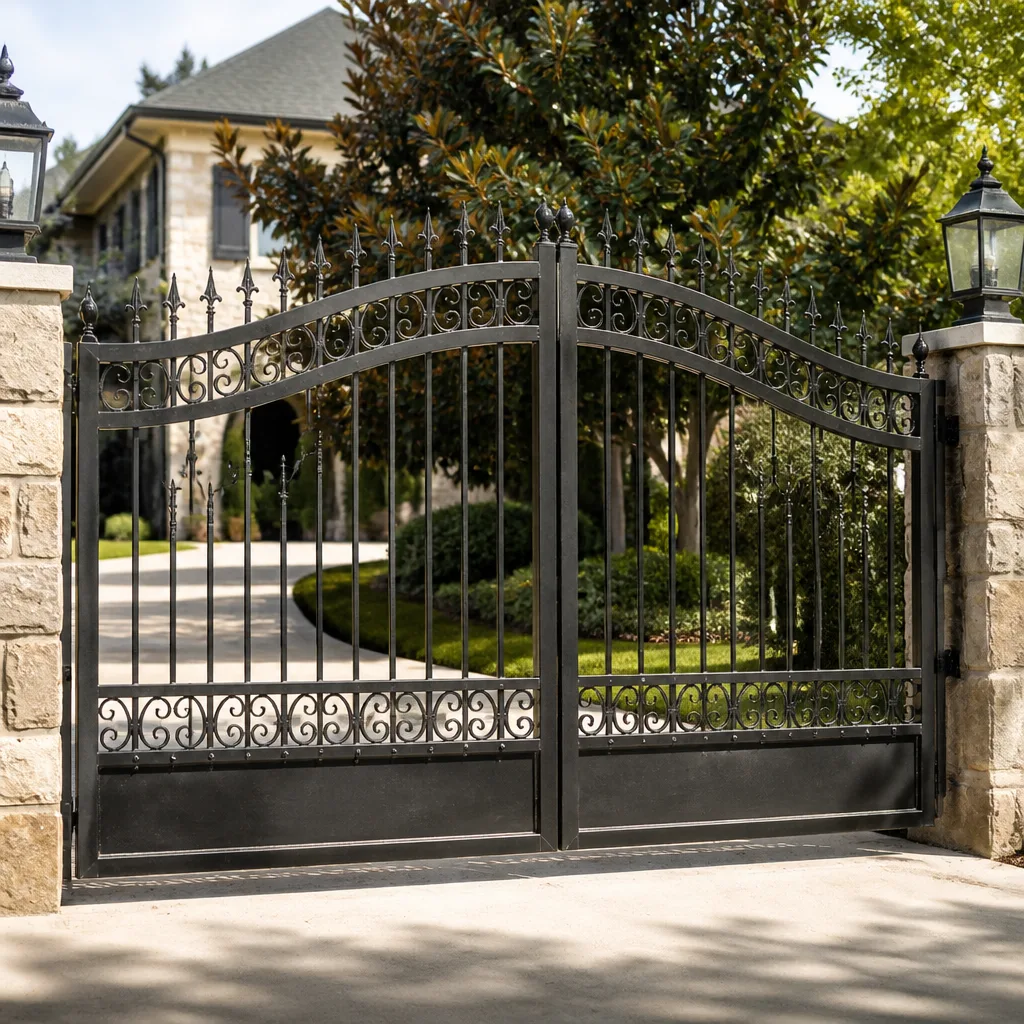 Wrought iron
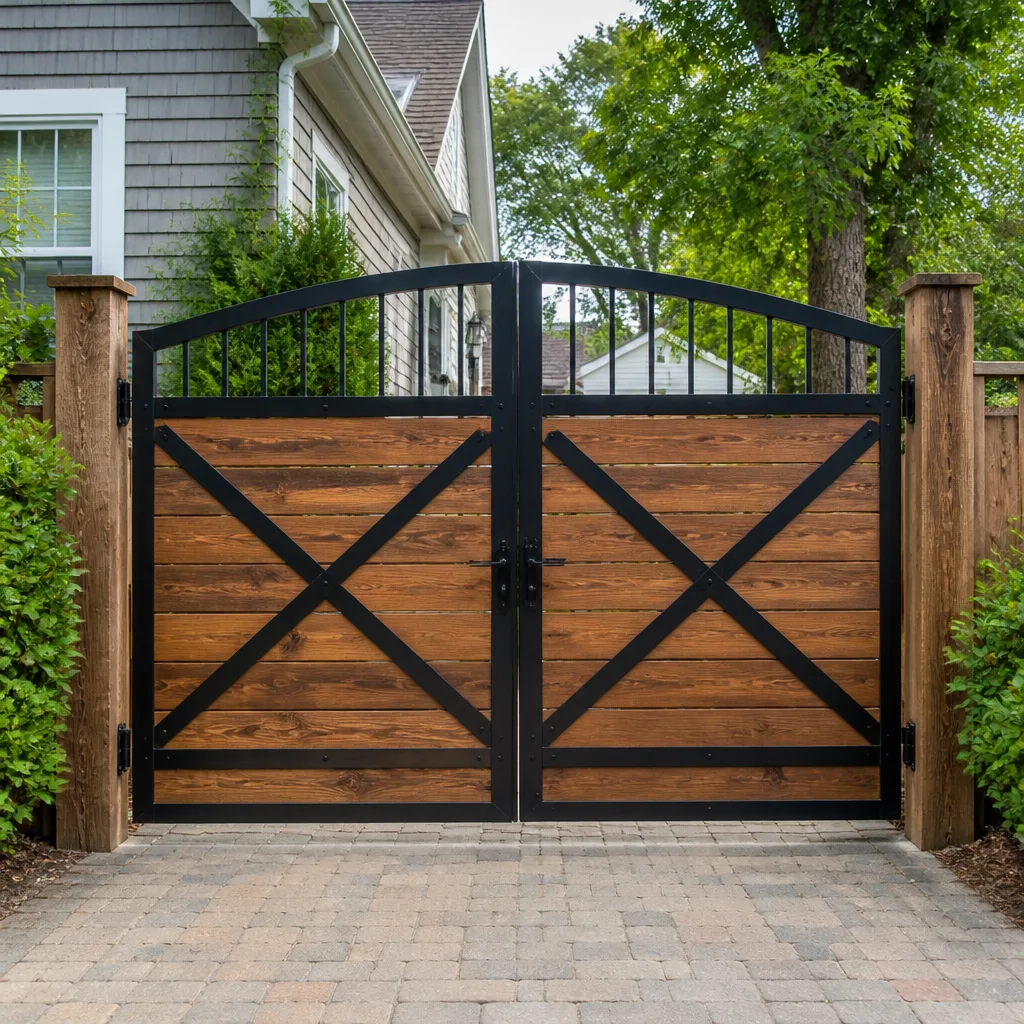 Wood & steel frame
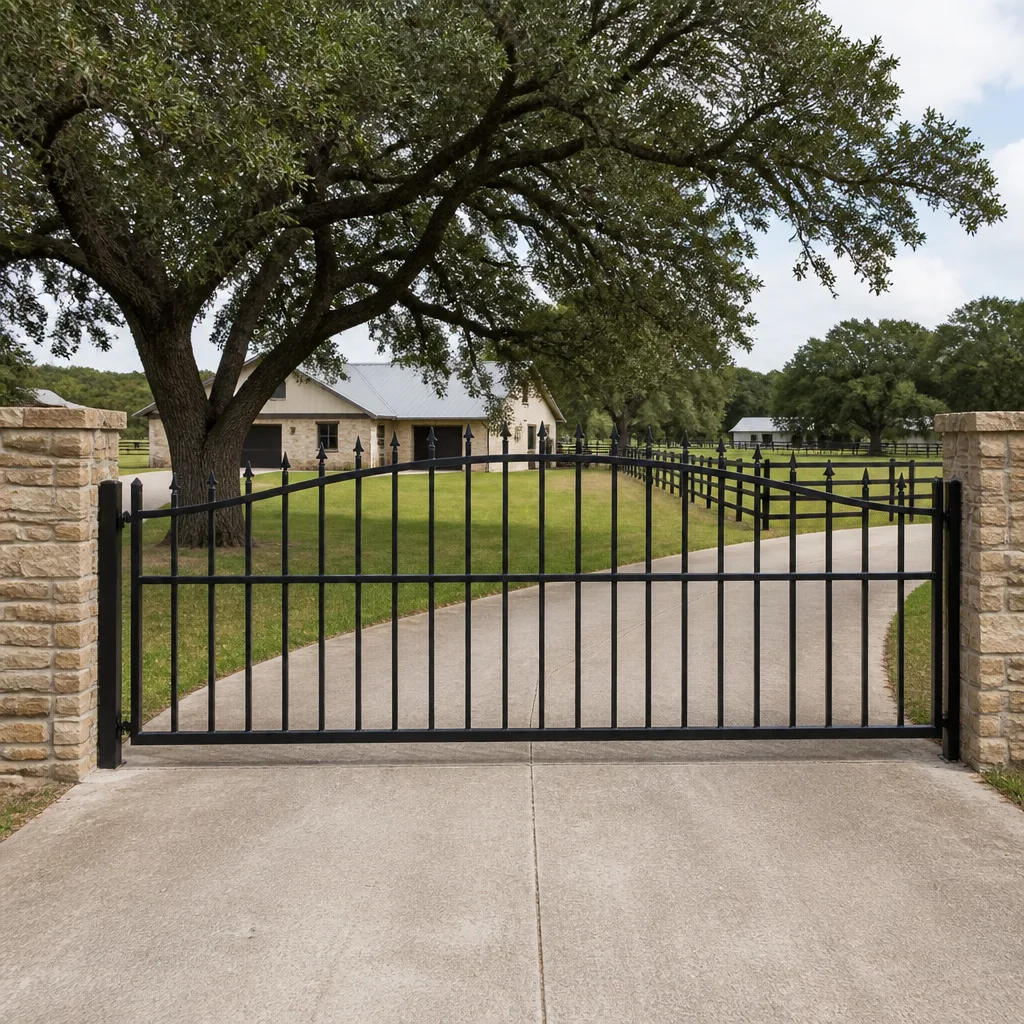 Farm & ranch
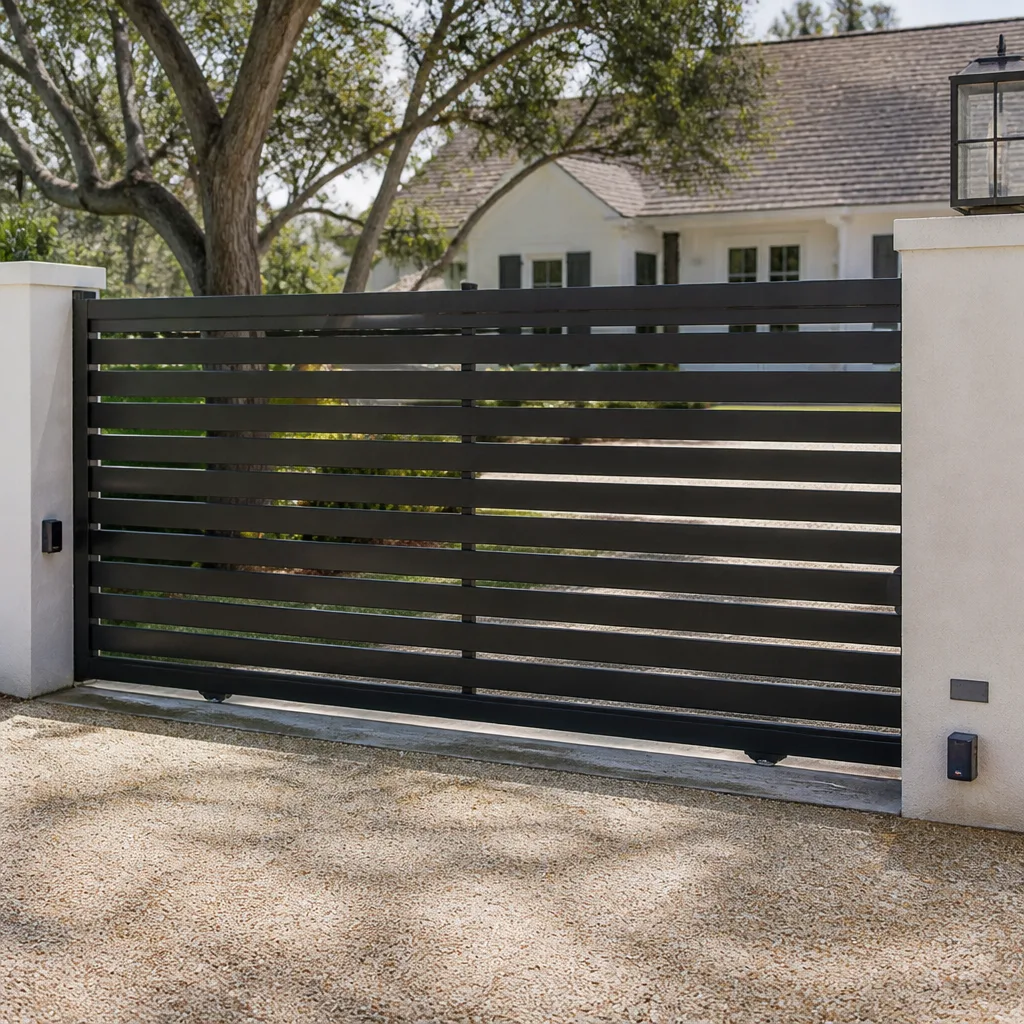 Sliding driveway gates
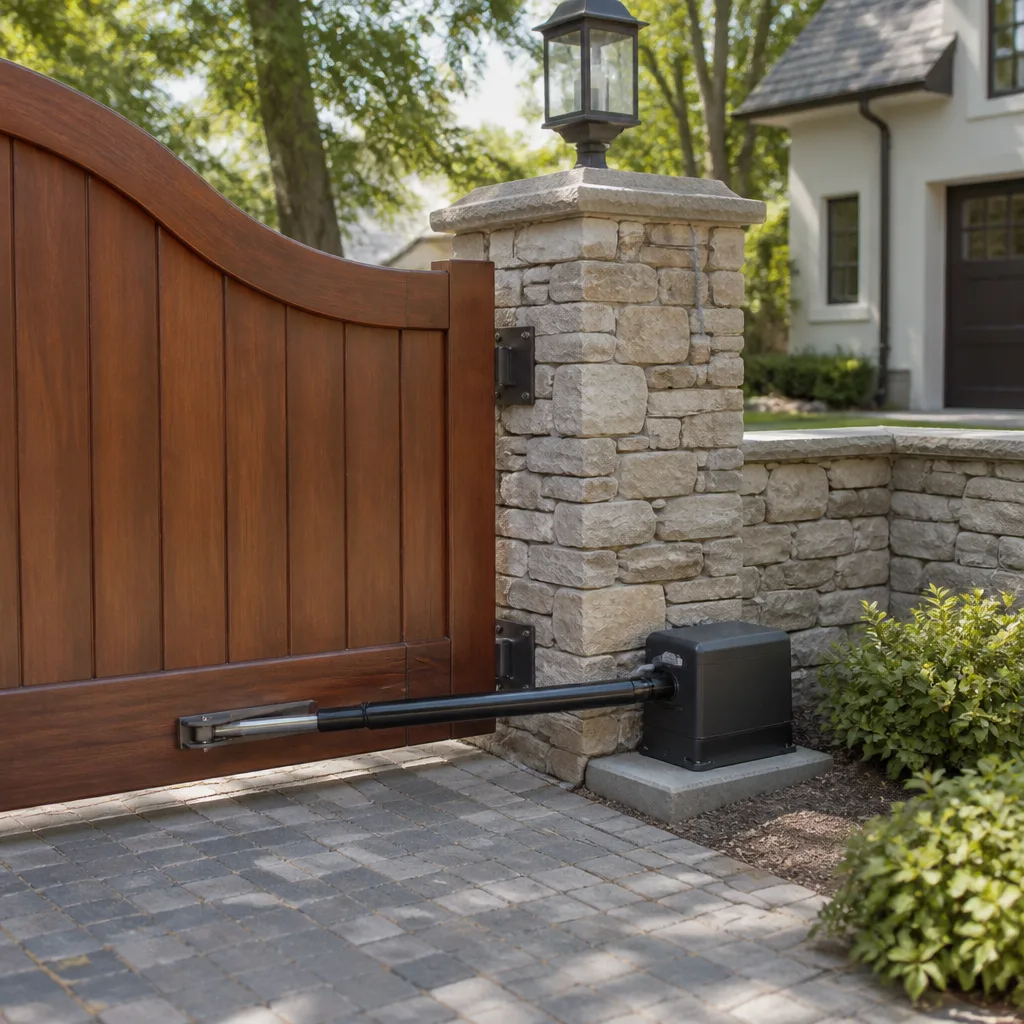 LiftMaster operators
Free on-site gate assessment - hinges, posts, and your LiftMaster or Nice gate operator checked before anything is quoted
The assessment is free and the quote is the invoice.
Get your free estimateThe Complete Guide to Gate Repair in Modesto
A gate that reverses before it closes usually gets called a sensor problem. It rarely is. In our experience, that symptom points to a pressure-limit fault, an obstruction-detection trip, or a logic board misreading its own inputs, and each one takes a different fix. Treat them the same way and you end up buying parts you never needed. The same is true across almost every gate failure: the symptom you see and the cause underneath it are two different things. This guide maps the common symptoms to the five mechanical root causes we actually find, explains why Modesto’s soil and summers stress gate hardware in ways other guides skip, and tells you when a repair stops making financial sense.
Quick Answer
Gate repair in Modesto comes down to diagnosing which of five root-cause categories your problem belongs to: the operator, the hinge or pivot, the control board, the wiring and power, or the structure itself. Most gate failures trace to one of these five, and identifying the category correctly is what separates a small mechanical fix from an unnecessary operator replacement. An on-site diagnosis and written estimate is the cheapest way to find out which one you’re dealing with before you spend anything.
Styles & brands we work with
- Wrought iron
- Wood & steel frame
- Farm & ranch
- Sliding driveway gates
- LiftMaster operators
Table of Contents
- The Five Root Causes Behind Almost Every Gate Failure
- Symptom-to-Cause Map: What Your Gate Is Telling You
- Why Modesto’s Clay Soil Misaligns Gate Posts
- Brand-Specific Failure Patterns We See Again and Again
- Electric and Automated Gate Repair: Where Generalists Get It Wrong
- Repair, Replace, or Upgrade? The Cost Checkpoints
- Like-for-Like Repair Versus a Code-Triggering Modification
- What Actually Prevents Gate Failures
The Five Root Causes Behind Almost Every Gate Failure
Every gate problem we diagnose lands in one of five categories. Naming the category first, before touching a single part, is the whole method. It’s a brand-specific diagnostic approach rather than trial-and-error replacement, and it’s the reason a gate-only specialist can usually tell you what’s wrong before the truck door closes.
1. The operator. The motor, gearbox, and drive mechanism. Symptoms include the gate moving slowly, stalling mid-travel, grinding, or the motor running without the gate moving at all. On swing operators, a worn gearbox often announces itself as a labored hum. On slide operators, it’s usually a slipping drive gear or a chain under the wrong tension.
2. The hinge or pivot. Every swing gate hangs on hardware that wears. Sagging, dragging, a gate that won’t sit level at rest, or a gate that has to be lifted to latch all point here. Hinge wear is mechanical, not electrical, and no amount of board-swapping fixes it.
3. The control board. The logic board takes inputs from every sensor, remote, keypad, and safety device on the property and decides what the gate does. A board fault can mimic anything: phantom openings, gates that reverse at random, remotes that stop working, or a gate that goes dead after a power blink.
4. Wiring and power. Low-voltage control wiring, the power feed to the operator, loop detector wiring, and every connection in between. Intermittent behavior, especially after rain or heat, is the classic signature. Rodents and aging insulation account for more of this than anything else.
5. The structure. The posts, the foundation beneath them, and the gate frame itself. A post that has shifted a fraction of an inch throws off the geometry of everything mounted to it. This is the category most homeowners and most generalists miss entirely, and in Modesto it’s the one that recurs most often.
Get the category right and the repair is usually straightforward. Get it wrong and you’ll replace a good board to fix a bad hinge. When you’re ready for a proper diagnosis, our Gate Repair Modesto team works the same five-category method on every call.
Symptom-to-Cause Map: What Your Gate Is Telling You
The fastest way to understand a gate problem is to work backward from the symptom. Here’s how the failures we see most often sort out. Use this as a starting point for the conversation with your technician, not as a parts list.
- Gate reverses before closing. Pressure-limit setting, an obstruction-detection trip, or a board misread. Almost never a failed sensor itself.
- Gate won’t open at all, motor silent. Power feed, control board, or a safety loop in fault. Check whether the operator has power before anything else.
- Motor runs, gate doesn’t move. Drive gear, chain, or a snapped arm connection. Mechanical, not electronic.
- Gate moves a few inches and stops. Limit switch out of adjustment or a board losing its limit memory.
- Remote works sometimes. Receiver, battery in the remote, or interference on the antenna run.
- Gate drags or sags at the far end. Hinge or pivot wear, or a post that has shifted.
- Phantom openings. Miswired loop detector, a short in buried wiring, or a board fault.
- Gate dead after a power outage. Board memory loss or a surge that took out a component on the board.
Notice how many of these symptoms cross categories. “Gate reverses before closing” could be a board setting, a wiring fault at the safety edge, or pressure-limit calibration. That’s exactly why a symptom-only repair burns money: you’re guessing at the category. A technician who reads the diagnostic inputs directly, rather than swapping parts, narrows it to one cause before spending a dollar on parts.
If your gate is automated and exhibiting any of these symptoms, our electric gate repair service is set up specifically for operator and control problems, not general gate work.
Why Modesto’s Clay Soil Misaligns Gate Posts
Modesto sits on heavy clay soil, and clay does two things that matter to a gate. It expands when wet and shrinks and cracks when it dries. Across a season, the ground under a gate post moves. A post set properly to footing depth resists that movement better than a shallow one, but nothing eliminates it entirely. Over time, a fraction of an inch of shift at the base becomes a visible misalignment at the top of the post, and that misalignment throws off the geometry of the gate, the hinges, and the operator arm all at once.
This is why we treat post alignment as its own diagnostic step in Modesto. Consider what a shifted post does to an automated swing gate:
- The operator arm no longer meets the gate at its designed angle, so it strains the motor and the gearbox.
- The gate stops latching cleanly, so the operator has to push harder to close it.
- The safety edges and pressure limits trip more often because the gate is binding.
- The hinges take uneven load and wear faster on one side.
A homeowner on an older lot near downtown Modesto can end up replacing an operator that was never the problem. The gate was binding because the post had moved, and the operator was doing double work. Diagnostic before replacement saves that expense, every time.
If your gate is dragging, binding, or refusing to latch after the dry season, ask your technician to check post alignment and hinge geometry before assuming the operator is failing. It’s one of the most common and most misdiagnosed causes in the city.
Brand-Specific Failure Patterns We See Again and Again
Every operator brand has a personality. Knowing the failure patterns by make is how a gate specialist gets it right the first time. We work across LiftMaster, FAAC, BFT, Linear, Viking, Ghost Controls, DoorKing, Elite, and Mighty Mule, and the differences are real.
LiftMaster swing operators, including the RSW12V, are dependable, but their backup batteries tend to fail at around 18 months in our experience. The symptoms show up as the operator hesitating or stalling during an outage or on a cold morning, and owners often mistake it for a motor problem. Checking and replacing the battery is a far cheaper fix than a new operator, and knowing the pattern saves a return visit.
DoorKing commercial boards have a well-documented habit of losing memory after power surges. The gate goes dead or forgets its limits, and the board is the culprit rather than the operator. On a commercial property, that means a quick board reset or a replacement board, not a new system.
FAAC and BFT commercial operators are built for high cycle counts, and their failure points tend to be wear-driven: limit switches, motor brushes, and the mechanical drive. Ghost Controls and Mighty Mule residential systems fail more often on wiring and receiver issues than on the motor itself. Elite and Linear systems sit in between and often present with control board or loop detector faults.
The practical takeaway: the same symptom means different things depending on the brand on your gate. A repair protocol that applies the same fix to every system will miss the actual cause. Brand-specific knowledge is what eliminates the return visit.
Electric and Automated Gate Repair: Where Generalists Get It Wrong
An automated gate is a control system, not just a motorized gate. The operator is one component. The control board, limit switches, safety loop detectors, intercom wiring, and receiver all feed into it. A generalist who treats the operator as the whole system will usually replace the wrong part.
Here’s how a disciplined electric gate diagnosis works. This is a numbered sequence, because the order matters:
- Check the power and the board first. Confirm the operator has correct voltage and the control board is powering up cleanly. No point diagnosing downstream if the board isn’t alive.
- Read the diagnostic inputs. Every control board has inputs from safety edges, loop detectors, keypads, and receivers. A trained eye reads these directly rather than guessing from the symptom.
- Test the safety devices. Pressure limits, obstruction detection, and safety loops trip more often than they fail. Test, don’t replace.
- Trace the controls wiring. Buried control wiring is a common failure point. Intermittent behavior after rain almost always points here.
- Check the mechanical drive. Only after the electrical side is clean do we test the gearbox, chain, and arm. Mechanical faults are real, but they’re the fifth thing to rule out, not the first.
On a commercial property or multi-family gate, the stakes go up. An entry gate that fails during a busy morning is an access-control problem for every resident and every delivery. Intercom wiring, loop detection, and the operator’s duty cycle all matter more on commercial systems. That’s why we handle both residential and commercial work with the same diagnostic method: read the system, don’t guess at it.
Repair, Replace, or Upgrade? The Cost Checkpoints
At some point, every gate owner faces the question. The answer comes down to a simple ratio: the cost of the repair versus the cost of an operator replacement. Our rule of thumb is that if a single repair is approaching half the cost of a new operator, and the existing operator is already showing wear across multiple components, upgrading is the better financial call. There are also specific situations that push toward replacement regardless of the repair cost:
- The operator has failed twice in the same year on the same component. Two failures on the same part usually mean the part is at the end of its service life and the rest of the unit is close behind.
- The control board has failed and is no longer available. A board you can’t source turns a cheap repair into a forced replacement.
- The operator’s duty cycle is being exceeded. A residential-rated unit on a high-traffic commercial gate will keep failing. The answer is a system rated for the load, not another repair.
- A single component is failing repeatedly in different ways. Wear across multiple systems is the signal.
The one repair that almost always makes sense is a mechanical fix on a sound operator. A hinge replacement, a post realignment, or a gearbox repair on an otherwise healthy system keeps the operator in service for years. The one that’s usually a false economy is a flat replacement of a board or motor in a unit that has already shown repeated wear. Price is set per job by the written estimate, and the estimate will lay out both repair and replacement so you can make the call with real numbers in front of you.
If you’re weighing this decision on a commercial site, our gate repair team can walk through the options with you before you commit to either.
Like-for-Like Repair Versus a Code-Triggering Modification
There’s a distinction most guides never make: whether a repair is a like-for-like replacement or a modification that triggers code and permit requirements. Getting this wrong can mean a repair that has to be redone.
Like-for-like repair means replacing a failed component with one of the same type and rating: a new control board for the old board, a new gearbox for the old gearbox, a new hinge for the old hinge. On a residential gate, these repairs usually don’t require a permit because they don’t change the gate’s structural or safety profile. It’s a maintenance action.
A code-triggering modification is anything that changes the gate’s design, height, operation, or safety devices. Examples include converting a manual gate to an automated one, changing a swing gate to a slide gate, adding or altering the operator’s safety devices, or replacing an operator with one of a different class. On a commercial or multi-family property, any change to a gate that controls vehicle or pedestrian access also needs to be reviewed against the property’s access and life-safety requirements.
The practical rule is to ask one question before any work begins: does this change anything beyond the failed component? If the answer is no, it’s a like-for-like repair. If the answer is yes, it’s a modification, and the permitting requirements need checking with the city’s building department first. A gate specialist will tell you which category your repair falls into before ordering a single part.
What Actually Prevents Gate Failures
Most gate failures don’t happen overnight. They develop over a season of small, unaddressed stresses. The failure that brings a technician out is usually the final step in a longer chain. Here’s what genuinely reduces failures, in our experience:
- Visual inspection once a season. Look at the hinges, the posts, and the ground around them. A post that’s starting to lean is easiest to catch before it drags the gate.
- Test the safety devices deliberately. Press the safety edge, check the loop detectors, test the obstruction detection. A safety device that doesn’t trip is a fault, and it needs attention before the gate does something unsafe.
- Check the operator’s backup battery. On LiftMaster and similar systems, the backup battery runs down over about 18 to 24 months. It’s a cheap part and a costly surprise when it fails during an outage.
- Keep the gate hardware lubricated. Hinges, chains, and pivot points need periodic lubrication. It’s the cheapest preventive step there is and the most commonly skipped.
- After heavy rain, watch for sluggish behavior. On Modesto’s clay soil, the wet season moves posts and can expose buried wiring that was fine through the dry months.
- Never ignore a board or power anomaly. Phantom openings, gate dead after an outage, or a remote that stops working are small symptoms that often precede a bigger failure.
If your gate is due for inspection, our team covers all of Modesto and can put together a written assessment of what needs fixing and what can wait.
Common Mistakes to Avoid
- Replacing the operator when the post has shifted. A gate that binds or drags is often a post-alignment problem, and a new operator on the same misaligned post will fail the same way. Check the structure before the electronics.
- Treating “gate reverses” as a sensor fault. It’s almost always a pressure-limit or board issue. Buying a new sensor on a guess just moves the problem to a different part.
- Applying the same fix to every brand. A LiftMaster battery issue, a DoorKing memory problem, and a Ghost Controls receiver fault look similar to a casual eye and need different fixes. Brand specificity matters.
- Ignoring the backup battery on a LiftMaster system. The failure shows up as a motor hesitation and leads to unnecessary operator replacement. A battery check costs a fraction of that.
- Assuming a like-for-like repair needs a permit. Replacing a board or gearbox on a residential gate usually doesn’t require one, and treating it as a modification adds unnecessary cost and delay.
- Skipping seasonal inspection. In Modesto, a gate that ran fine through September can drag by February because the soil under the post has moved. A season-aware inspection schedule catches this.
- Treating a commercial gate as a residential one. Duty cycle, loop detectors, and intercom wiring behave differently on a commercial system, and a residential fix applied to a commercial gate will fail again.
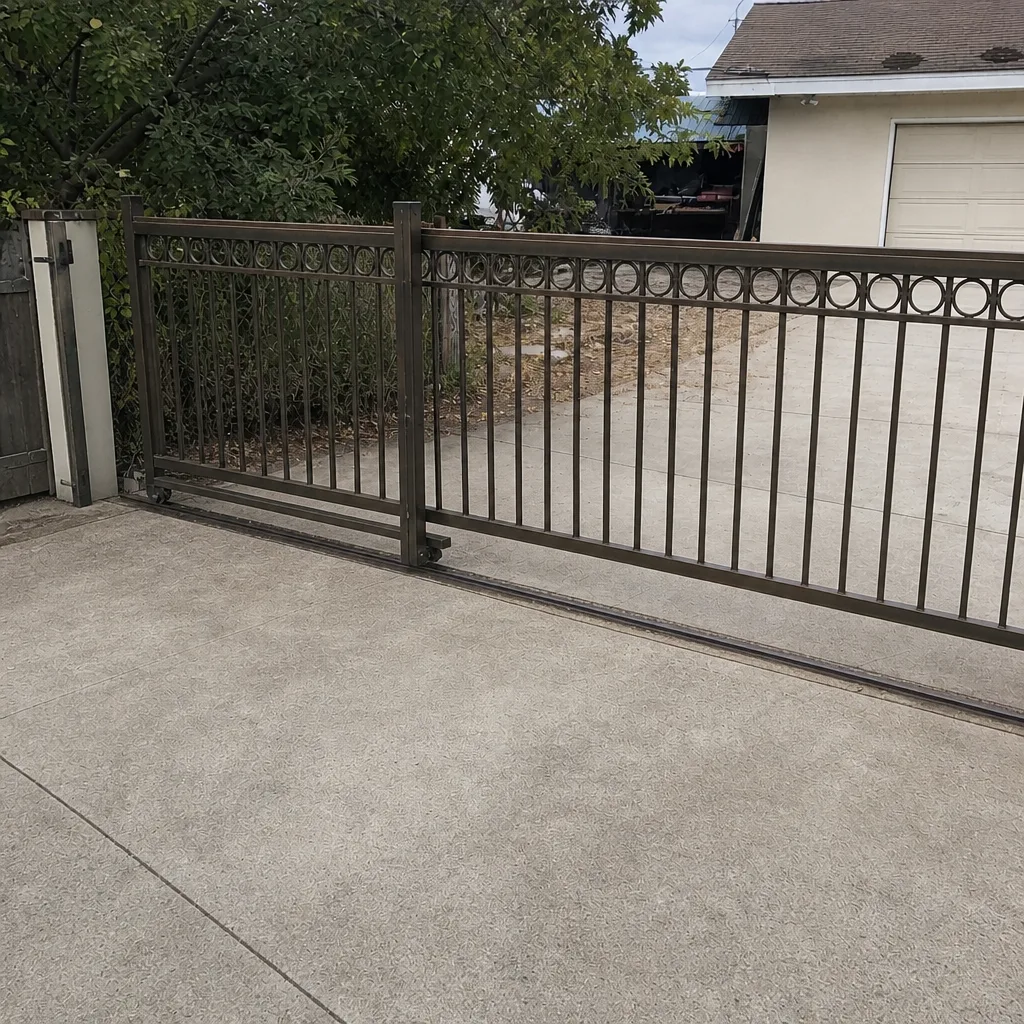
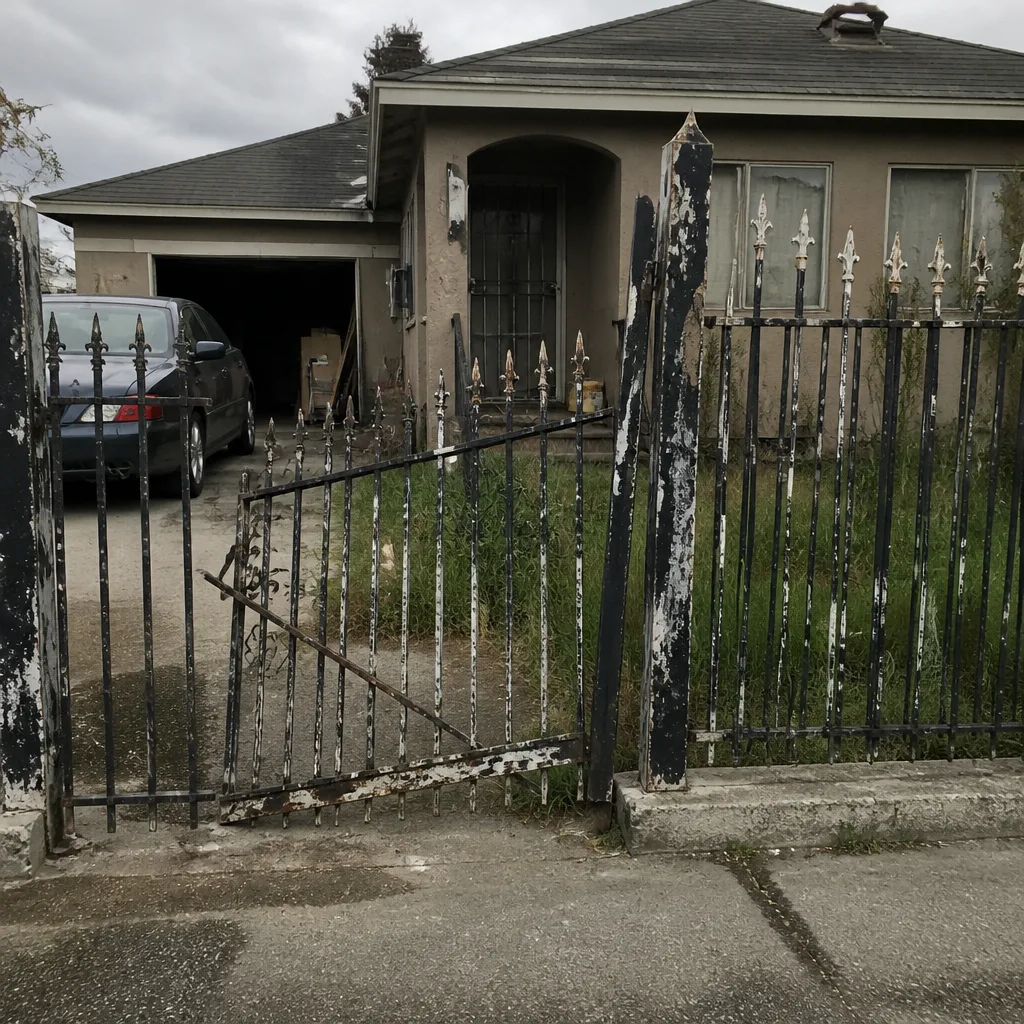
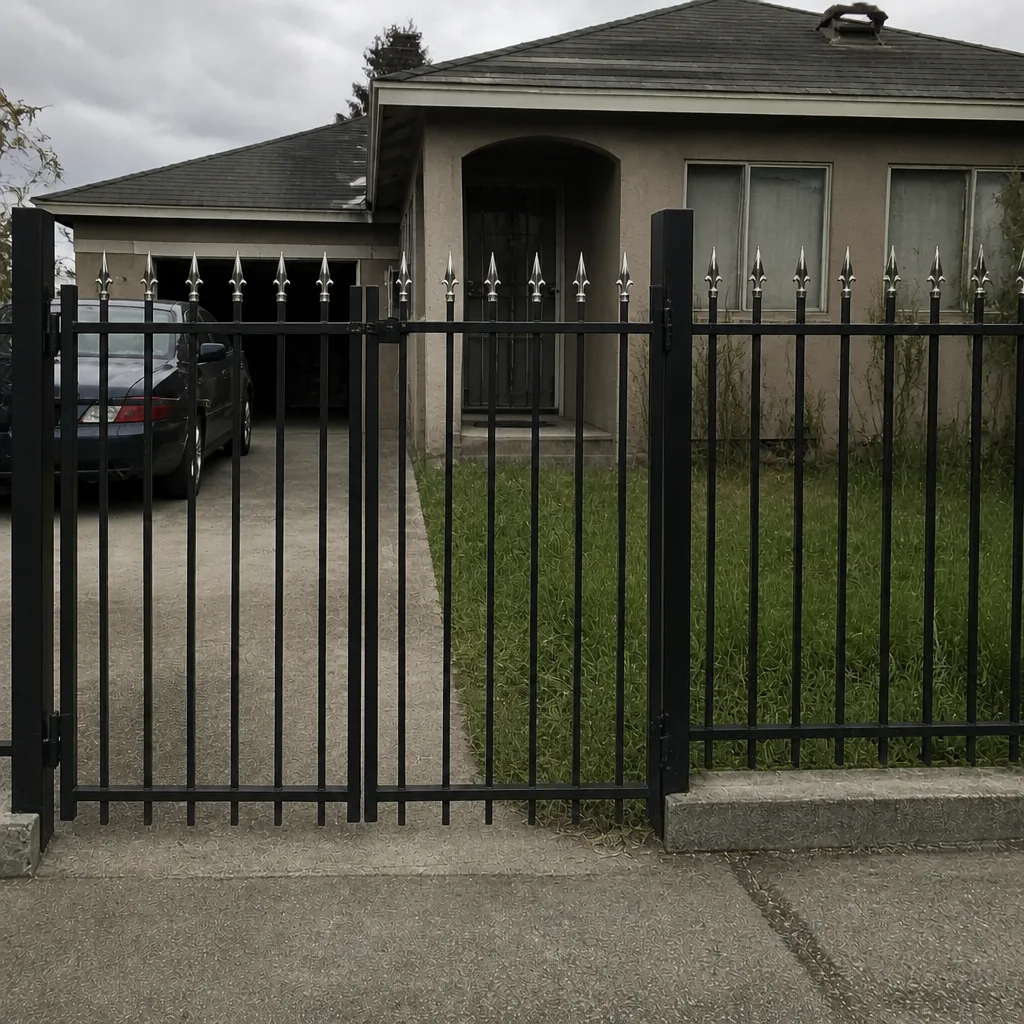
See the difference
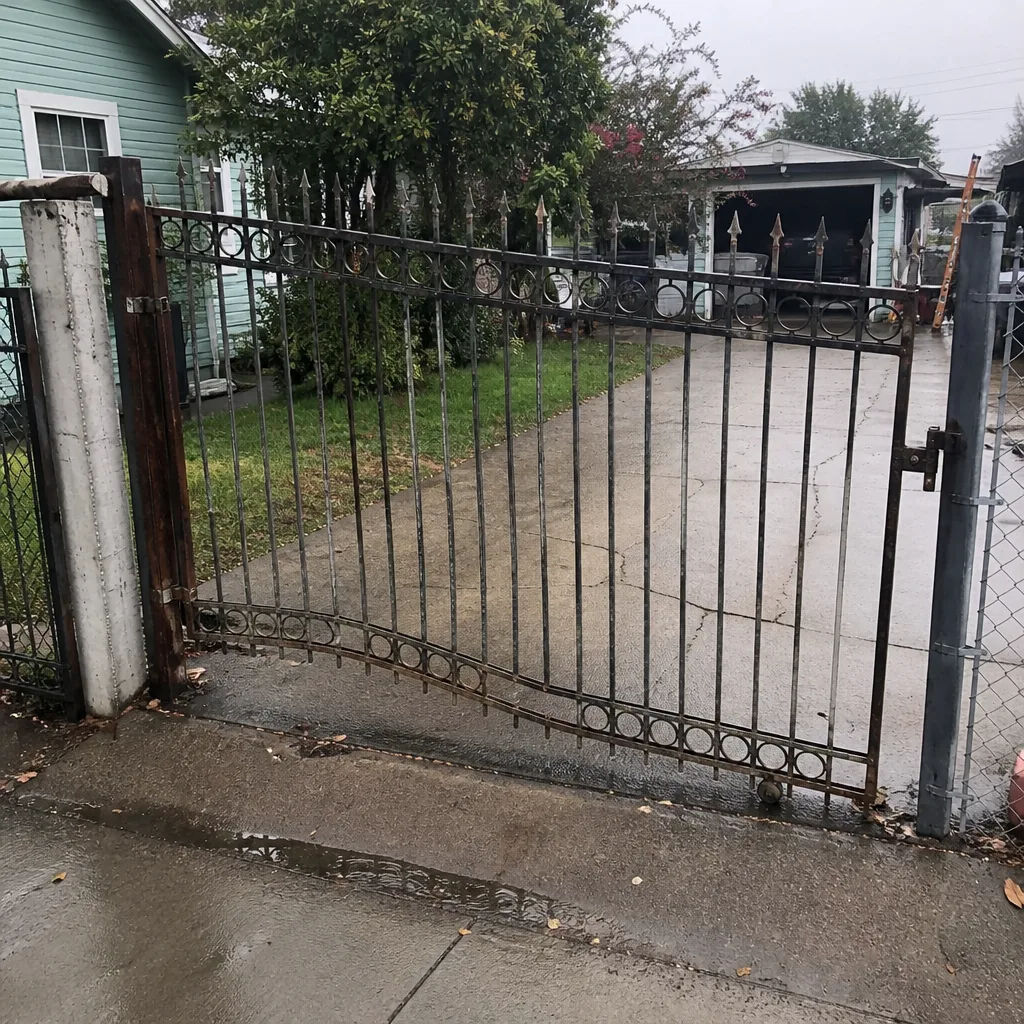 Before
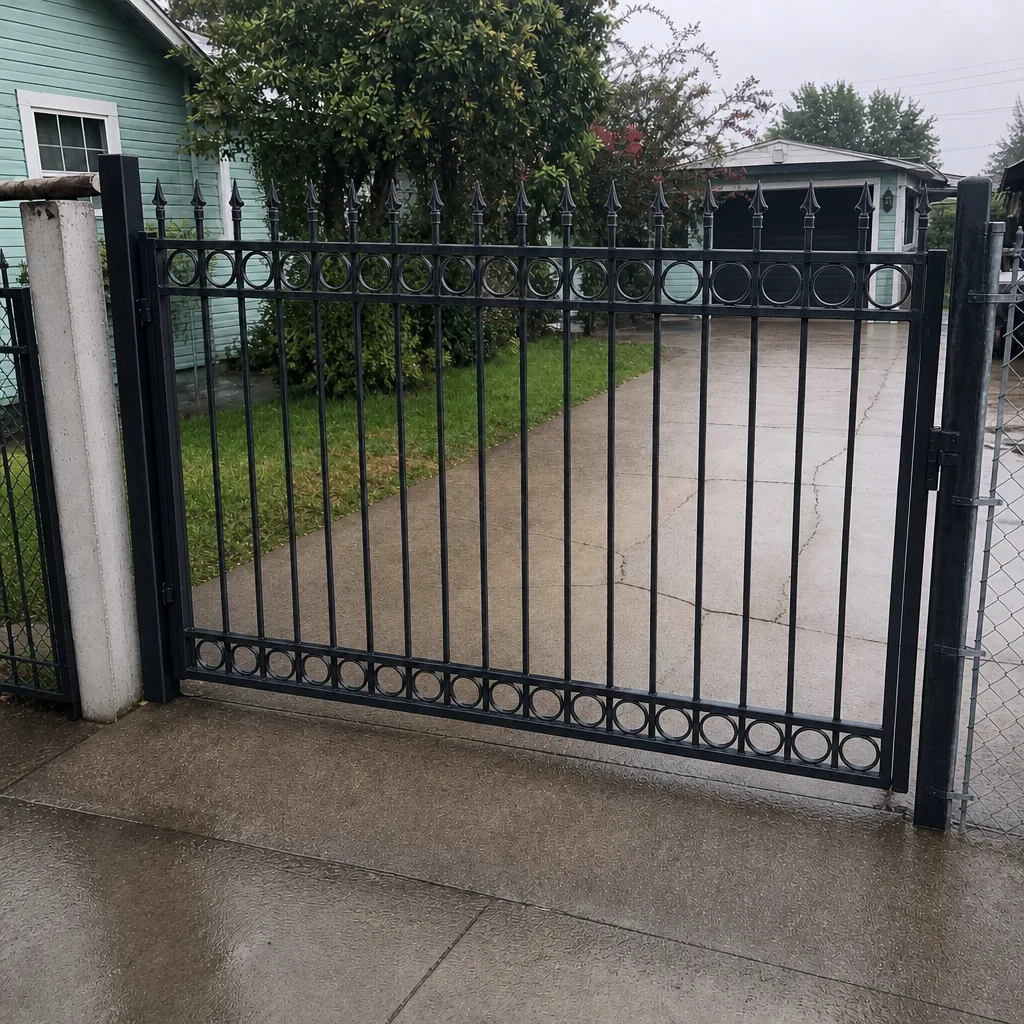 After
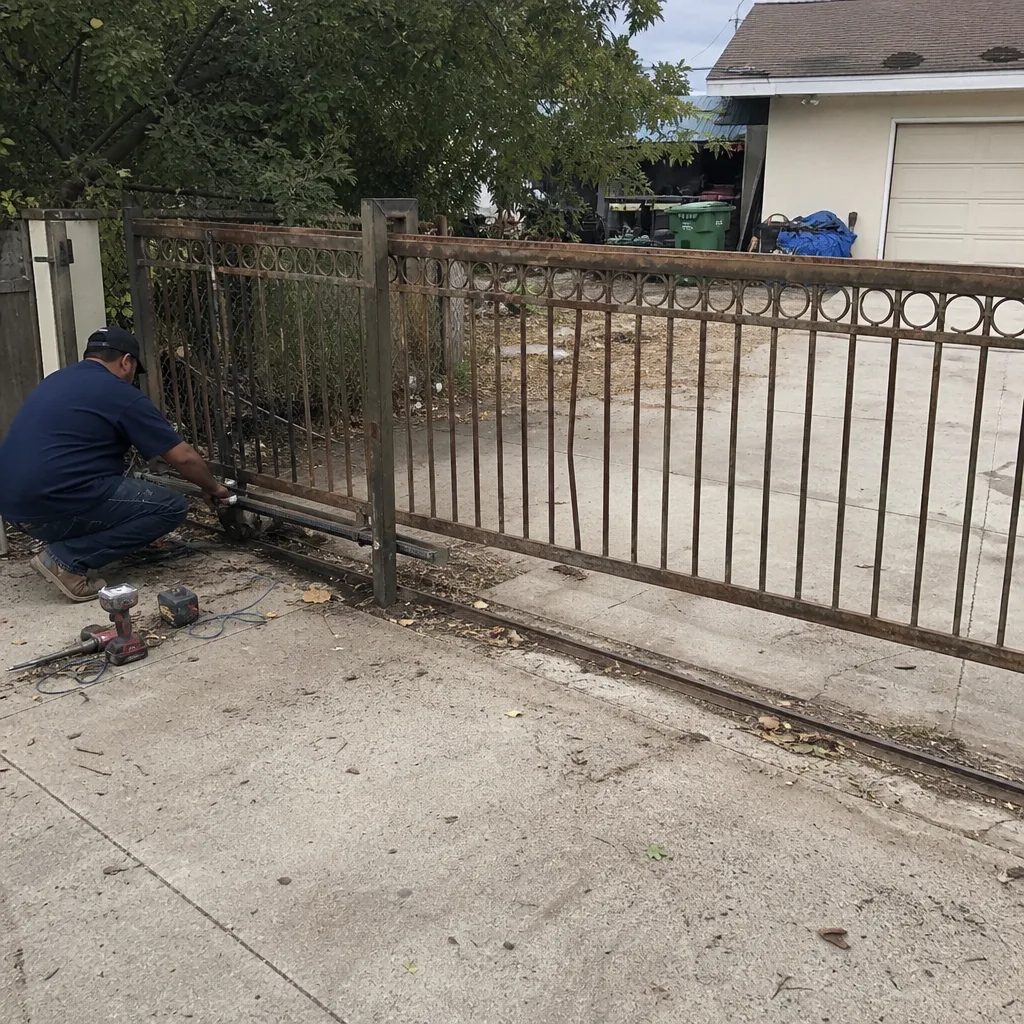 Before
 After
 Before
 After
When to Call a Professional
Call a professional for any gate fault where the cause is not obvious, and for every electric gate problem where the operator, control board, safety devices, or buried wiring is involved. These are systems with control logic and electrical components, and a mistaken repair can disable a safety device or permanently damage a board. Call immediately for a gate that has stalled mid-travel, a gate that reverses and reopens on its own, an operator that runs hot or makes a grinding sound, a gate that has come off its track, or a post that has visibly shifted. On a commercial site, call on any gate problem that affects access. Gate Repair Modesto offers free estimates in Modesto. Call (844) 834-3242. We answer 24/7. Fast dispatch from 7am to 7pm, Sunday through Friday.
Our technicians have up to 11 years of experience, and every job begins with an on-site diagnosis and a written estimate, so the price is agreed before any work starts.
Frequently Asked Questions
The cost depends on which of the five root-cause categories your problem falls into, which is why an on-site estimate matters more than a general range. A hinge or pivot repair is a smaller mechanical job, while a control board or operator replacement is a larger one. The written estimate sets the final price, and it’s free. Call (844) 834-3242 for an exact quote – estimates are free.
Many gate problems can be diagnosed and repaired the same day when the cause is straightforward and parts are on hand for your brand. Complex board or operator replacements may need a follow-up visit. Call (844) 834-3242, and we’ll tell you what’s realistic after a quick diagnosis.
In our experience, it’s almost always a pressure-limit fault, an obstruction-detection trip, or a logic board misread, not a bad sensor. Each cause has a different fix, so the safe path is a diagnostic, not a parts swap. Call (844) 834-3242 for a same-day diagnosis.
The backup battery on LiftMaster operators, including the RSW12V, tends to fail at around 18 months in our experience. The symptom is stumbling on power loss or during cold mornings, and it’s a battery replacement rather than a motor problem. Call (844) 834-3242 and we’ll check the battery first.
DoorKing boards are known for losing memory after a power surge, which shows up as a gate that forgets its limits or goes dead entirely. That’s a board-level issue, not an operator failure. Call (844) 834-3242 and we’ll test the board before recommending anything else.
If a single repair approaches half the cost of a new operator, and your system has already failed more than once, replacement is usually the better call. If the operator is otherwise sound and the problem is mechanical, repair it. Call (844) 834-3242 for an estimate on both options.
The Bottom Line
Gate repair comes down to getting the category right. Most failures trace to one of five root causes: the operator, the hinge, the control board, the wiring, or the structure. In Modesto, the structural category matters more than most guides admit because clay soil moves posts and throws off every system mounted to them. Brand-specific knowledge matters too, whether it’s a LiftMaster battery running out at 18 months or a DoorKing board losing memory after a surge. When you’re ready for a proper diagnosis, call (844) 834-3242. We answer 24/7. Fast dispatch from 7am to 7pm, Sunday through Friday. Estimates are free, and the written price is agreed before any work starts.
Written by the team at Gate Repair Modesto.