
Last updated November 15, 2026
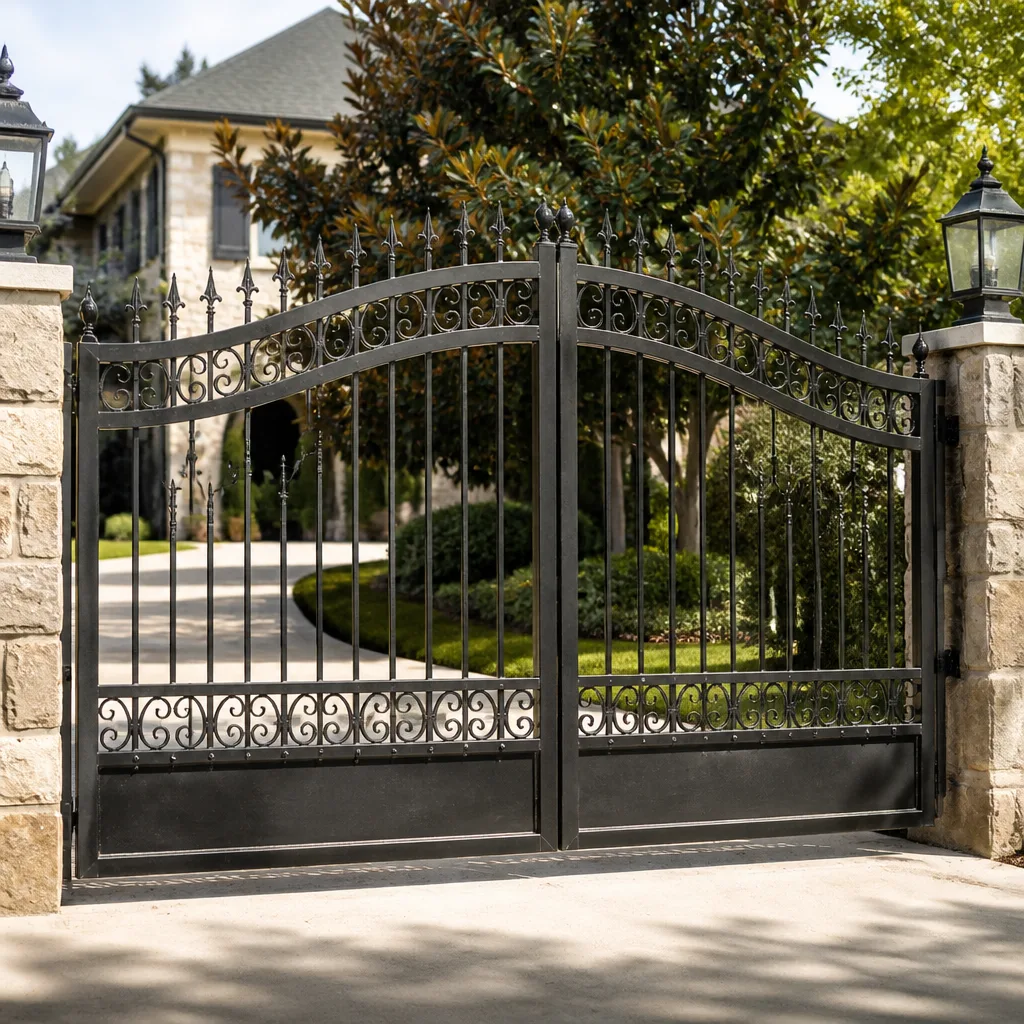 Wrought iron
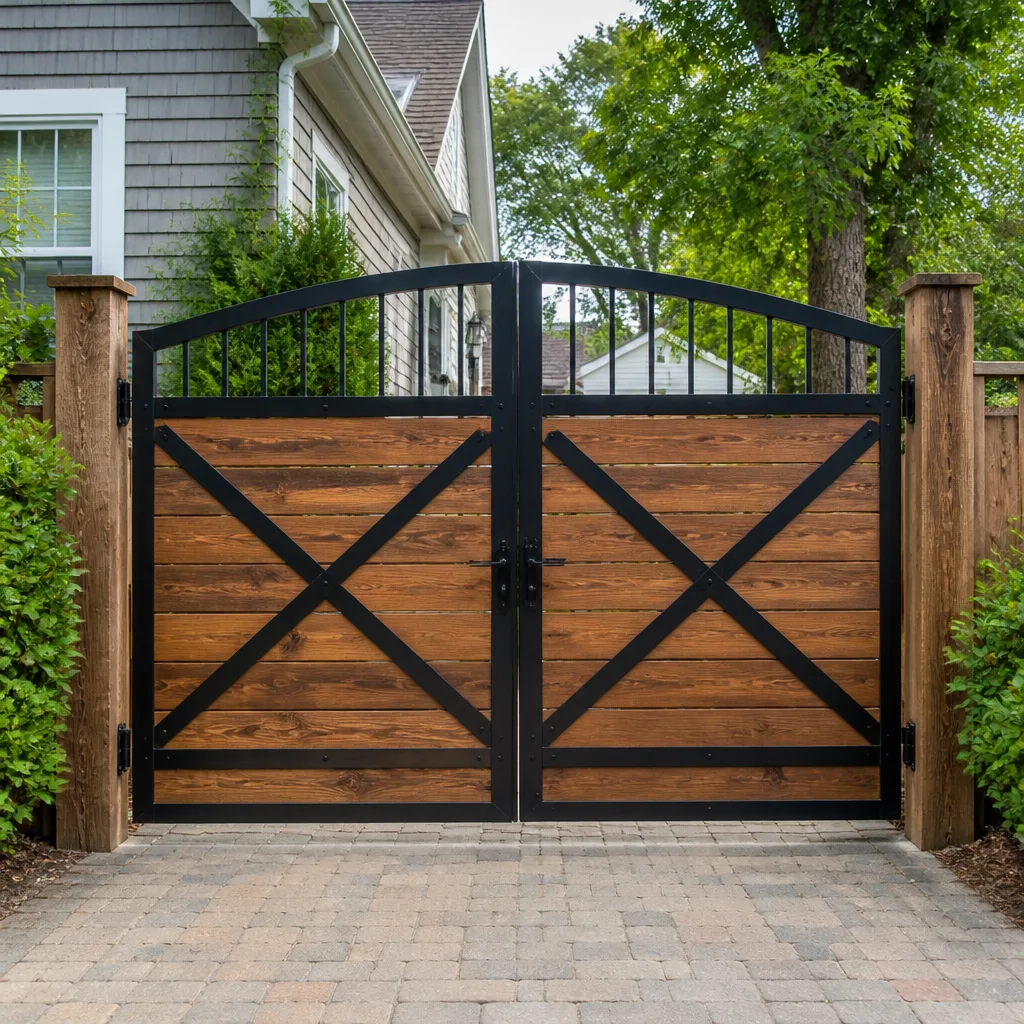 Wood & steel frame
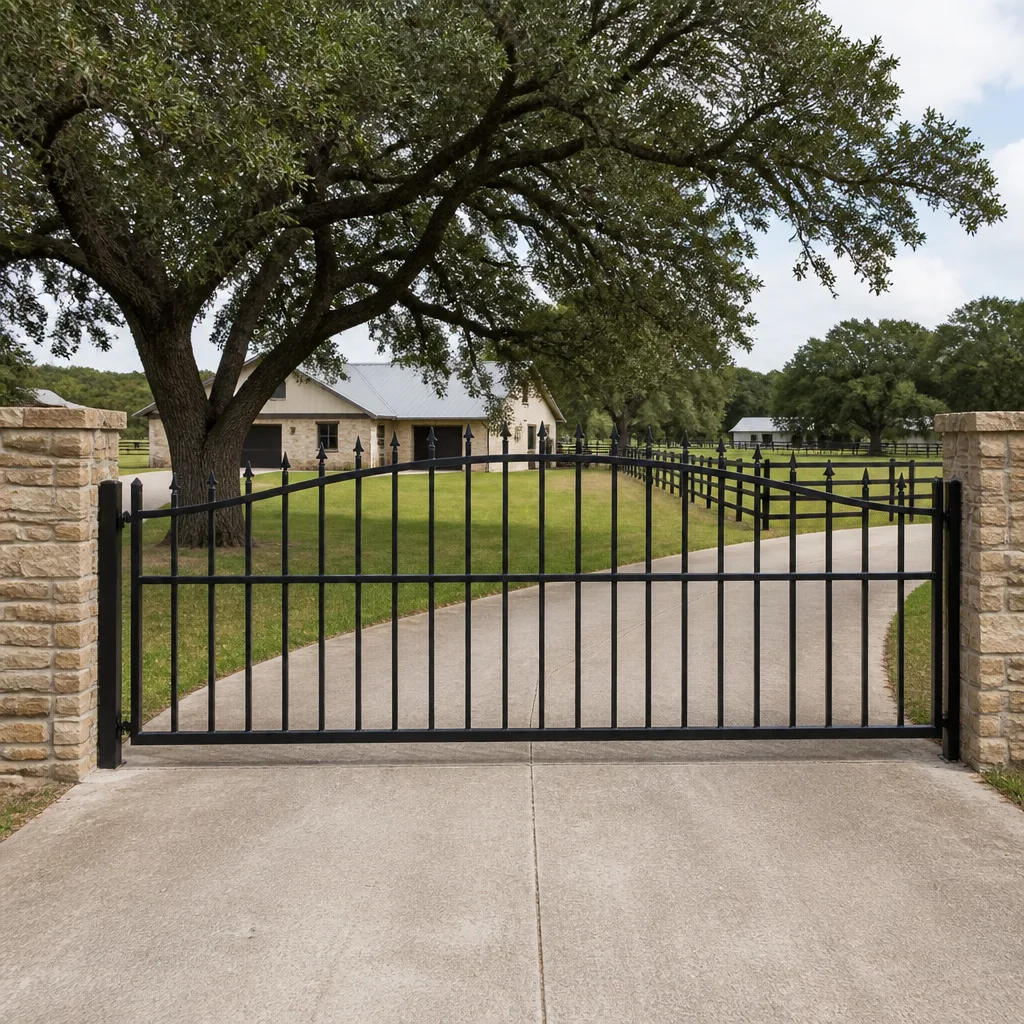 Farm & ranch
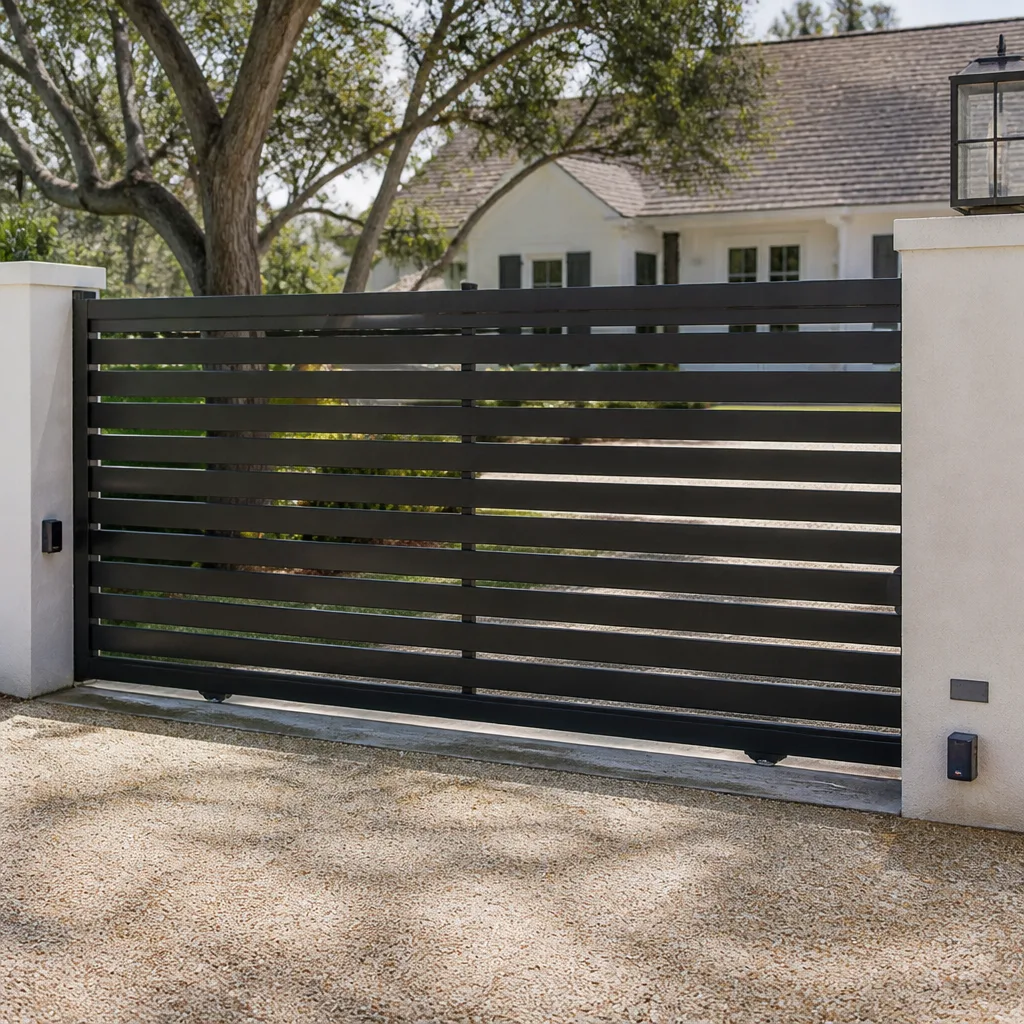 Sliding driveway gates
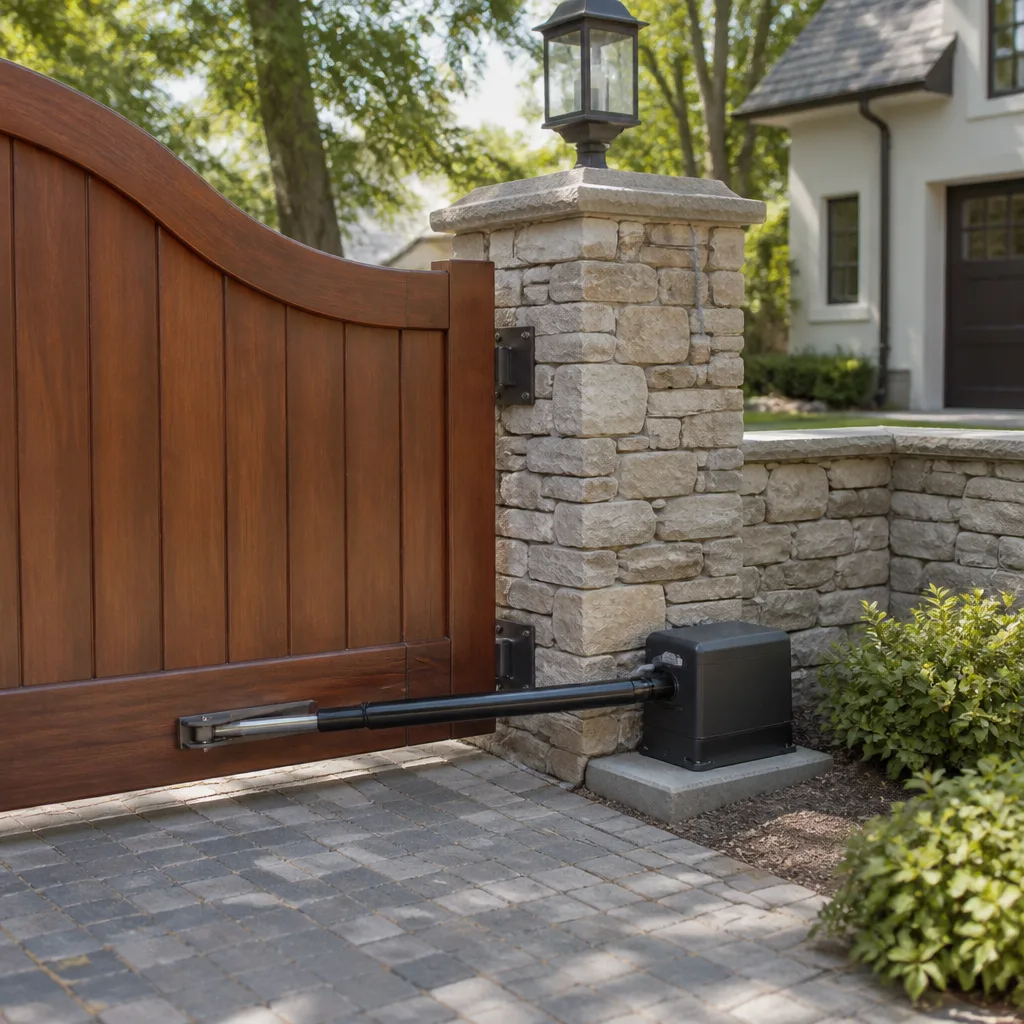 LiftMaster operators
Free on-site gate assessment - hinges, posts, and your LiftMaster or Nice gate operator checked before anything is quoted
The assessment is free and the quote is the invoice.
Get your free estimateGate Repair Emergency Preparedness Guide for Modesto Homes
When a gate fails closed at 7 PM on a Friday, most homeowners call a gate company first. The better first step is finding the manual release on the operator itself. It’s a 30-second fix that gets your car in or out while you wait for a technician, and in our experience a large share of panicked service calls end the moment someone shows the homeowner where that lever is. Gate emergencies in Modesto split into two categories: gates that won’t open and gates that won’t close. Each demands a different response. This guide walks you through both, brand by brand, so you’re not improvising in the driveway.
Quick Answer
If your gate won’t open, locate the manual release on the operator and disengage the gear so you can move the gate by hand. If your gate won’t close, stop cycling it and clear the safety sensor path before trying again. Both situations need a gate specialist, not a handyman, because the failure is usually in the operator, control board, limit switch, or safety loop, not the gate itself. Call (844) 834-3242 for Modesto gate repair. We answer 24/7, and fast dispatch runs from 7am to 7pm, Sunday through Friday.
Styles & brands we work with
- Wrought iron
- Wood & steel frame
- Farm & ranch
- Sliding driveway gates
- LiftMaster operators
Table of Contents
- The Two Failure Modes: Won’t Open vs. Won’t Close
- Manual Release Locations by Operator Brand
- How to Hold a Gate Safely While You Wait
- Power Outage Protocols and Backup Battery Testing
- What to Have Ready When You Call
- What Counts as a True Emergency in Modesto
- Pre-Season Checks That Prevent Most Emergencies
- When to Call a Professional
The Two Failure Modes: Won’t Open vs. Won’t Close
Every gate emergency in Modesto falls into one of two buckets, and the distinction matters more than homeowners realize. A gate that won’t open is an access problem. Your car is stuck, a delivery is blocked, or a tenant can’t get in. A gate that won’t close is a security problem. The property is standing open, and that’s a different kind of urgency.
The reason this matters is that the two failures usually trace to different components. A gate that won’t open often points to a dead operator, a tripped breaker, a failed control board, or a jammed gearbox. A gate that won’t close more often involves a safety sensor that’s misreading, a limit switch that’s out of position, or an obstruction in the travel path that the gate detects and reverses on.
Here’s the practical split:
- Won’t open: Check power at the operator first, then look at whether the manual release is engaged. If the operator has power and the release is set, the fault is internal and needs a technician.
- Won’t close: Check the safety sensors first. Look for anything blocking the photo-eye beam or sitting on a safety loop in the driveway. If the path is clear and it still reverses, the sensor or the board is the culprit.
In our experience across Modesto, both failures get misdiagnosed by generalists who treat a gate like a garage door. They apply the same fix regardless of brand or failure type, which is exactly why the same gate comes back a week later with a different problem. Gate-specific knowledge of your brand’s control logic changes the diagnosis entirely.
Manual Release Locations by Operator Brand
This is the single most useful thing you can learn about your own gate. Every automated operator has a manual release that disengages the motor so you can move the gate by hand. Finding it takes 30 seconds and saves hours of waiting with your car stuck on the wrong side.
The release is not in the same place on every brand. Here’s where to look for the operators we work on most in Modesto:
- LiftMaster: Look for a release handle or lever on the operator housing near the gate arm or chassis. Residential swing operators typically use a keyed release or a pull handle that disengages the drive. Engage it by turning the key and pulling the handle firmly until the gear releases.
- Viking: Viking swing and slide operators usually have a manual release lever on the motor housing. Some models use a keyed cylinder that releases a lock before the lever moves. Push or pull the lever in the direction marked on the housing to disengage the drive.
- FAAC: FAAC operators often use a release key inserted into a lock cylinder on the housing, then a lever or knob turned to disengage. Commercial FAAC slide operators may have a separate release on the gear motor, so check the operator body, not just the arm.
- Linear: Linear slide and swing operators typically have a release lever or pull cord depending on the model. On slide operators, the release sits on top of the motor housing. On swing arms, look where the arm attaches to the operator.
On Ghost Controls and BFT operators the release location varies by model too, and it’s worth finding yours now rather than during a failure. Ghost Controls residential DIY-friendly operators usually document the release in the manual, and BFT commercial units often use a keyed release on the gear motor.
Two cautions before you touch anything. First, never force the release or the gate arm. If it won’t move freely, something is binding and forcing it can damage the gearbox or void the warranty. Second, always release the gate to a stable position and chock it or tie it before walking away. A released gate on a slope will move. For a full walkthrough of what repairs involve once a technician arrives, see our main page on Gate Repair Modesto.
How to Hold a Gate Safely While You Wait
Once you’ve released the gate manually, you have a new problem: a free-swinging gate that won’t stay put. How you secure it while you wait for repair determines whether you’re dealing with a minor inconvenience or a crush hazard.
A gate panel is heavy. A slide gate that comes off its track or a swing gate that swings freely can injure a person, damage a vehicle, or hit a pet. The safe methods are simple and the unsafe ones are tempting, so get this right.
Safe ways to hold a gate:
- Chock the gate at the ground with a solid wedge or block rated for the weight, positioned so the gate rests against it rather than balancing on it.
- Tie the gate to a fixed post with a strap or rope rated well above the gate’s weight, with the gate resting in a stable position, not suspended.
- For a swing gate, open it fully to the stop so it rests against its physical limit, then chock it there.
- Use the operator’s own mechanical stop or a gate lock if the model has one designed for manual holding.
Unsafe methods to avoid:
- Never prop a gate with a cinder block balanced on edge or a loose brick. It slides or tips.
- Never tie a gate with rope that’s too light for the panel weight, or tie it so the gate is under tension that could snap the rope.
- Never leave a released slide gate on a slope without a chock. It will roll.
- Never put your body weight against a gate to hold it while you work on something else. If it moves, you go with it.
If the gate is on a slope or the panel is heavy enough that you’re not confident chocking it safely, treat it as an emergency and call for a technician rather than improvising. The entrapment and crush risk on a heavy swing or slide gate is real, and it’s not worth a shortcut. Our technicians have up to 11 years of experience with exactly this kind of situation, and they’ll tell you over the phone what’s safe to do in the meantime.
Power Outage Protocols and Backup Battery Testing
Most automated gates run on household power, and when the power goes out, the gate stops where it is. Whether that’s a 30-second inconvenience or a locked-in car depends entirely on whether your operator has a working backup battery, and whether you’ve tested it recently.
Many residential and commercial operators support battery backup, but the battery is only useful if it still holds a charge. Lead-acid batteries in gate operators degrade over time, and an untested battery is often a dead battery. The failure shows up at the worst possible moment, during an outage, when you need the gate to cycle on backup power.
Here’s how to test your backup before an outage hits:
- Locate the backup battery in or near the operator control box. On most brands it’s a sealed lead-acid pack connected to the control board.
- With the gate closed and the area clear, trip the breaker that feeds the operator (or use the operator’s own test mode if the manual documents one).
- Command the gate to open. If it opens on backup power, the battery is holding a charge. If it doesn’t move or moves weakly, the battery is failing.
- Restore power and note how the gate behaves. If it cycles normally on household power but not on backup, schedule a battery replacement before the next outage.
If backup power fails and you’re mid-outage, fall back to the manual release covered above. Release the operator, move the gate by hand, and secure it. Don’t repeatedly command an operator that has no power and no working battery; it won’t help and on some boards it can throw a fault that needs clearing later.
Modesto’s power reliability is generally steady, but summer heat and the occasional storm can still knock out service. The homeowners who sail through outages are the ones who tested the battery in spring, not the ones who discovered it was dead at 9 PM. If your battery is old or you’re not sure how to test it, our electric gate repair technicians can check the backup system along with the rest of the operator.
What to Have Ready When You Call
The information you have ready when you call for emergency gate repair determines two things: how fast we can diagnose the problem, and whether the technician can bring the right part on the first visit. A vague call (“my gate is broken”) means a diagnostic trip and a return visit. A specific call often means a repair in one trip.
Have these details ready before you dial:
- The operator brand and model. LiftMaster, FAAC, BFT, Linear, Viking, Ghost Controls, DoorKing, Elite, or Mighty Mule, plus the model number if you can read it off the housing or the control box label.
- The failure mode, precisely. Does it not open, not close, open partway and stop, reverse mid-travel, or make a noise without moving? Each points to a different component.
- What you’ve already tried. Did you check the breaker? Release the gate manually? Clear the sensor path? This tells the technician what’s been ruled out.
- Gate type. Swing or slide, single or double, residential or commercial-duty. This affects which parts the technician brings.
- Power status. Is the operator getting power? Any recent outage, storm, or electrical work at the property?
- Age and history of the operator. If you know when it was installed or what’s been replaced, say so.
- Access details. Gate width, driveway slope, whether a vehicle is currently blocked, and whether the gate is secure or standing open.
The brand detail is the one most people skip and the one that saves the most time. A technician who knows they’re walking up to a Linear slide operator versus a FAAC commercial swing operator arrives with the right control board, limit switch, or sensor in hand. Brand-specific parts knowledge is why a gate specialist cuts return visits that generalists rack up. When you call (844) 834-3242, have the model number ready and we’ll tell you what to expect.
What Counts as a True Emergency in Modesto
Not every gate failure is a true emergency, and knowing the difference saves you stress and gets the right response. The clearest test: is the failure an access lockout or a security breach that can’t wait until the next dispatch window?
True emergencies:
- A commercial or multi-family gate stuck open, leaving the property unsecured.
- A vehicle trapped inside or outside a gate that can’t be released manually.
- A gate that has come off its track or is hanging in a way that could fall or injure someone.
- An operator that’s smoking, tripping breakers, or showing burn marks, which is a fire risk and needs to be shut off at the breaker.
- A gate holding open a building or lot that depends on it for security.
Not emergencies, next-window calls:
- A gate that won’t open but has a working manual release you can operate.
- A gate that reverses on close but the sensor path can be cleared and the gate secured manually.
- An operator making noise but still functioning.
- A battery that failed during an outage but household power is back.
When you call, describe the failure mode precisely and say whether the gate is currently open, closed, or secured. That single detail tells us whether you need a technician dispatched now or booked into the next opening. We answer 24/7, and fast dispatch runs from 7am to 7pm, Sunday through Friday. A call outside dispatch hours gets booked into the next opening. On our schedule, a gate that fails on Saturday is handled the following Sunday.
One more thing: never tell a technician to skip a safety check to get the gate working “just for now.” Disabling a safety edge or sensor because it’s inconvenient creates a crush hazard, and it’s the cause of more serious injuries than the original fault. For more on how repairs are handled once we’re on site, see our gate repair page.
Pre-Season Checks That Prevent Most Emergencies
Most gate emergencies we see in Modesto share a pattern: a small problem that went unaddressed until it failed completely. The operator that was a little sluggish in March is the gate that’s dead in July. A short seasonal check catches the majority of failures before they strand a car or leave a property open.
Run through this list a few times a year, and whenever the season turns:
- Test the manual release. Confirm it engages and the gate moves by hand. If it’s stuck, that’s a problem that should be fixed before you need it.
- Check the safety sensors. Clear the photo-eye lenses and the loop area, and confirm the gate reverses when the sensor path is blocked.
- Test backup battery function. Kill power briefly and cycle the gate on backup, as described above.
- Look at the tracks and rollers. Debris, dirt, and worn rollers cause the drag that eventually trips limits or burns out a motor.
- Check the control board for fault codes. Many operators display a diagnostic code. A solid green or slowly blinking indicator is usually normal; a fast blink or error code means something’s pending.
- Clear the gate path. Trim vegetation away from the travel path and check that nothing has settled onto the safety loop in the driveway.
Modesto’s dry summers mean dust and debris collect in tracks and around sensors at certain times of year. A quick cleanup after a windy stretch or a storm prevents a surprising number of sensor faults. If your operator is a brand we know well, LiftMaster, FAAC, BFT, Linear, Viking, Ghost Controls, DoorKing, Elite, or Mighty Mule, we can tell you exactly what to check for your model over the phone.
Common Mistakes to Avoid
- Calling a generalist first. A handyman or fencing contractor will often apply a generic fix to a brand-specific problem, which is why the same gate fails again. Call a gate specialist who knows your operator’s control logic.
- Skipping the manual release. Homeowners often wait hours for a technician when a 30-second release gets their car in or out. Learn where yours is before you need it.
- Forcing a released gate. If the release won’t move freely, something is binding. Forcing it damages the gearbox and can void the warranty on a LiftMaster or Viking operator.
- Disabling a safety sensor to make a gate close. It’s tempting when the gate reverses on close, but disengaging a safety edge or sensor creates a genuine crush hazard. Never do it, even briefly.
- Propping a heavy gate with something unstable. A cinder block on edge or a loose brick slides or tips under a heavy gate panel. Chock or tie it properly, or call for help.
- Assuming the battery is fine. An untested backup battery is usually a dead one. The failure surfaces during an outage, exactly when you need it.
- Calling without the model number. The operator brand and model determine which part the technician brings. Without it, expect a diagnostic trip and a return visit.
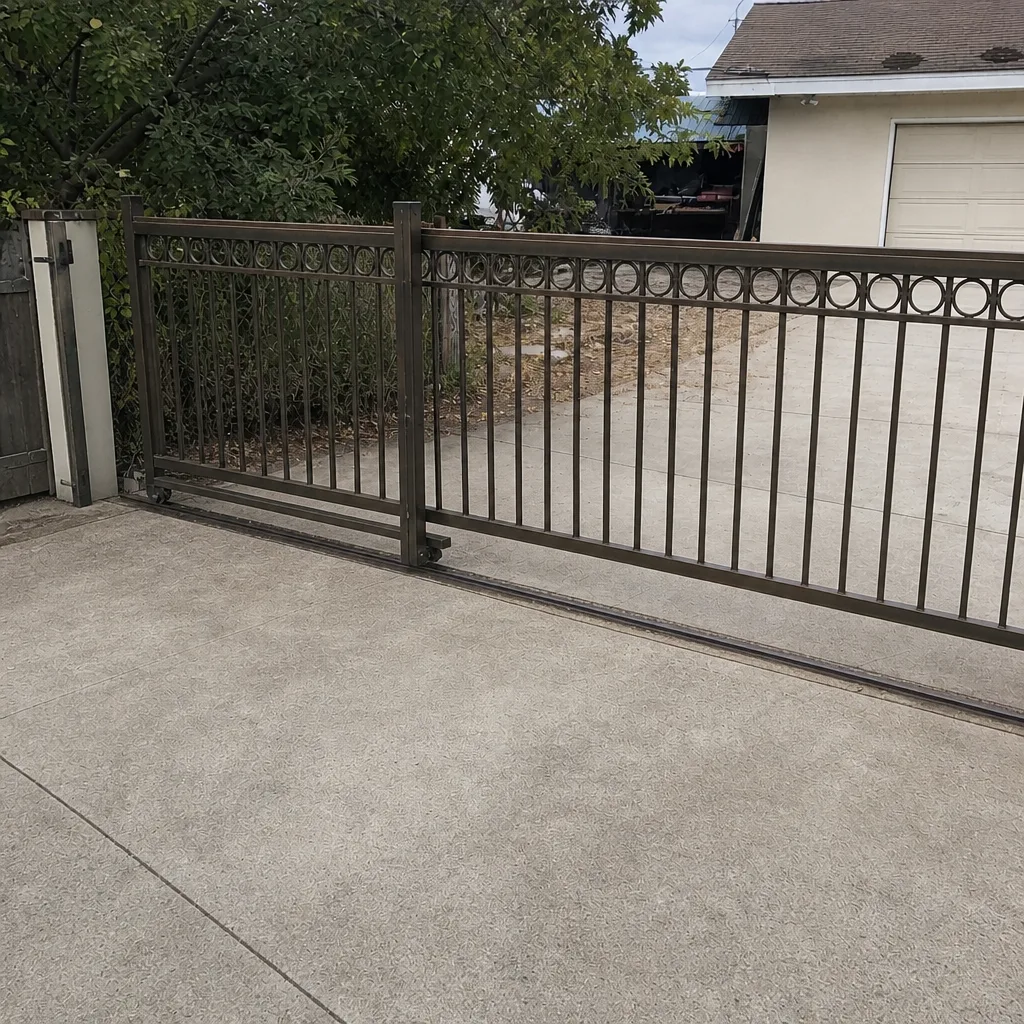
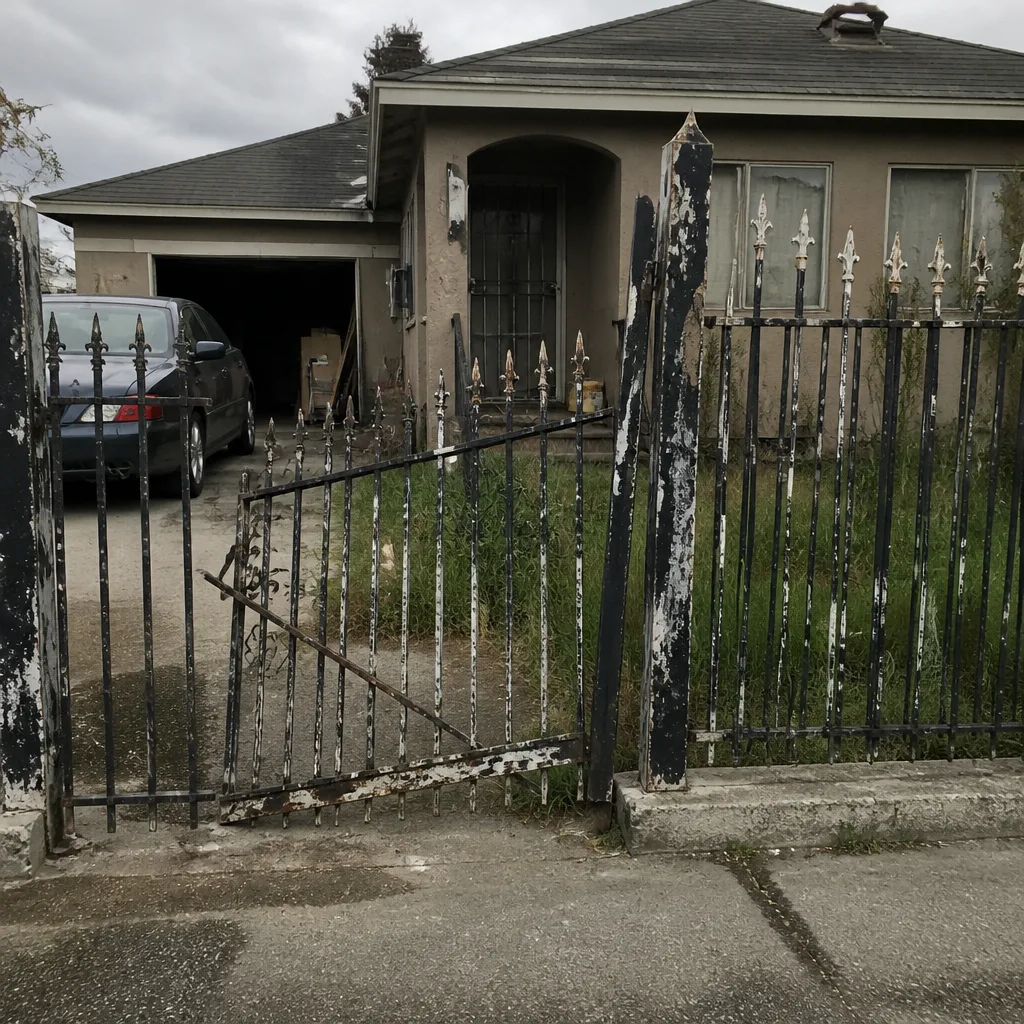
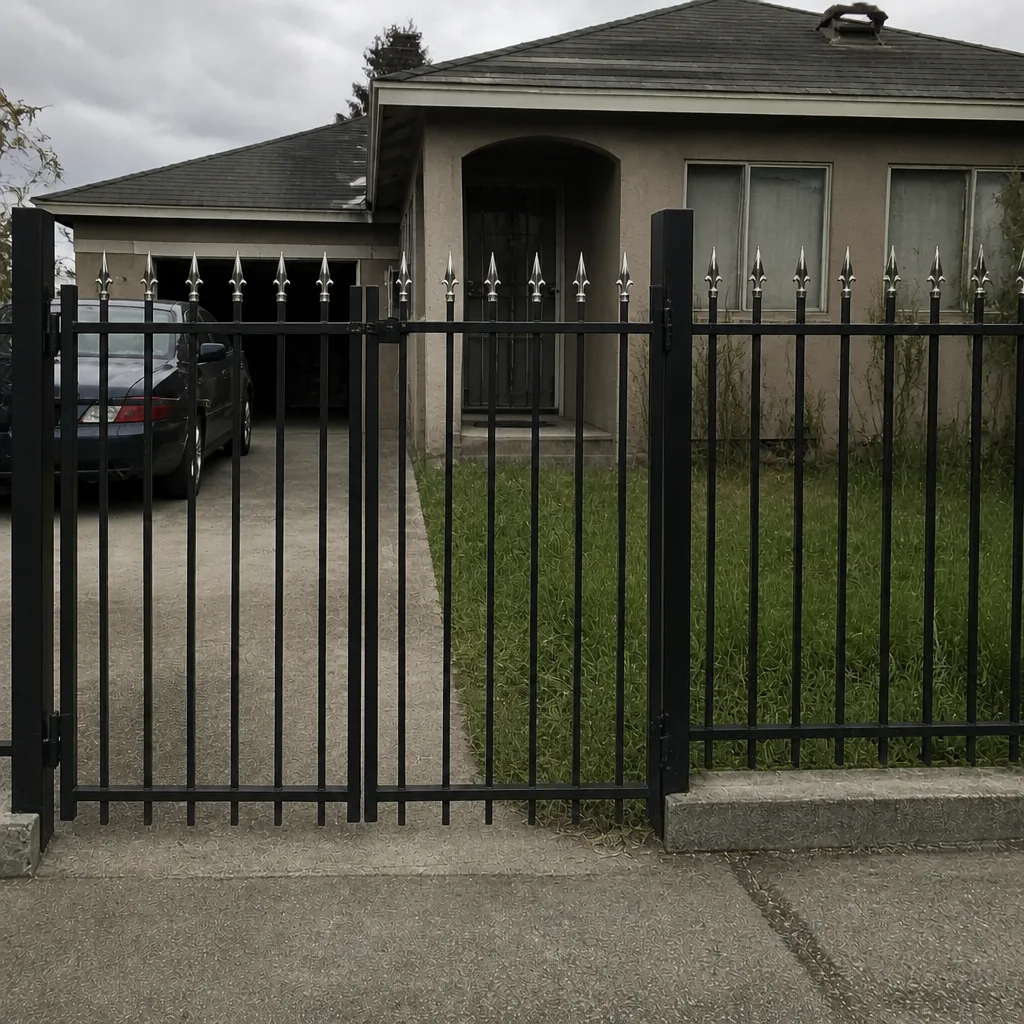
See the difference
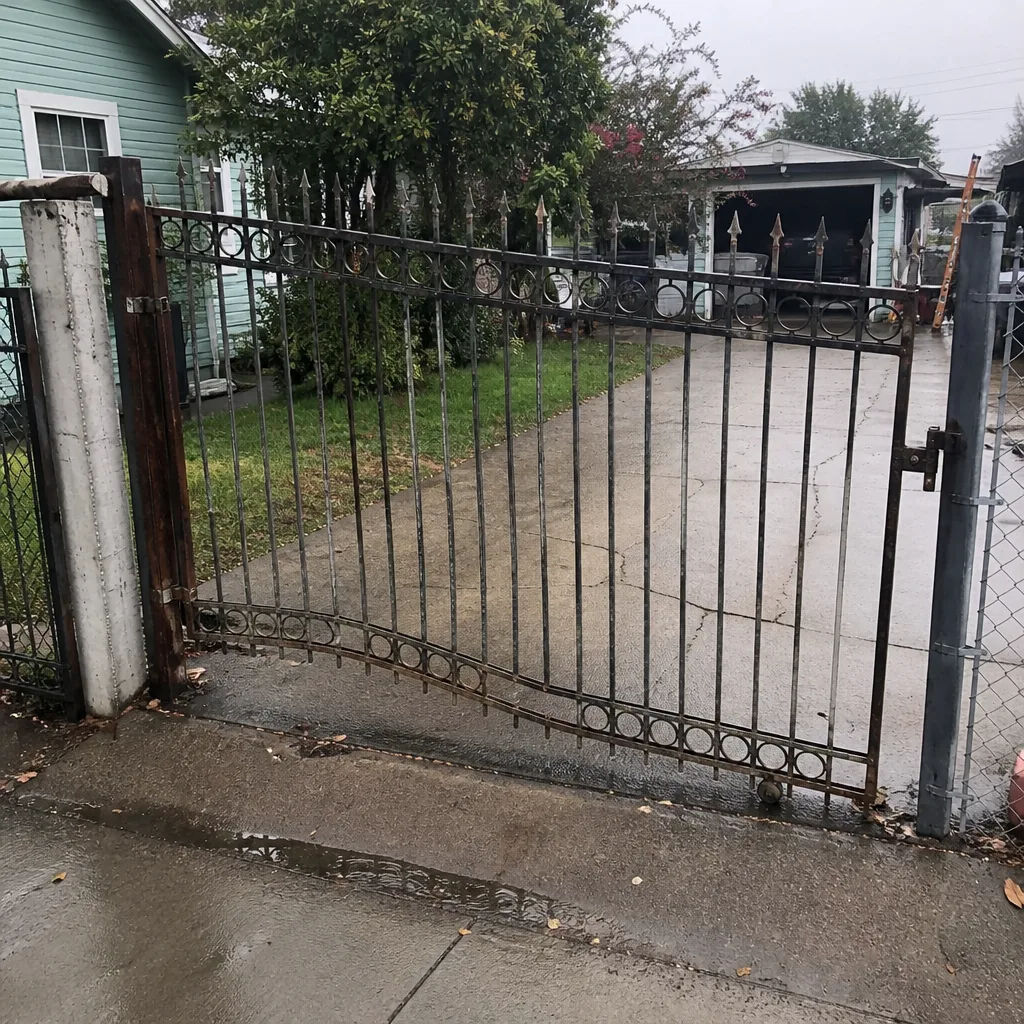 Before
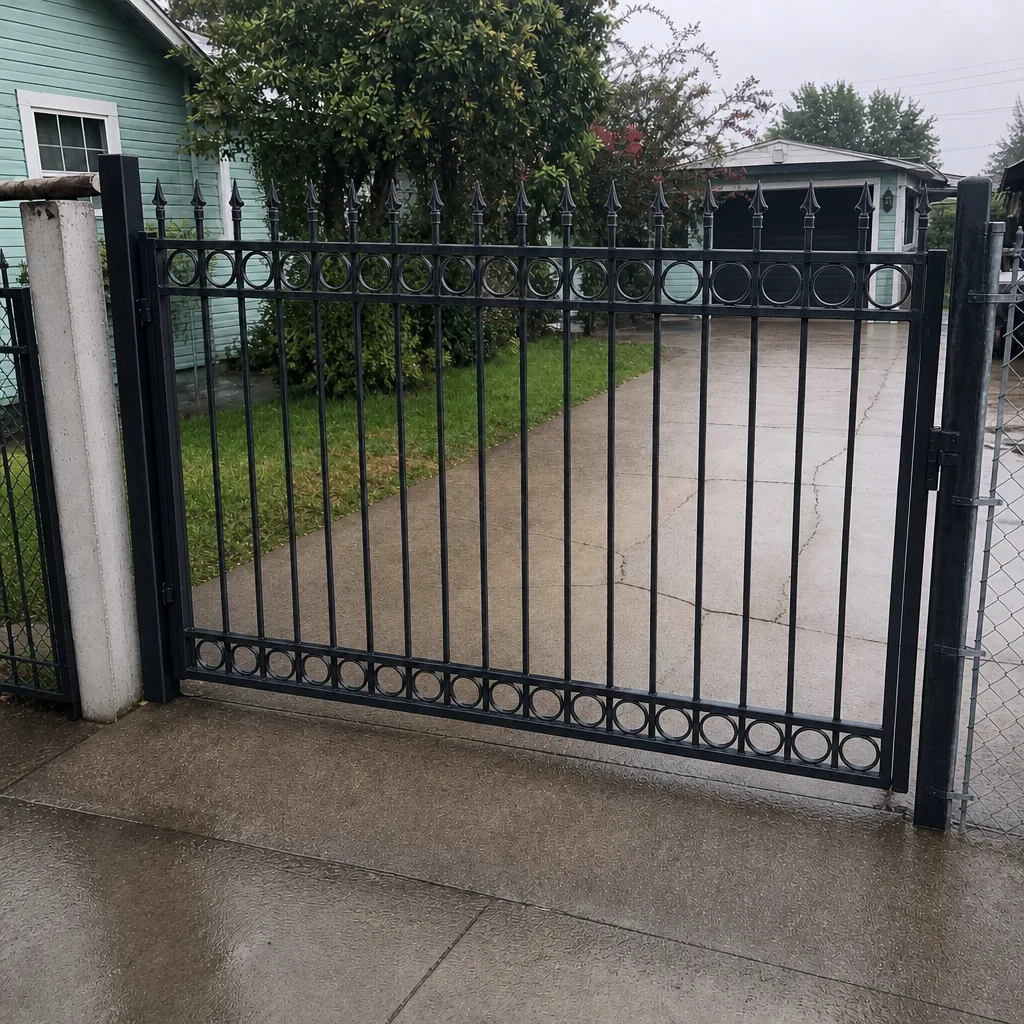 After
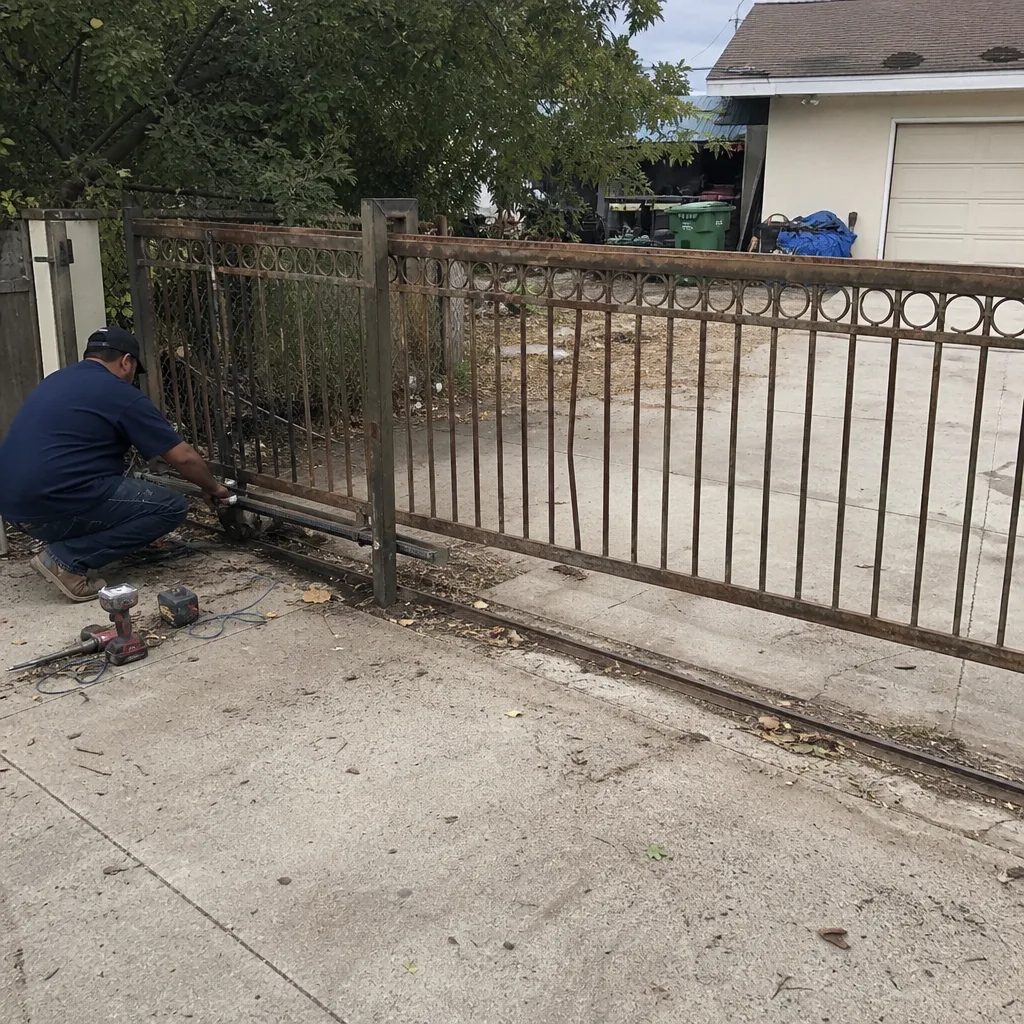 Before
 After
 Before
 After
When to Call a Professional
Call a gate professional when the failure is internal to the operator, the control board, the limit switches, or the safety loop, and no amount of manual release or sensor clearing gets you back to normal. Call immediately if the gate is stuck open on a commercial or multi-family property, if a vehicle is trapped and the release won’t operate, if the gate is hanging or off its track, or if the operator shows burn marks or keeps tripping the breaker. Those are safety and security situations, not inconveniences. For a gate that won’t open but has a working release, or one that reverses on close with a clear path, book the next available slot. Gate Repair Modesto offers free estimates in Modesto. Call (844) 834-3242. We answer 24/7, and fast dispatch runs from 7am to 7pm, Sunday through Friday.
Frequently Asked Questions
It varies by brand. LiftMaster, Viking, FAAC, Linear, BFT, and Ghost Controls all place the release in different spots on the housing or gear motor, so check the operator body and the owner’s manual for your model. If you can’t find it, read the model number to us over the phone and we’ll walk you to it. Call (844) 834-3242 for an exact answer on your operator.
Often, yes. A gate that won’t close is usually a safety sensor, limit switch, or obstruction issue, and those are frequently resolved on the first visit. Have the operator brand and model ready when you call so the technician arrives with the right part. Call (844) 834-3242 for an exact quote, estimates are free.
Secure the property another way if you can, and call for immediate dispatch. A commercial or multi-family gate stuck open is a true emergency, not a next-day call. Describe whether the gate is open, closed, or secured when you call (844) 834-3242. We answer 24/7, and fast dispatch runs from 7am to 7pm, Sunday through Friday.
Many residential and commercial operators support a backup battery, but it only works if it’s holding a charge. Test it by killing power briefly and cycling the gate, as covered above. If it doesn’t move on backup, the battery needs replacement. Call (844) 834-3242 to have your backup system checked.
No. A gate panel is heavy and a free-swinging gate is a crush hazard. Chock it against a solid wedge or tie it to a fixed post rated for the weight, and never prop it with a loose block. If you’re not confident securing it, call (844) 834-3242 and we’ll tell you what’s safe in the meantime.
We work on nine specific brands: LiftMaster, FAAC, BFT, Linear, Viking, Ghost Controls, DoorKing, Elite, and Mighty Mule, spanning residential swing and slide gates up to commercial access systems. Knowing your brand’s control logic is what makes an accurate diagnosis possible. Call (844) 834-3242 for your brand and model, estimates are free.
The Bottom Line
Gate emergencies in Modesto come down to two failures: a gate that won’t open and a gate that won’t close. Each has a different first step. For a gate that won’t open, find the manual release and get moving. For a gate that won’t close, clear the sensor path and secure the gate. Know your operator brand, test the backup battery before you need it, and call a gate specialist when the fault is internal. A 30-second release or a properly chocked gate handles most emergencies while you wait. Call (844) 834-3242 for a free estimate. We answer 24/7, and fast dispatch runs from 7am to 7pm, Sunday through Friday.
Written by the team at Gate Repair Modesto.