
Last updated November 15, 2026
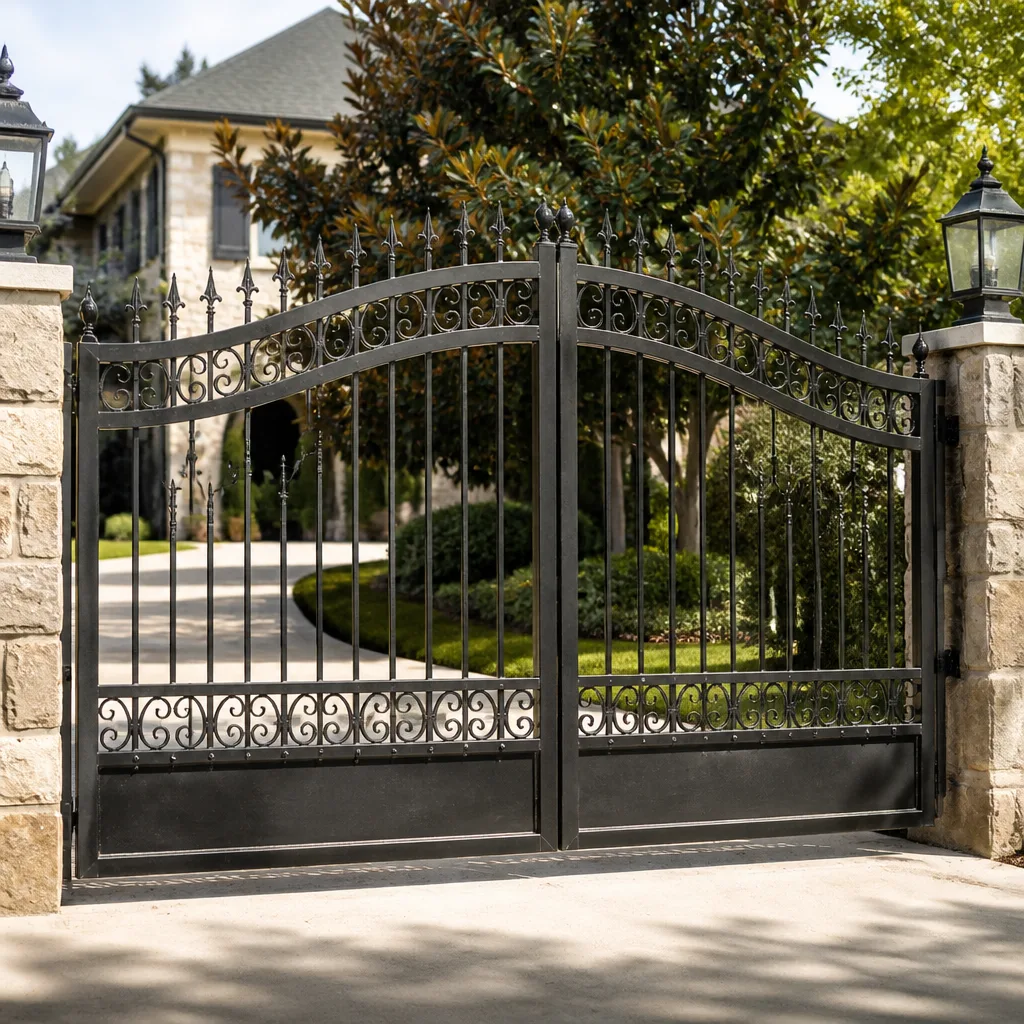 Wrought iron
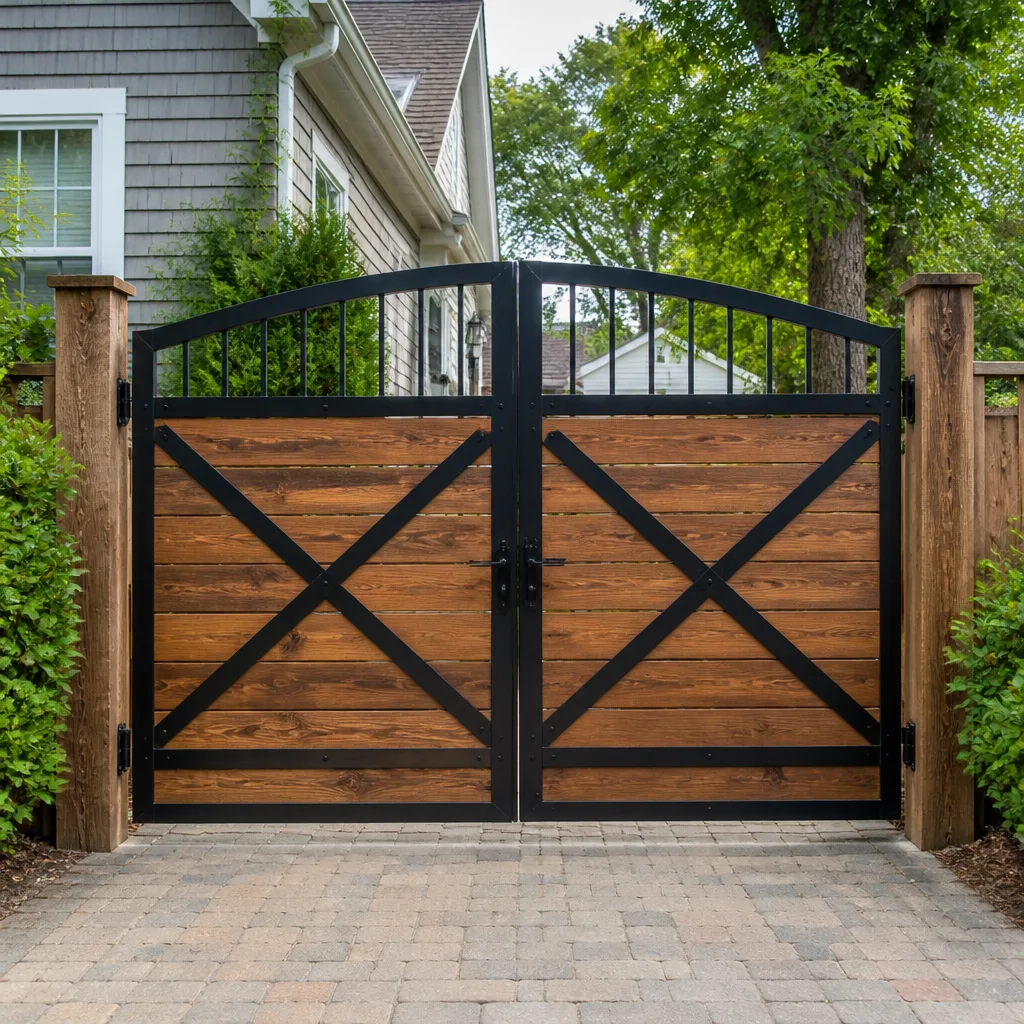 Wood & steel frame
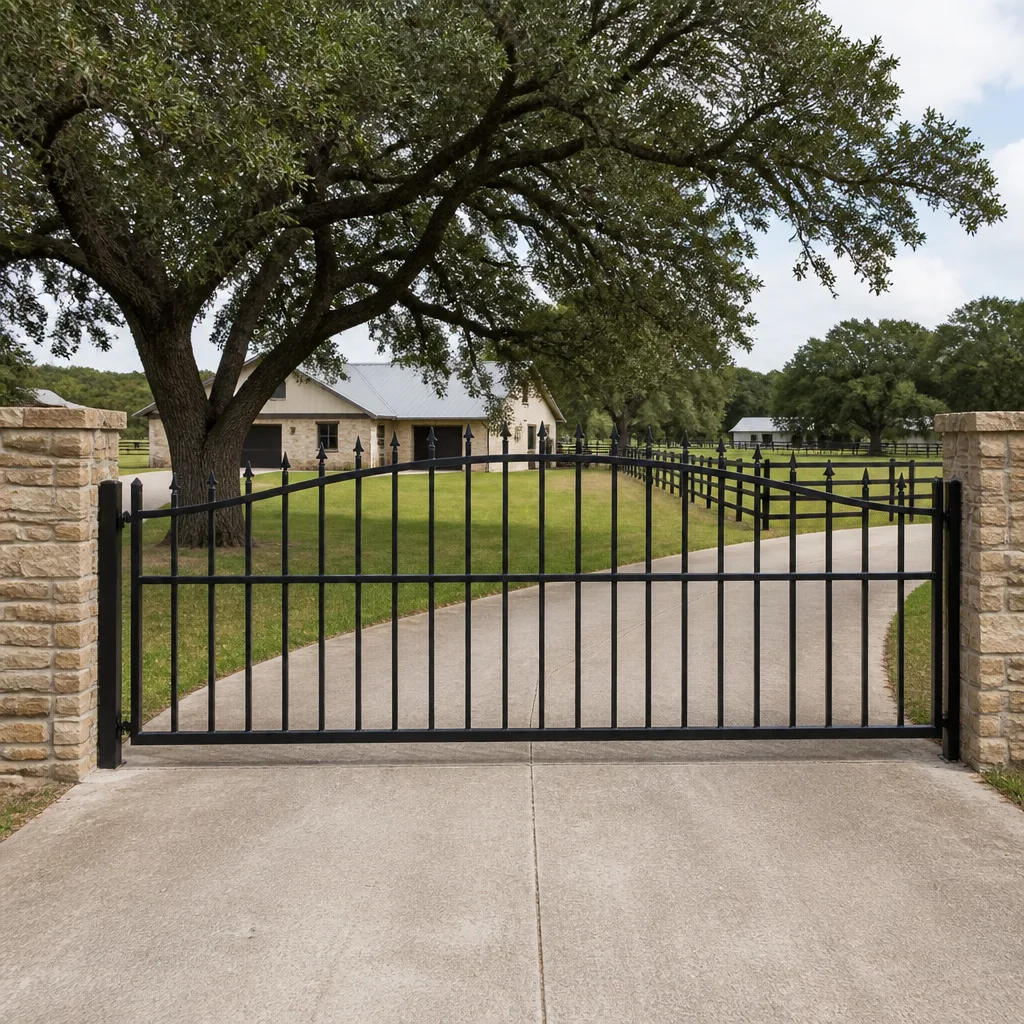 Farm & ranch
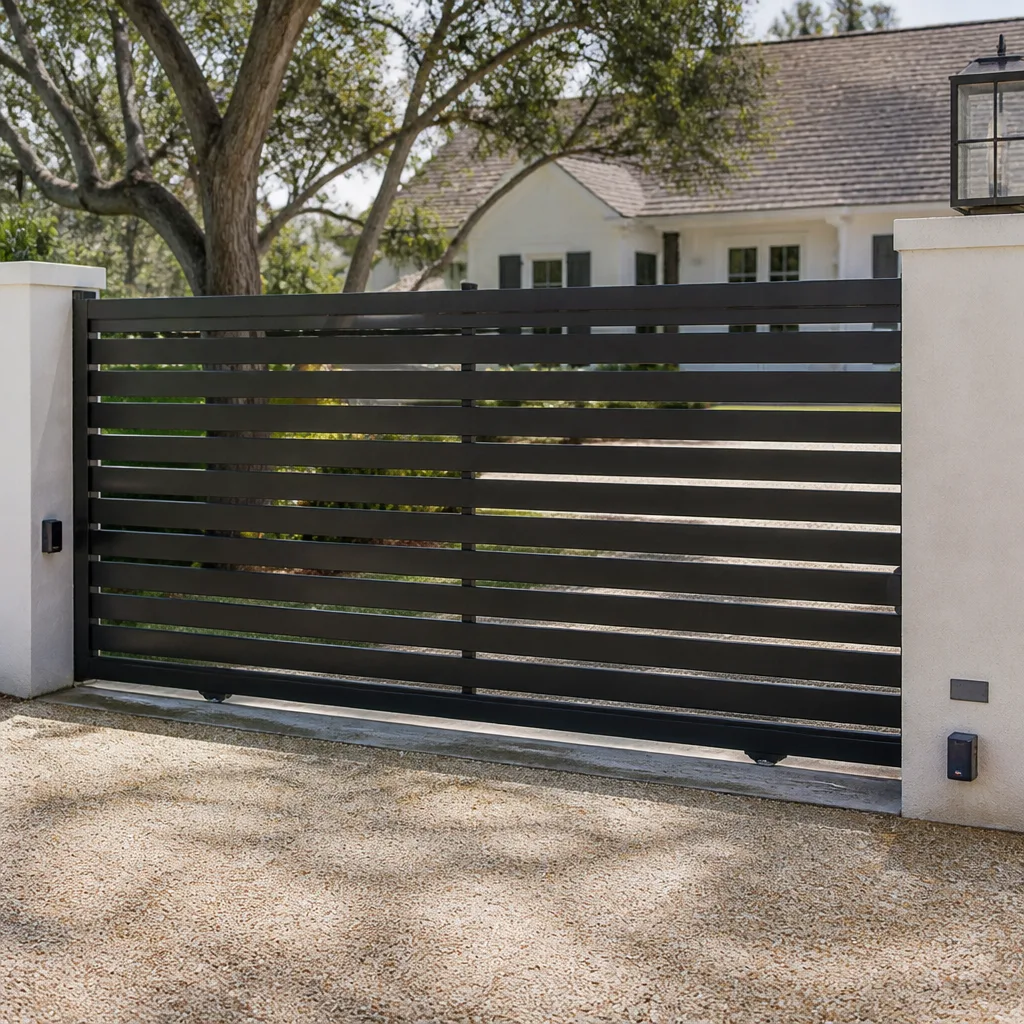 Sliding driveway gates
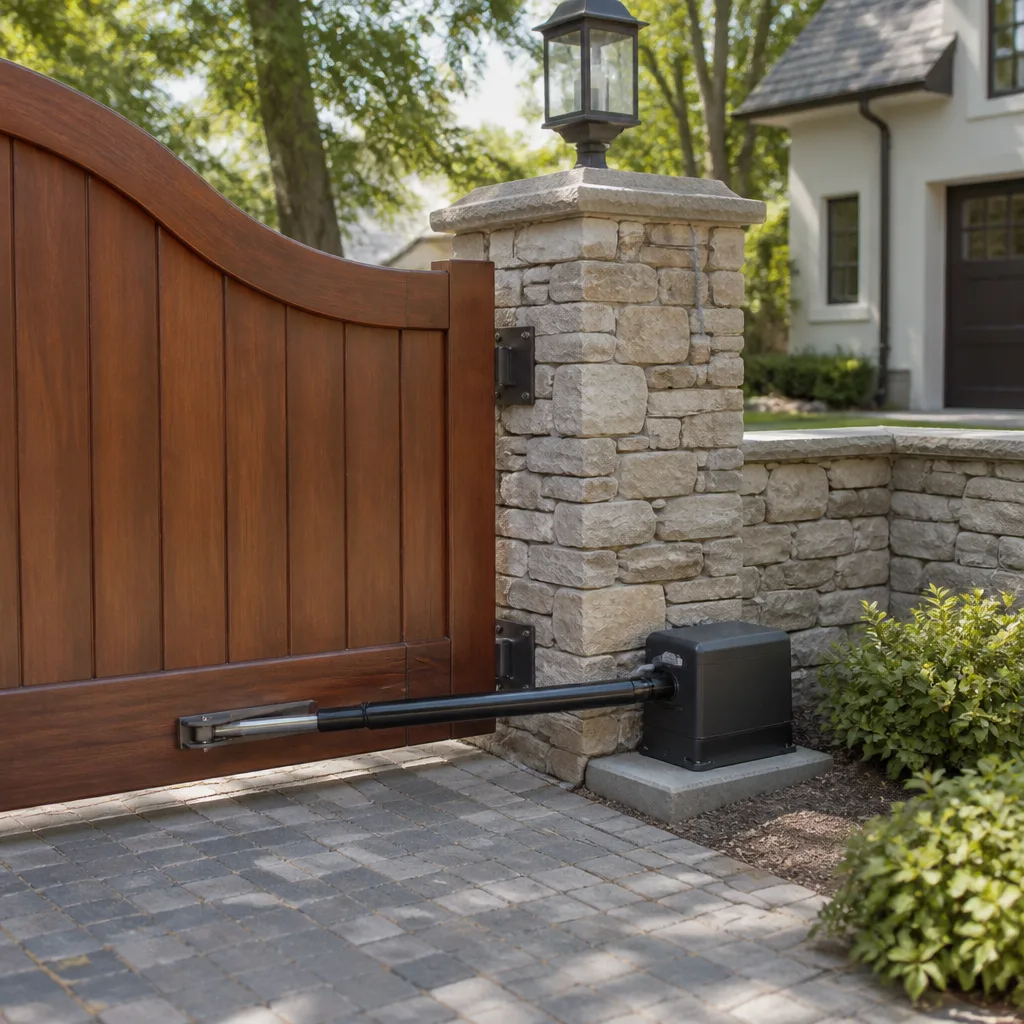 LiftMaster operators
Free on-site gate assessment - hinges, posts, and your LiftMaster or Nice gate operator checked before anything is quoted
The assessment is free and the quote is the invoice.
Get your free estimateSeasonal Gate Repair Care for Modesto: Year-Round Homeowner’s Guide
Most gate failures that show up in October started in July. That’s the counterintuitive part of owning an automated gate in Modesto. A heat-stressed post footing shifts slightly through the long dry summer, the gate’s alignment drifts with it, and nobody notices until the first cool contraction locks that misalignment in place. By fall the gate drags, the operator strains, and it feels like something “just broke.” It didn’t. It wore out slowly, in a pattern this climate repeats every year. This guide maps gate care to the actual seasonal stressors in Modesto – summer heat, irrigation schedules, dry wind, and winter fog – so you can catch problems before they become repairs.
Quick Answer
Seasonal gate care in Modesto means matching maintenance to four climate-driven stress periods rather than to calendar habit: summer heat that triggers operator thermal cutouts and post-alignment drift, fall post inspections after the thermal expansion cycle, winter fog that corrodes exposed steel hinges and electrical terminals, and spring irrigation overspray that confuses photo-eye lenses. Annual tasks like weld inspection, ground rod continuity, and loop detector calibration belong to no single season. A small amount of checking each period keeps automated gates working reliably year-round.
Styles & brands we work with
- Wrought iron
- Wood & steel frame
- Farm & ranch
- Sliding driveway gates
- LiftMaster operators
Table of Contents
- Summer Gate Stress: Heat, Thermal Cutouts, and Alignment Drift (June-September)
- Fall Gate Care: Post-Alignment Inspection After the Heat Cycle (October-November)
- Winter Gate Care: Tule Fog, Corrosion, and the Grease That Holds (December-February)
- Spring Gate Care: Irrigation, Photo-Eyes, and Control Box Drainage (March-May)
- Annual Gate Tasks That Don’t Belong to Any Season
- Why Brand-Specific Gate Care Beats a Generic Checkup
- Signs You Need Gate Repair in Modesto, Not Just Maintenance
- Common Mistakes to Avoid
- When to Call a Professional
Summer Gate Stress: Heat, Thermal Cutouts, and Alignment Drift (June-September)
Modesto summers push automated gates harder than any other season, and the failures show up in two very different ways. The first is electrical: operator control boards on systems like LiftMaster and FAAC are rated for a working temperature range, and a gate that runs multiple cycles an hour in triple-digit heat can trip a thermal cutout as a protective measure. The operator stops mid-cycle, the gate sits open or closed, and it may resume once the unit cools. That is the operator protecting itself, not a board failure – but telling the two apart matters, because one is expected behavior and the other needs a repair.
How to tell a thermal cutout from a board failure
- A cutout trip usually clears on its own after the unit rests and the day cools. A board failure does not clear.
- Cutout trips tend to repeat only during the hottest part of the day and not in the morning.
- A board failure often brings a specific fault code, a dead display, or an operator that powers on but never responds to any command.
- If the gate runs fine for a week and then stops again at 3 p.m., suspect heat before you suspect the board.
The alignment drift nobody notices
The second summer problem is mechanical and slower. Heat expands metal posts, panels, and footings. Through June, July, and August that expansion nudges alignment a fraction at a time. By the time the cool fall air contracts everything back, the gate is no longer square in its opening, the rollers or hinges bind, and the operator is working harder on every cycle. Starting summer with your slide-gate track clear of grit and your hinge points properly lubricated reduces the drag that compounds the drift. We see this pattern again and again in Modesto – the gate isn’t fussy, it’s just been cooking all summer.
If your operator is tripping more than once a week in the heat, or a fault code keeps returning, it’s worth an electric gate repair look before fall.
Fall Gate Care: Post-Alignment Inspection After the Heat Cycle (October-November)
Fall is when you investigate what summer did. The thermal expansion cycle has ended and everything has contracted back to its cool-weather position, so any misalignment is now permanently visible. This is the single most useful inspection window on the Modesto gate calendar, and it’s one most homeowners skip because the gate still “works.”
The measurements that catch pre-failure drift
You don’t need a special tool to catch the early signs. Check four things at the gate’s full closed position and again at full open:
- Post plumb: hold a level against the hinge post and the latch post. A post that’s drifted noticeably off plumb since spring has moved – and a gate hung off a leaning post binds on every swing.
- Gate-to-post gap: measure the gap between the gate frame and the latch post at the top and bottom. If those two measurements differ by more than a small fraction, the gate is racking.
- Clearance under the gate: for slide gates, measure from the bottom rail to the ground at both ends. Uneven clearance means the track has settled or the gate has dropped.
- Travel over the track: walk the gate across its full range and feel for a point where it stiffens. A hitch in travel time is an alignment warning.
Any of these caught in October is usually a small correction – adjust a hinge, shim a track, true up an operator’s limit settings. Left until the gate drags in January, the same drift has worn the operator and the hardware. If you can’t run the checklist yourself, a scheduled gate repair visit in fall is the cheapest time to catch it. If the gate is still fighting you into winter, this is also the moment to look at gate repair Modesto options before the fog season sets in.
Winter Gate Care: Tule Fog, Corrosion, and the Grease That Holds (December-February)
Modesto winters are mild on temperature but not on moisture. Tule fog settles into the valley through December and February, and it leaves a fine wet film on every exposed surface for hours at a time. For an automated gate that means two specific corrosion targets: the exposed steel of Hinges, rollers, and latch hardware, and the electrical terminals inside the operator housing and control box.
The two winter corrosion zones
- Exposed hinge and roller steel: every cycle of fog-then-dry leaves a little surface oxidation. Left unaddressed across the season, that’s where you get stiff hinges, squealing rollers, and a gate that needs extra force to move.
- Electrical terminals and connectors: fog drives moisture into control boxes, limit switch housings, and intercom junction points. This is where intermittent faults begin – an operator that “works most days,” a safety edge that trips randomly, an intercom that crackles. On brands like DoorKing and Elite, moisture at the terminals is a frequent first cause of a control fault.
Which grease holds up in fog and which emulsifies
Not all gate lubrication is equal in valley fog. Light oils and some multi-purpose sprays dilute and wash off – they emulsify with ambient moisture and stop protecting the surface within days. What holds up better are heavier lubricants meant for exterior gate hardware: lithium or moly-based greases on hinges and roller chains, and dielectric grease on electrical connectors to seal out moisture. If you don’t know what’s on your gate now, a winter visit from a technician who works gate hardware daily will tell you in a minute what’s protecting and what isn’t.
One word of caution: never open an operator housing or control cabinet to inspect terminals or apply anything yourself. The operator runs on line voltage, and touching a live circuit can hurt you badly. Let a trained technician handle anything behind a cover. For a look at a fog-damaged operator, call us for electric gate repair – we want eyes on that wiring before it fails outright.
Spring Gate Care: Irrigation, Photo-Eyes, and Control Box Drainage (March-May)
Spring in Modesto brings two things that take automated gates by surprise: the irrigation system restarts, and the moisture that built up over winter has somewhere to go. Both create failures that look electrical but aren’t.
The irrigation restart checklist
- Check for sprinkler overspray on the photo-eye lenses. Safety photo-eyes work by sending an infrared beam across the gate opening; a sprinkler that sprays across the lens coats it, and water on the lens refracts or blocks the beam. A gate that stops and reverses for no obvious reason at a specific time of day is very often a fogged or water-spotted lens.
- Walk the property and identify any sprinkler aimed at the gate path. Redirect the head. Overspray on the gate hardware is also a slow corrosion source.
- Clear the control box drainage. If winter water pooled around the operator cabinet and its weep holes or base are clogged with grit and leaves, the spring warm-up turns that into a damp cabinet with condensing moisture inside – exactly the environment that grows faults on a control board.
- Wipe the photo-eye lenses with a soft cloth and check the alignment indicator if your operator has one. On a Ghost Controls or Linear residential operator, a misaligned eye is one of the most common “the gate just stopped” causes.
- Test your safety devices – the safety edge, the photo-eyes, and the gate’s reversal on obstruction. These are the features that protect people and vehicles, and they should work every cycle.
If you find a control box with standing water or visible moisture at the terminals, don’t power it on and start pressing. That’s a call. This is common enough in valley springs that a Modesto homeowner shouldn’t feel singled out by it – the fog season simply leaves moisture where fog goes.
Annual Gate Tasks That Don’t Belong to Any Season
Some gate care is calendar-independent. These three tasks should happen once a year regardless of the season, and they’re the ones most homeowners never do because a working gate gives no obvious prompt.
1. Weld inspection
On welded steel gates, the welds at the frame joints and hinge brackets take every load the gate puts on them. A weld that’s started to crack shows as a hairline rust line at the joint, a slight flex under load, or a popping sound when the gate swings. Inspect the full weld perimeter with a flashlight and look specifically for those rust lines, because a rust streak along a seam usually means moisture has worked into a crack. Catch a hairline early and it’s a weld touch-up; let it grow and the gate needs re-hanging.
2. Ground rod continuity check
An automated gate’s operator and any connected access hardware depend on a proper ground. The ground rod and its bond should be checked once a year – a loose or corroded connection there causes nuisance faults, erratic operator behavior, and, in the worst case, an unsafe fault path. Continuity checks are a job for a technician with a meter, not a homeowner poking at a grounding conductor. That’s line-voltage work.
3. Loop detector calibration drift
Vehicle loop detectors – the buried wire that tells a slide gate a car is waiting – drift out of calibration over time and with ground movement. The symptoms are subtle: a gate that opens a beat late, a call that doesn’t register when a car is stopped directly over the loop, or an exit loop that no longer triggers consistently. Loop drift isn’t an emergency, but it’s worth catching once a year so the access system keeps behaving as it should. This is especially relevant for commercial and multi-family properties running FAAC or DoorKing systems where every delayed cycle adds up.
Bundle these three with your seasonal checks and you have a realistic year of gate care. Call gate repair for a free estimate if any of them turns up a problem.
Why Brand-Specific Gate Care Beats a Generic Checkup
Gate operators aren’t interchangeable appliances, and the care that suits one brand can be wrong for another. A technician trained on nine specific gate brands – LiftMaster, FAAC, BFT, Linear, Viking, Ghost Controls, DoorKing, Elite, and Mighty Mule – brings a diagnostic method that isn’t generic trial-and-error. Each brand has its own failure points, its own control-board behavior, its own limit-switch design, and its own safety-input logic.
A few examples of why that matters:
- A residential Ghost Controls or Mighty Mule operator used on a residential swing gate behaves differently under heat load than a high-cycle FAAC commercial slide operator. The thermal behavior, the duty rating, and the failure mode all differ.
- A DoorKing access system often pairs with intercom and loop equipment that must be checked together; a fault in one looks like a fault in the other to a generalist.
- An Elite operator’s control board may store fault information that a brand-experienced technician reads first, saving the trial-and-error that replaces good parts.
- The right grease for a hinge, the right tension for a chain, and the correct limit-switch adjustment all vary by operator. Generic checklists fix the wrong thing.
This is why we focus only on gates. Technicians who split their attention across roofing, handyman work, and gates never build the brand-deep pattern recognition that gate-specific failures demand. When the season turns and something’s wrong, the difference between a well-informed diagnosis and a hollow one is usually the man-hours on that exact make and model. For the same reason, brand-specific electric gate repair is cheaper than a repair by process of elimination.
Signs You Need Gate Repair in Modesto, Not Just Maintenance
The seasonal routine above prevents most failures. Some signs mean the gate has moved past care and into repair. If you see any of these, the checklist is no longer the right tool.
- The operator trips repeatedly on hot days and doesn’t recover. A cutout that clears is heat protection. One that doesn’t clear, or is accompanied by a fault code, points to a board or limit fault.
- The gate reverses on its own. On any modern operator that means a safety device is signaling an obstruction – a blocked eye, a wet lens, a drifting loop, or a misaligned safety edge. It should be diagnosed, not overridden.
- The gate drags at one point in the travel. That’s a mechanical bind from alignment drift or a worn hinge, and it will wear the operator if left.
- Hinges or rollers feel rough or stiff after fog season. Surface corrosion has started, and fresh correct lubrication only helps if it’s caught early.
- You see moisture or rust inside the control box or at terminals. Don’t ignore this and don’t open the cabinet. This is line-voltage territory.
- A weld shows a rust seam or the gate flexes when it moves. Frame integrity is a safety issue on a heavy panel, especially a slide gate that could come off its track.
Keep one caution in mind throughout: gate and operator repairs on automated and electric gates involve line voltage, heavy panels, and dangerous pinch points. Diagnosis belongs to a trained technician, not a DIY project.
Common Mistakes to Avoid
- Treating the calendar as the maintenance plan. Modesto’s gate stresses are heat, fog, irrigation, and wind, not the months on a wall calendar. Caring by season without watching the actual stressor means you inspect the right things at the wrong time.
- Greasing with whatever is in the garage. Light spray oils emulsify in Tule fog and quit protecting. A heavy exterior gate grease and a dielectric on connections last through the winter; a thin spray does not.
- Ignoring a thermal trip as “normal.” It may be normal behavior, but repeated tripping can mask a failing capacitor, a failing board, or an operator that’s working harder because of a bind. Distinguish the two before summer ends.
- Leaving sprinkler overspray on photo-eyes. A single sprinkler aimed across the gate path creates a “random” failure that no parts swap will fix. Redirect the head first.
- Inspecting alignment only after something breaks. The fall post-alignment check takes minutes and catches drift before it costs a hinge or an operator.
- Skipping winter electrical checks. Fog-driven moisture at terminals is the quiet cause of intermittent faults. Check connectors and the control box condition at the start of the wet season, with a technician for anything inside a cover.
- Calling a general handyman for a gate fault. Gate-specific failures – limit switches, safety loops, operator boards, intercom wiring – are missed by generalists. When the problem is brand-deep, call someone fluent in the brand.
When to Call a Professional
Call a gate specialist when the seasonal checklist turns up something you shouldn’t touch yourself. That means anything inside an operator housing or control box (line voltage and dangerous wiring), anything involving the safety devices – photo-eyes, safetys, loops – that won’t clear after cleaning, a gate dragging or scraping at any point in travel, a visible weld crack or rust seam on a load-bearing frame joint, and any operator fault that repeats after the first rest-and-retest. Gate professionals are also the right call for a fall alignment inspection you’d rather not run on your own – a technician will catch drift that a level and a tape measure miss. Gate Repair Modesto offers free estimates in Modesto – call (844) 834-3242. We answer 24/7. Fast dispatch, 7am-7pm, Sunday through Friday.
See the difference
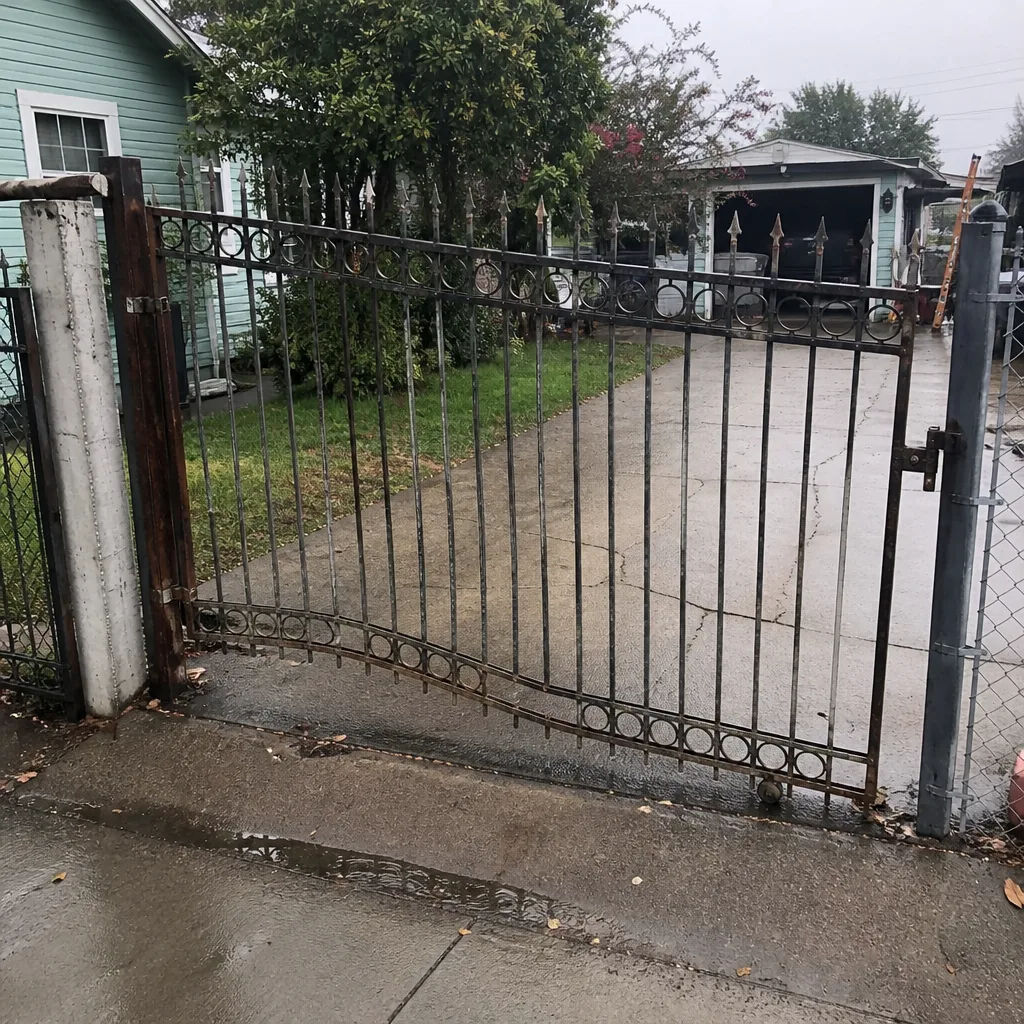 Before
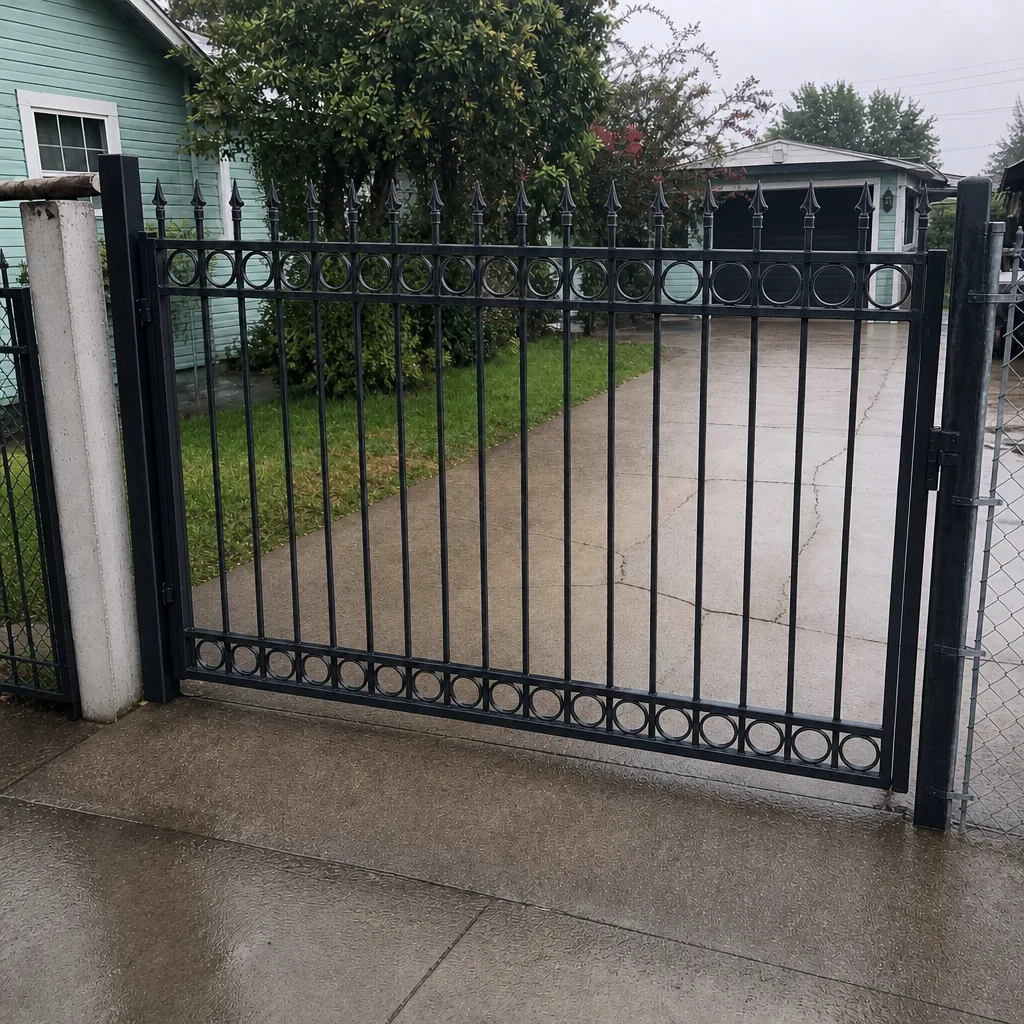 After
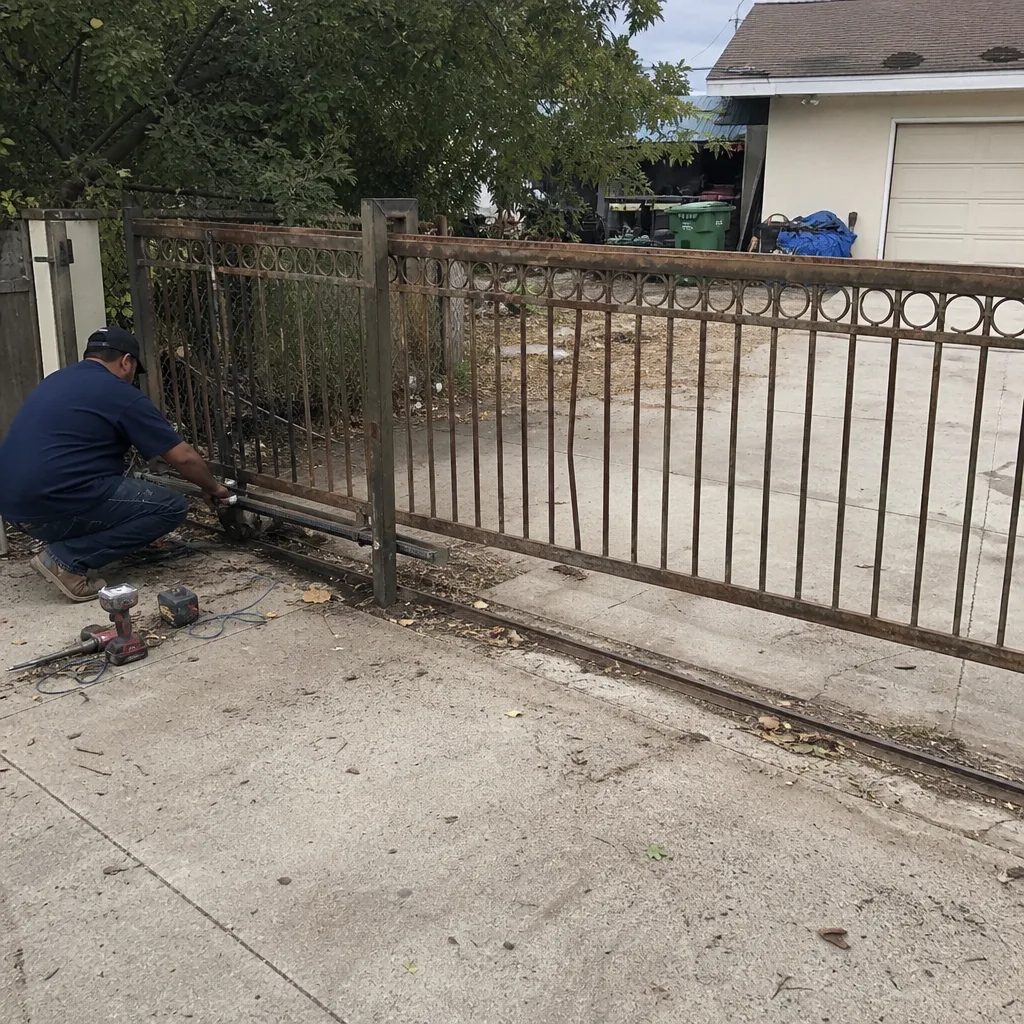 Before
 After
 Before
 After
Frequently Asked Questions
Once a season and once a year – four seasonal check-ins for the specific stressor of the season, plus three annual tasks (weld inspection, ground rod continuity, loop detector calibration) that don’t belong to a single month. The seasonal checks target summer heat, fall post alignment, winter fog, and spring irrigation, while the annual tasks safeguard frame integrity and access electronics.
That’s very likely a thermal cutout. Control boards in operators from LiftMaster, FAAC, and others protect themselves when the working temperature climbs in Modesto’s summer afternoons. If it clears after the unit rests and works fine the next morning, it’s likely protective behavior – but if it repeats often, or a code appears and doesn’t clear, it’s worth an electric gate repair look, because a failing board or a binding gate can masquerade as heat sensitivity. Call (844) 834-3242 for a free estimate.
Clean the lenses first, with a soft dry cloth, and check that nothing – a sprinkler head, a fallen leaf, a plant – is obstructing the beam. If the gate still reverses and no obstruction is visible, the eye may be misaligned, wet, or the loop detector or safety edge may be at fault. That’s a diagnostic, not a cleaning; call for repair rather than bypassing the safety device.
You can apply a heavy exterior gate grease to visible hinge and roller hardware – not to anything inside the operator housing or control cabinet. Use a lubricant meant for exterior gate steel (a lithium or moly-based grease), not a spray oil that emulsifies in winter fog. Anything behind a cover or connected to line voltage stays with a technician.
Irrigation overspray and moisture in the control box, together, are the usual spring culprits. A sprinkler spraying across a photo-eye lens causes a beam fault, and winter moisture pooled inside or around the operator cabinet creates intermittent faults at the terminals. Clearing the overspray, wiping the lenses, and having the cabinet inspected early in the season prevents most of it.
Modesto winters are mild, so freezing damage isn’t the concern – fog moisture is. Tule fog keeps exposed steel and electrical terminals damp for long stretches, which drives rust on hinges and corrosion at connector points. The fix is the right grease on hardware and a technician checking the control box and terminals at the start of the wet season, not winterizing for cold.
The Bottom Line
Modesto gate care works best when you match tasks to the actual stressor. That means watching your operator through summer heat for thermal behavior versus a real fault, inspecting post alignment in fall after the summer expansion cycle, protecting hinges and terminals from Tule fog through winter, and clearing irrigation overspray and control box drainage in spring. Layer on one annual pass for weld inspection, ground rod continuity, and loop detector calibration, and you’ve built a year of care that catches drift before it becomes a repair. When a check turns up something inside a housing or on the safety system, leave it to a specialist. Call gate repair for a free estimate and get the problem diagnosed by someone who works only on gates.
Frequently Asked Questions (Continued)
We don’t publish flat prices, because gate repair cost depends on the brand, the failure, and the parts needed – a safety-loop calibration is nothing like an operator board replacement. What we do commit to is a written estimate before any work starts, so you know the price before we touch anything. Call (844) 834-3242 for a free estimate.
We work on nine specific gate brands – LiftMaster, FAAC, BFT, Linear, Viking, Ghost Controls, DoorKing, Elite, and Mighty Mule – which covers both entry-level residential gates and high-cycle commercial systems. If your gate is one of those makes, we’re trained on its exact failure points and control logic. Call (844) 834-3242 to confirm your model.
First, don’t force it – forcing a stuck gate can damage the operator or pinch hardware. Check the obvious: a foreign object in the path, a sprinkler on the lens, a photo-eye that looks blocked. If nothing’s visible, it’s a diagnostic, not a maintenance item. Call (844) 834-3242. We answer 24/7. Fast dispatch, 7am-7pm, Sunday through Friday. A call outside dispatch hours is booked into the next opening.
Yes. Our scope includes commercial and multi-family access systems alongside residential swing and slide gates, and we’re experienced with the brands those properties run most – FAAC, BFT, and DoorKing among them. Loop detector calibration drift, intercom wiring, and high-cycle operator maintenance all fall within what we handle. Call (844) 834-3242 for a free estimate.
No. The operator and its control box run on line voltage, and touching a live terminal can cause serious injury. Homeowners should never open an operator housing or control cabinet. The safe care a homeowner can do is at the visible, unpowered hardware – hinges, rollers, and lenses – while anything inside a cover belongs to a trained technician.
Yes – three distinct service lines: gate repair, electric gate repair, and full gate installation. That means a gate that’s reached end of life can be replaced by the same specialist who’s been maintaining it, rather than a separate vendor. From residential swing gates to commercial slide systems, it’s one scope. Call (844) 834-3242 for a free estimate.
Written by the team at Gate Repair Modesto.