
Last updated November 15, 2026
 Wrought iron
 Wood & steel frame
 Farm & ranch
 Sliding driveway gates
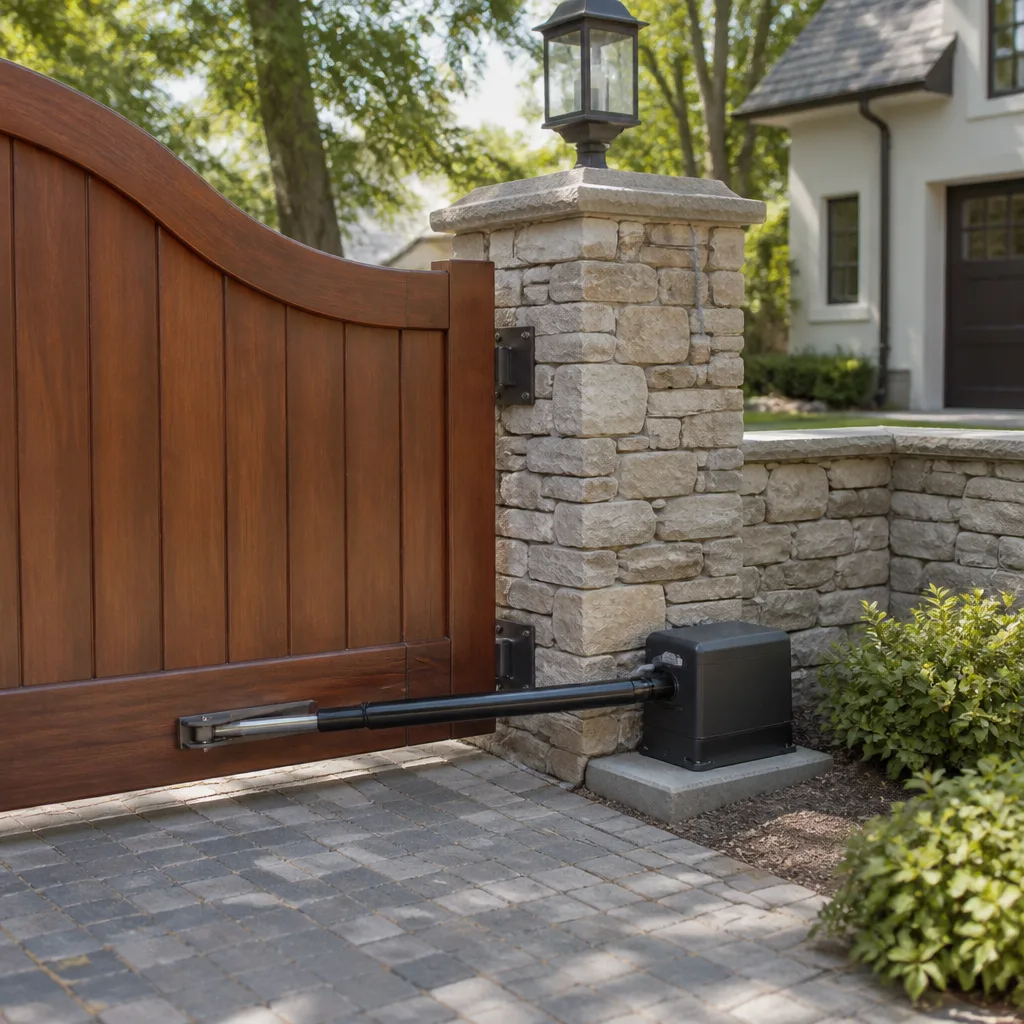 LiftMaster operators
Free on-site gate assessment - hinges, posts, and your LiftMaster or Nice gate operator checked before anything is quoted
The assessment is free and the quote is the invoice.
Get your free estimateGate Repair Maintenance Checklist for Modesto Homeowners
A checklist copied from a national site will tell you to grease your operator once a year. In Modesto, that advice can be wrong by August. Valley heat cycles the terminals, connectors and battery boxes on automatic gate operators harder than cooler climates do, and irrigation overspray from residential landscaping changes what a photo-eye sees from one month to the next. This guide gives you a maintenance routine built for the conditions your gate actually lives in: 100°F+ summers, dry stretches, and yards that get watered. You’ll get a component-by-component checklist, pass/flag/fail criteria, and a log format you can hand to any technician. No gate brand left out, either – we work on Ghost Controls, Linear, Viking, DoorKing and six more.
Quick Answer
A Modesto gate maintenance checklist should cover seven things quarterly and three things monthly: quarterly checks on operator grease, backup battery voltage, hinge bolt torque, photo-eye alignment, chain or rack tension, control board connectors, and safety loop test; monthly checks on obstruction response, track debris, and remote function. In valley heat, dielectric grease on board connectors needs reapplication more often than the manufacturer’s annual schedule, and sealed lead-acid batteries in exposed operator boxes need a quarterly voltmeter check. Any gate that fails an obstruction or safety loop test should be taken out of automatic mode and looked at by a technician before it’s used again.
Styles & brands we work with
- Wrought iron
- Wood & steel frame
- Farm & ranch
- Sliding driveway gates
- LiftMaster operators
Table of Contents
- Why a Modesto Checklist Is Different From a National One
- Lubrication Intervals by Component in Valley Heat
- Checking Photo-Eye Alignment Drift
- Backup Battery Voltage Checks
- Catching Hinge Fatigue Before Weld Failure
- Electrical and Operator Safety Checks
- The Log Format: Pass, Flag, Fail
- Seasonal Rhythm for Modesto Yards
Why a Modesto Checklist Is Different From a National One
A gate operator is a heat machine. The control board, the motor and the battery all live inside a metal box that sits in direct sun for months. In Modesto, that box can see temperatures well past 100°F on a July afternoon, and the daily swing between a hot day and a cool valley night pulls moisture in and out of every terminal and connector. National maintenance schedules are written for an average climate. Modesto isn’t average in the summer.
Three local factors change the schedule:
- Heat cycling. Dielectric grease on board connectors breaks down faster when terminals repeatedly expand and contract. Where a manufacturer recommends annual reapplication, plan on checking every six months.
- Irrigation overspray. Residential landscaping in Modesto runs on sprinkler systems and drip lines. Overspray and splashback on photo-eyes, safety edges and posts cause more false triggers and alignment drift than any other single cause we see.
- Dry dust and pollen. The valley’s spring pollen load and summer dust settle into chain, rack and hinge grease. Lubricant that’s still clean elsewhere has already turned into an abrasive paste here.
A gate that runs fine in a cooler climate can fail an obstruction test in Modesto in August because the grease thinned out and let the gear slip. That’s the kind of failure a national checklist won’t warn you about. If you’d rather skip the trial-and-error and get a baseline inspection, our team handles Gate Repair Modesto work across the valley – we’ve seen this exact pattern in every brand from Mighty Mule to DoorKing.
Lubrication Intervals by Component in Valley Heat
Generic schedules lump everything under “grease the gate once a year.” That’s not accurate for a Modesto yard. Each component has its own interval, and the summer range pushes all of them tighter than the manufacturer’s chart suggests. Here’s how we break it down by component type:
Chain-Driven Slide Gates
Chain needs the shortest cycle in valley heat. High temperatures thin the lubricant and dust collects in the links. Inspect monthly for tight spots, then clean and re-lubricate every two to three months in summer, stretching to four in the cooler months. Use a chain-specific lubricant that goes on wet and sets tacky – a light oil that runs off in the heat is worse than nothing. Check the chain for sag while you’re there; a chain that’s too tight loads the operator sprocket and shortens motor life.
Rack-and-Pinion Slide Gates
Rack gears hold grease better than chain, but valley dust turns the grease into grit. Inspect monthly, clean away old grease and reapply a heavy gear grease every three to four months during summer, every six months in cooler weather. Run your finger along the rack – if it comes away dark and gritty rather than smooth, it needs cleaning before the next application.
Hinges and Swing Gate Pivots
Hinges are the most neglected and the most dangerous to neglect. Grease every three to four months, and inspect the grease cavity for cracking or loss of the base grease. On a residential swing gate, worn grease on a hinge translates directly into load on the hinge weld and post. We cover hinge fatigue in detail further down this page.
Operator Gearbox and Motor
Sealed gearboxes don’t need lubricant added, but they do need their oil checked for color and consistency if they have a sight glass or fill plug. Overheated motor housings in summer can cook the factory grease. If a Linear or Viking operator is running noticeably hotter than usual, that’s a flag, not a pass.
Checking Photo-Eye Alignment Drift
Photo-eyes are the pair of small sensors mounted on the gate posts that stop or reverse the gate when something crosses the beam. In Modesto, the most common reason they lose alignment isn’t vandalism or impact – it’s the wood post they’re mounted to. Irrigated yards and hot, dry summers make a wooden post swell and shrink through the season, and that tiny movement tilts the sensor just enough to break beam alignment. What looks like a mystery fault is often just post moisture doing its thing.
Monthly Photo-Eye Check
- Stand between the gates with the system in normal operation.
- Trigger the open cycle and break the beam with your hand as the gate travels.
- Confirm the gate stops or reverses immediately.
- Look at the indicator light on each sensor: solid means aligned, blinking means marginal, off means dead or disconnected.
- Inspect the post for cracks, paint peeling at the base, or softness – signs the post has moved.
If the beam only breaks at certain times of day, that’s a strong alignment-drift signal. Sun angle changing can shift the aim of a marginally mounted sensor. We see it constantly in Modesto on gates with low-mounted photo-eyes in full western sun. If the check fails or is inconsistent, stop using the automatic cycle and call for a technician. Safe sensor function is not optional – a gate that can’t reliably detect a person or vehicle is a hazard.
Backup Battery Voltage Checks
Most residential and many light-commercial operators use a sealed lead-acid battery to run the gate during a power cut or to handle the initial surge at open and close. Those batteries live in the same hot box as the operator, and heat is the single biggest killer of lead-acid service life. A battery rated for several years at room temperature can degrade in half that time when it cooks in a valley summer.
Check voltage quarterly, not annually. Here’s the method:
- With the gate idle, use a voltmeter on the battery terminals.
- Compare the reading to the operator’s recommended resting voltage (typically in the maintenance manual – Linear, Ghost Controls and DoorKing operators all have specific thresholds).
- Trigger a cycle and watch the voltage under load. A battery that reads fine at rest but drops sharply when the motor starts is failing.
- Note the reading in your log. Trending downward over two checks is a flag even before it fails a load test.
Don’t just replace a battery and assume you’re done. A failing battery is often a symptom of a charging circuit problem or an operator that’s working too hard because the gate mechanics are stiff. That’s a diagnosis question, not a parts question, and it’s why gate-specific diagnostics matter. Our electric gate repair work starts with the charging circuit, not the battery shelf.
Catching Hinge Fatigue Before Weld Failure
A swing gate relies on its hinges to carry the panel’s weight. As the hinge wears, the load shifts onto the weld between the hinge and the gate frame. By the time a homeowner notices the gate sagging, that weld is often already showing hairline cracks. Catching it before it becomes a failure is the most valuable thing you can do with a quarterly check.
Three-Part Hinge Inspection
- Bolt torque. Check every hinge bolt with the right tool. Loose bolts let the hinge move in a way it wasn’t designed to. Tighten to the manufacturer’s spec, and if a bolt spins freely without snugging, the tapped hole is stripped – that’s an immediate flag.
- Play measurement. Grab the gate and try to lift it vertically, then rock it. Any visible vertical movement in the hinge is play. A few millimeters is normal wear. More than that means the hinge bushings or bearing surfaces are going, and a technician should assess before it gets worse.
- Grease cavity condition. Open the hinge cap and check inside. Grease should be present, pliable and light-colored. Dry, cracked or missing grease means metal-on-metal contact, which accelerates wear. Re-pack with fresh grease and add the hinge to the more frequent cycle.
Weld inspection rounds out the picture. Clean the weld area with a wire brush and look for hairline cracks along the hinge plate edge, especially on the top hinge where the load is highest. If the panel is heavy iron or the gate is old, have a professional look annually. A failing gate panel that drops is a genuine crush hazard – heavy panels are one of the serious injury risks on any swing gate. Don’t try to weld, brace or repair a failing hinge yourself if you’re not equipped for it.
Electrical and Operator Safety Checks
The other serious hazard on an automatic gate is the electrical side: the operator’s power supply, control board and any intercom or access control wiring. Line voltage at an operator is lethal. Everything in this section is a check-and-observe procedure – not a DIY job. If you see something wrong, isolate the circuit at the breaker and call a technician.
What To Check (Observe, Don’t Open)
- Control board connectors. Look for corrosion, discoloration or loosened plugs. If the board is in a sealed box, that’s the appropriate view – if it’s not sealed, close it. Connector cleaning and dielectric grease are professional work.
- Safety edges and reversing sensors. Test the safety edge by pressing the rubber strip on the leading edge of the gate; the gate should reverse. Test monthly.
- Safety loop detectors. On driveway loops or commercial loops, drive a metal object across the buried loop when the gate is closing and confirm the gate reverses. Test quarterly.
- Limit switches. Watch the gate as it reaches fully open and fully closed. The stop should be smooth, not a hard clunk. Erratic stops or re-tries at the limit point suggest a limit switch out of adjustment.
- Intercom and access control wiring. On a DoorKing entry system or any intercom setup, check for loose terminal screws and cracked insulation at the outdoor station.
- Grounding and weather sealing. The operator enclosure should be sealed, with cable entries facing down. Standing water inside an operator box is a red flag for water intrusion – not a routine condition.
One item that’s specific to summer exposure: dielectric grease on the control board connectors. Heat cycling opens gaps at the terminals, and moisture in the air finds them. Grease applied in a cooler month can thin out by August. Checking and refreshing it more often than the annual schedule is worth the effort on any operator in Modesto.
The Log Format: Pass, Flag, Fail
An honest checklist produces a record. Without one, you’re relying on memory of what the gate sounded like last year, and nobody has that. A simple paper or spreadsheet log, with a Pass/Flag/Fail column for each check, is what a technician actually needs if a fault appears later. Here’s the format we recommend for a Modesto gate.
Suggested Log Columns
- Date and season – so failures can be matched to summer heat or spring pollen.
- Component – hinge top, hinge bottom, chain, photo-eye A, battery, etc.
- Check performed – torque, voltage, obstruction test, alignment.
- Result – Pass / Flag / Fail.
- Reading – torqued value, voltage reading, or “n/a” if not applicable.
- Action – “re-greased,” “flagged for professional assessment,” “battery replaced.”
What Pass, Flag, and Fail Mean
- Pass: Every reading is in spec and the component performs correctly. No action.
- Flag: A reading is trending toward the edge, or a check passed but with a caveat (e.g., “battery at 12.3V, was 12.7V last quarter”). Note it and check again sooner.
- Fail: The safety test fails, a reading is out of spec, or a hazard is present. Take the gate out of automatic mode and call a technician. A fail on obstruction, safety edge, safety loop or photo-eye is a stop-work condition.
A log kept over a full year tells a technician a lot at a glance. A Modesto gate with three logged battery flags from July to September is telling you something the owner can’t feel. When we diagnose a gate, a completed log saves a visit and turns a guess into a diagnosis.
Seasonal Rhythm for Modesto Yards
No single visit fits every season. The three items that shift most in Modesto’s climate are lubrication intervals, battery health and photo-eye alignment. Here’s how we’d plan the year.
Spring (The Pollen Window)
Pollen settles into chain and rack grease and turns it into an abrasive. This is the season to clean and re-grease all lubricated components, regardless of when they were last serviced. Check the photo-eyes for pollen dust on the lenses and clean them.
Summer (The Heat and Battery Stress Window)
This is when the operator works hardest. Check battery voltage monthly at the start of the season, then back to quarterly if readings are stable. Watch operator housing temperatures, and listen for a change in the motor under load. If the gate is running noticeably slower or hotter, the motor may be fighting a mechanical problem – that’s a technician call, not a lubrication fix.
Fall (The Cooling Transition)
As the temperature drops, thermal expansion reverses and photo-eye mounts that swelled in summer settle back. This is the time to check post movement and re-align any photo-eye that drifted. Clean and re-grease, then check hinge welds before the wet season begins.
Winter (The Mild Check Season)
Modesto winters are mild, so the risk profile here is mostly dust, debris and general wear rather than cold. Clear debris from tracks and safety loops, re-test all safety devices, and address anything flagged in the summer. This is also a good time for a full professional inspection before the summer heat returns.
Vacation rentals, multi-family properties and commercial gates often need tighter cycles than a home. Landlords and property managers with heavier daily cycles, or with a DoorKing or FAAC operator in a shared entry, should shorten the intervals by roughly half. That’s not a guess – heavy cycles mean the wear curves shorten proportionally.
Common Mistakes to Avoid
- Applying generic national schedules. A chart written for an average climate will leave your operator under-serviced in July and over-serviced in January. Adjust the intervals for heat and dust as shown above.
- Ignoring photo-eye alignment drift. Many homeowners replace the photo-eye before checking if the post has moved. If you replace the sensor without fixing a moving post, you’ll be back at the same fault next season.
- Skipping battery voltage under load. A battery that reads fine at rest and drops under load is failing. Check it with the motor running, not just sitting idle.
- Greasing without cleaning first. Adding fresh grease over grit and old grease on a chain or rack doesn’t fix anything. Clean first, then apply.
- Running a gate that fails a safety test. If the photo-eye, safety edge or safety loop fails, take the gate out of automatic mode. A gate that can’t detect a person or vehicle is a hazard, and no amount of “it still opens” makes it acceptable.
- Opening the operator’s electrical panel yourself. Line voltage and control board diagnostics are professional work. Observe from the outside, isolate the circuit if something is wrong, and call. A control board, wiring or limit switch problem on a ghost Controls or Viking operator is a diagnostic job, not a tightening job.
- Letting hinge play go unrecorded. Small vertical play on a swing gate hinge is normal. Small play that isn’t logged, then becomes larger, then becomes a weld failure – that’s the sequence to break. Write it down.
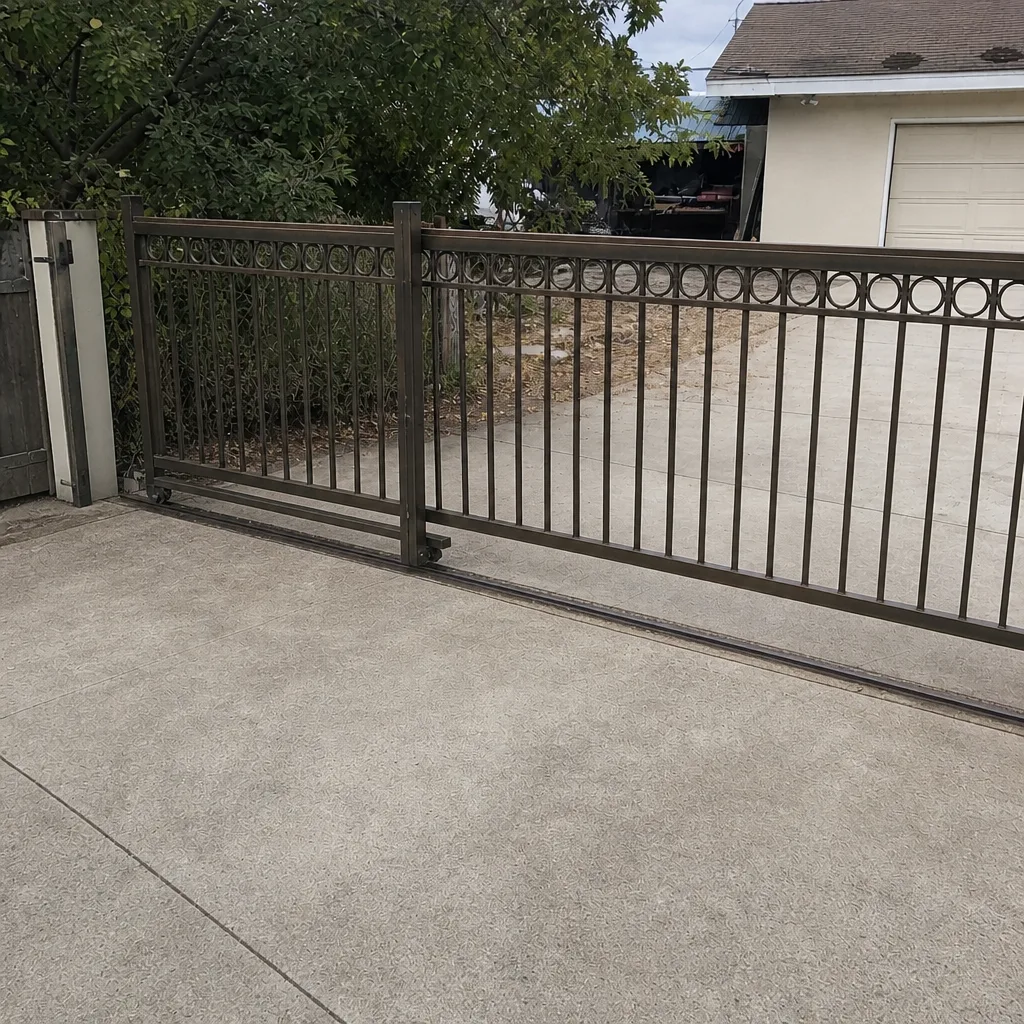
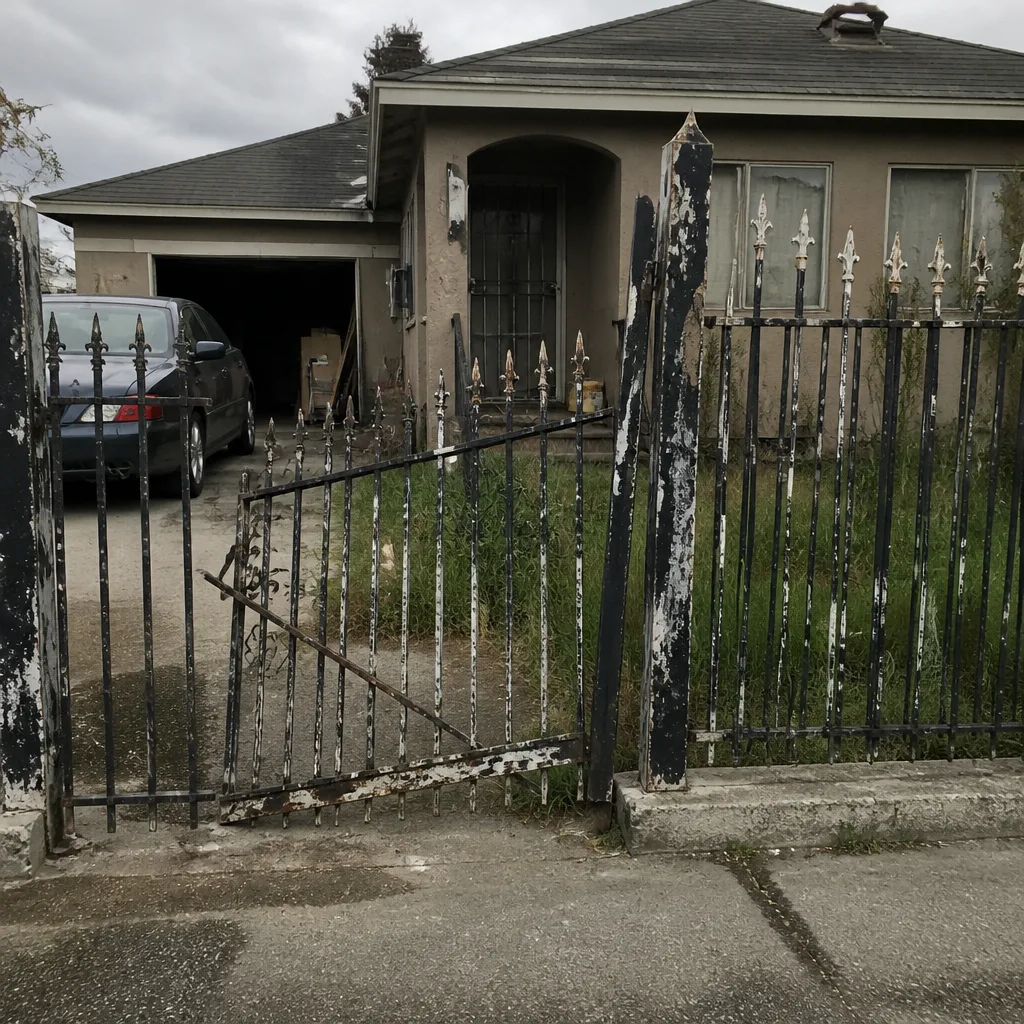
See the difference
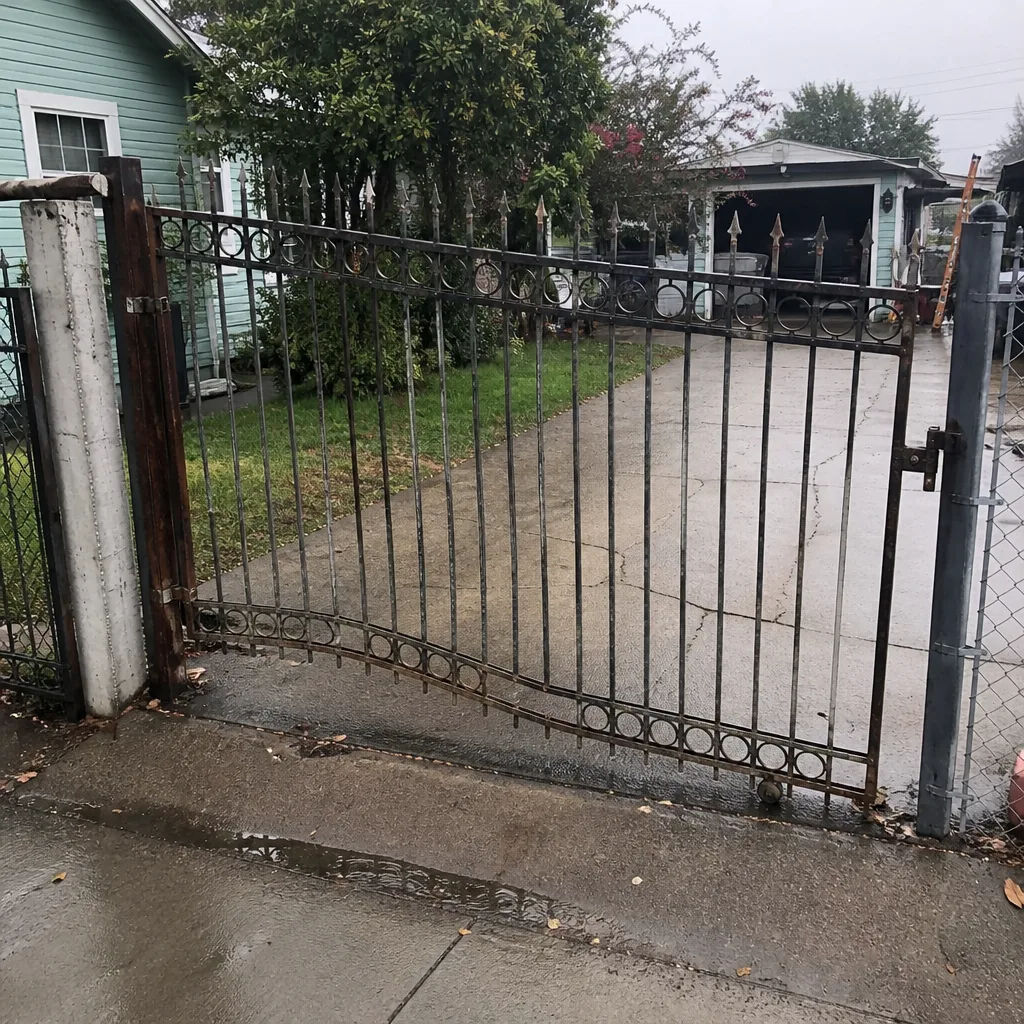 Before
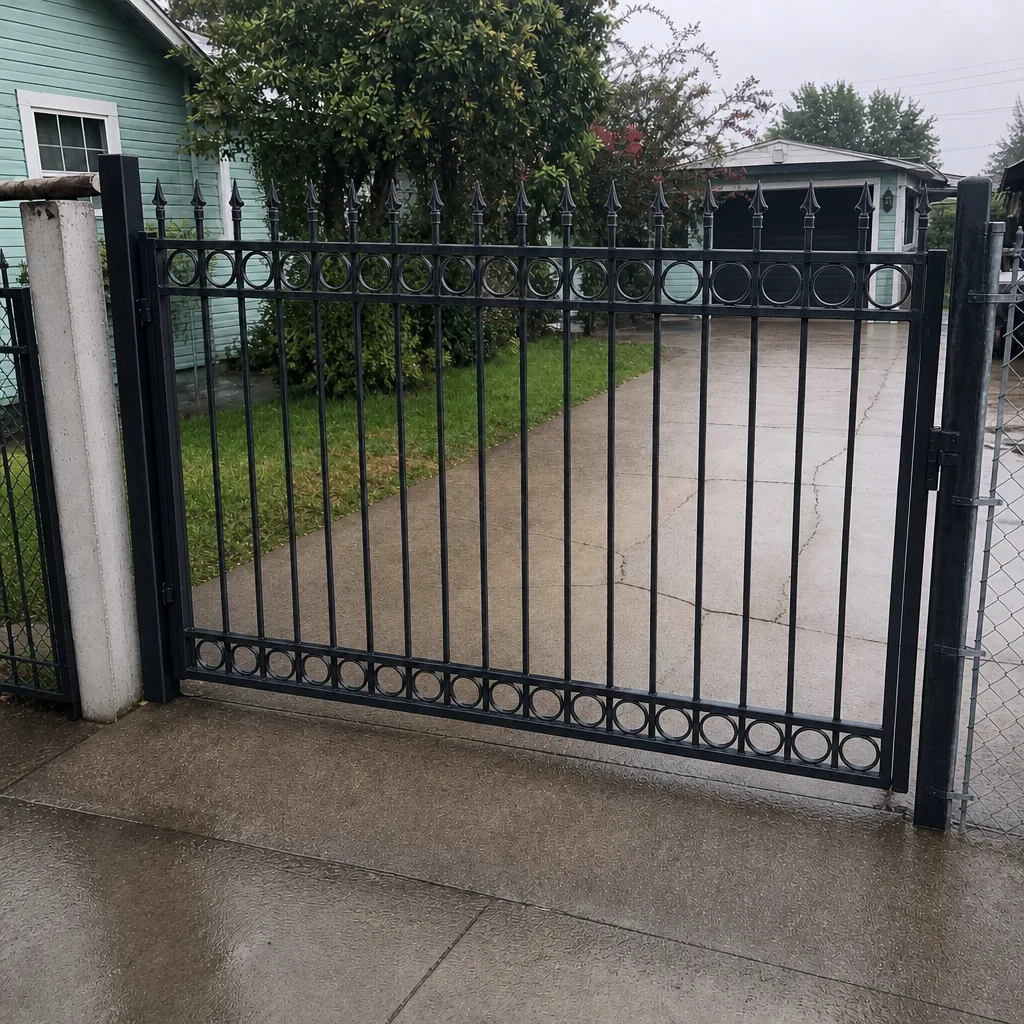 After
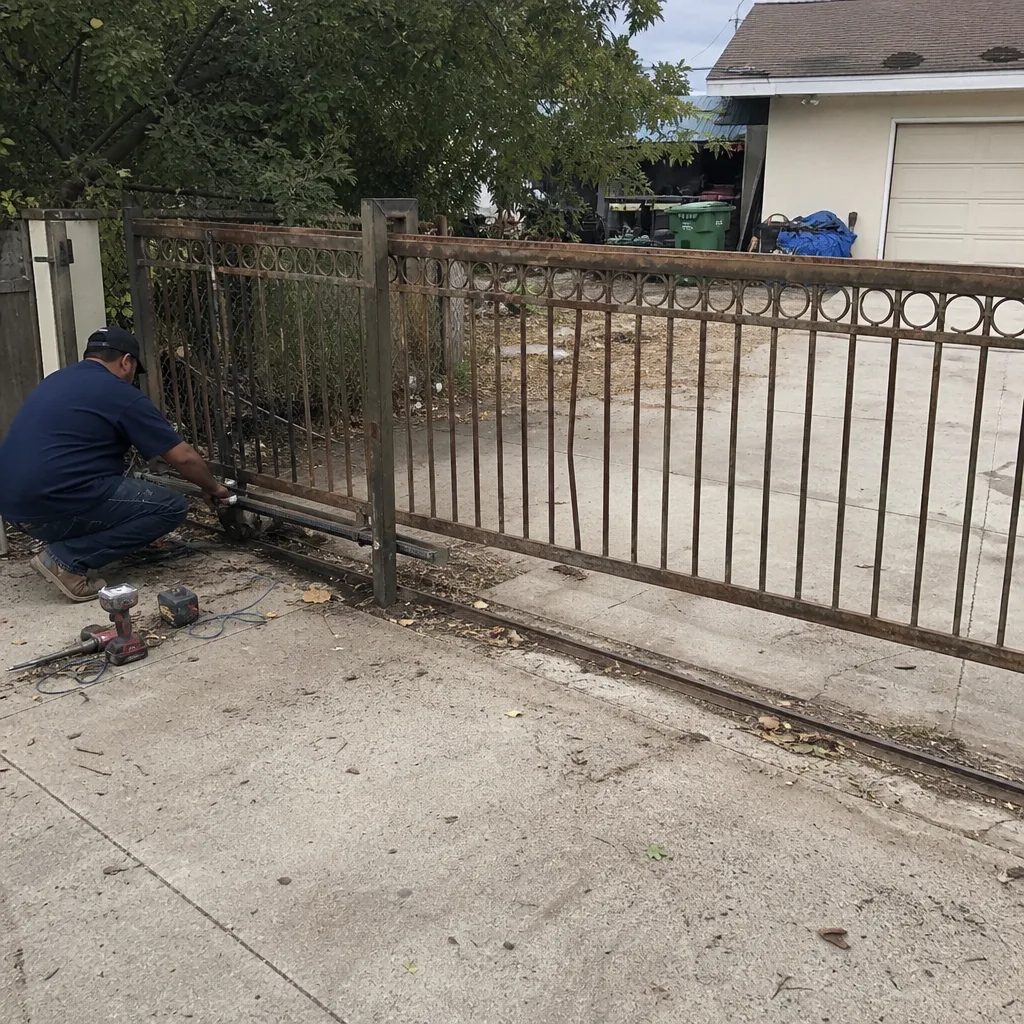 Before
 After
 Before
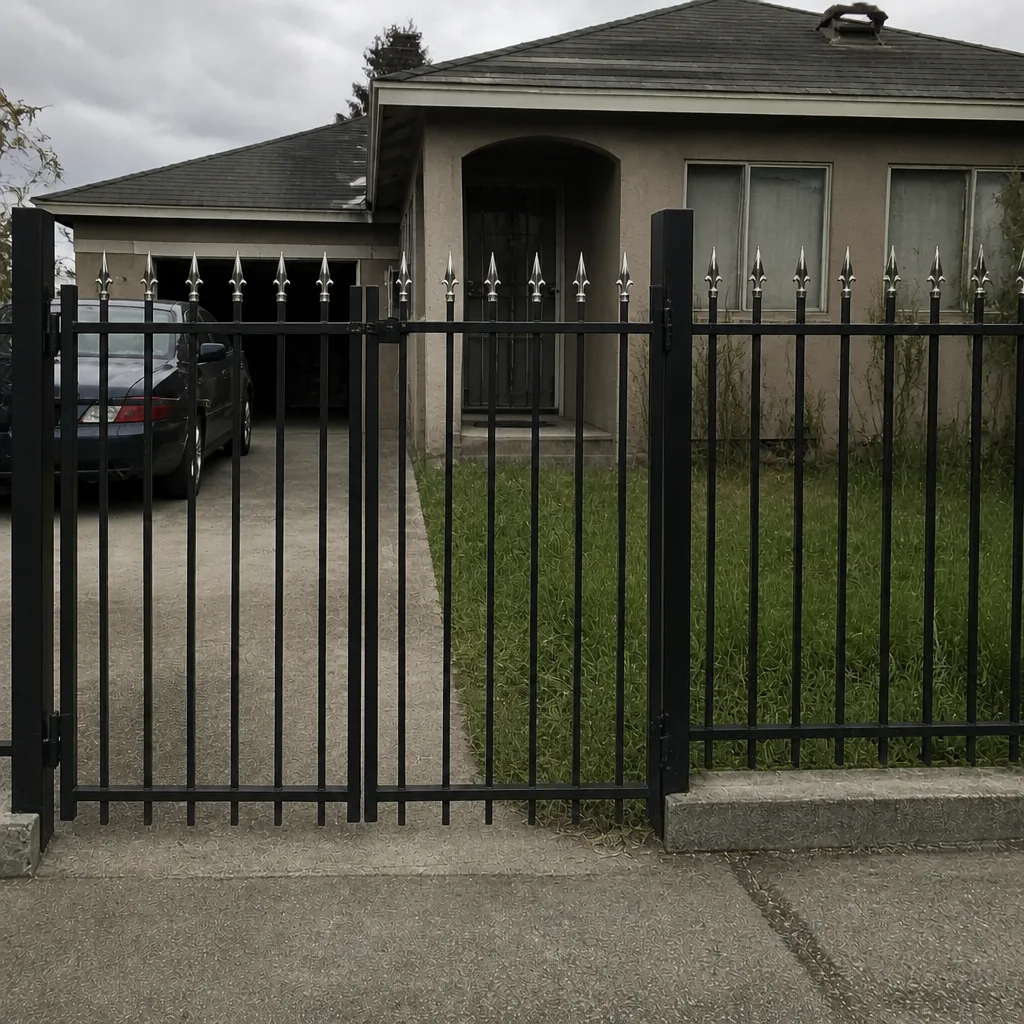 After
When to Call a Professional
Some checks in this guide are safe for a homeowner to complete with a screwdriver and a voltmeter. Others aren’t, and calling a professional early usually saves money over calling one after the failure. Call a technician if: the gate fails any obstructions, safety edge or safety loop test; the operator is running hot, slow or repeated cycling without a clear cause; a hinge shows play beyond a few millimeters or a weld has started cracking; the control board connectors are discolored or wet; the battery fails a load test and you don’t know why; or the gate is stuck mid-travel. Also call for anything requiring an electrical panel adjustment, intercom wiring, or replacement of a failing component. Gate Repair Modesto offers free estimates in Modesto – call (844) 834-3242. We answer 24/7. Fast dispatch from 7am to 7pm, Sunday through Friday.
One more scenario worth naming: any gate you can’t physically feel safe standing next to. If a heavy swing panel has dropped, a slide gate has come off the track, or a gate lurches when the operator moves it, don’t wait for the scheduled check. Isolate the power, keep people clear of the panel and call.
Frequently Asked Questions
In summer, clean and re-grease every two to three months for a chain, every three to four months for a rack or hinge. Cooler months stretch those intervals to four and six months respectively. The driver is heat, dust and pollen, not the manufacturer’s calendar. If you’ve got a gate with an irrigation line nearby or full western sun exposure, stay on the shorter end of those ranges.
In Modesto, the most common cause is the wood post the sensor is mounted to moving as it takes on irrigation moisture and dries in the heat. Each season of swelling and shrinking tilts the sensor slightly out of alignment. The fix isn’t a new photo-eye, it’s stabilizing or replacing the post mount. If the sensor also blinks or fails intermittently, call a technician – safe reversing function isn’t optional.
Every quarter in valley heat, though monthly during the first summer on a new battery is reasonable until you see stable readings. Check resting voltage and then voltage under load during a cycle. A battery that reads fine at rest and drops under load is failing. Sealed lead-acid batteries in an exposed operator box in Modesto can degrade faster than the manufacturer’s annual schedule because the heat is the dominant factor.
You can safely do the visual checks – cleaning, greasing, photo-eye tests, hinge play measurement, battery voltage with a meter – and you should log them. Don’t open the operator’s electrical panel or touch interior wiring. Line voltage is lethal, and control board diagnostics on a Viking, Linear or DoorKing operator need a trained technician. If you don’t feel equipped for the electrical checks, that’s normal. Call and we’ll do the full inspection.
Three signs: vertical play beyond a few millimeters, hairline cracks along the hinge weld when the area is cleaned, and dry or missing grease in the cavity. Catch these early and the fix is a re-grease and torque check. Let them grow and the fix becomes a weld repair. Stop using the gate and call for an assessment if a heavy panel has dropped or the weld is clearly cracked – a dropping panel is a crush hazard.
We work specifically on LiftMaster, FAAC, BFT, Linear, Viking, Ghost Controls, DoorKing, Elite and Mighty Mule systems – from a residential Ghost Controls swing gate to a commercial DoorKing access system. If you’re not sure what brand you have, the operator label on the housing or inside the control box will tell you. Our team handles both gate repair and new installation, so if a fault turns out to be a worn part or a failed operator, we can walk through the options with you in one visit.
The Bottom Line
Your Modesto yard came with conditions the national maintenance charts don’t account for: heat that thins grease and cooks batteries, irrigation that moves posts, and dust that turns lubricant into grit. The routine above adjusts for it – tighter lubrication intervals, quarterly battery voltage checks under load, photo-eye alignment checks against post movement, and hinge inspections that catch fatigue before a weld fails. Log every check, and treat any failed safety test as a stop-work condition. If a fault needs a trained eye or a board-level diagnosis, our team works on the Modesto area’s gate systems, brand by brand. Call (844) 834-3242 for a free estimate on any repair or installation.
Written by the team at Gate Repair Modesto.