
Last updated November 15, 2026
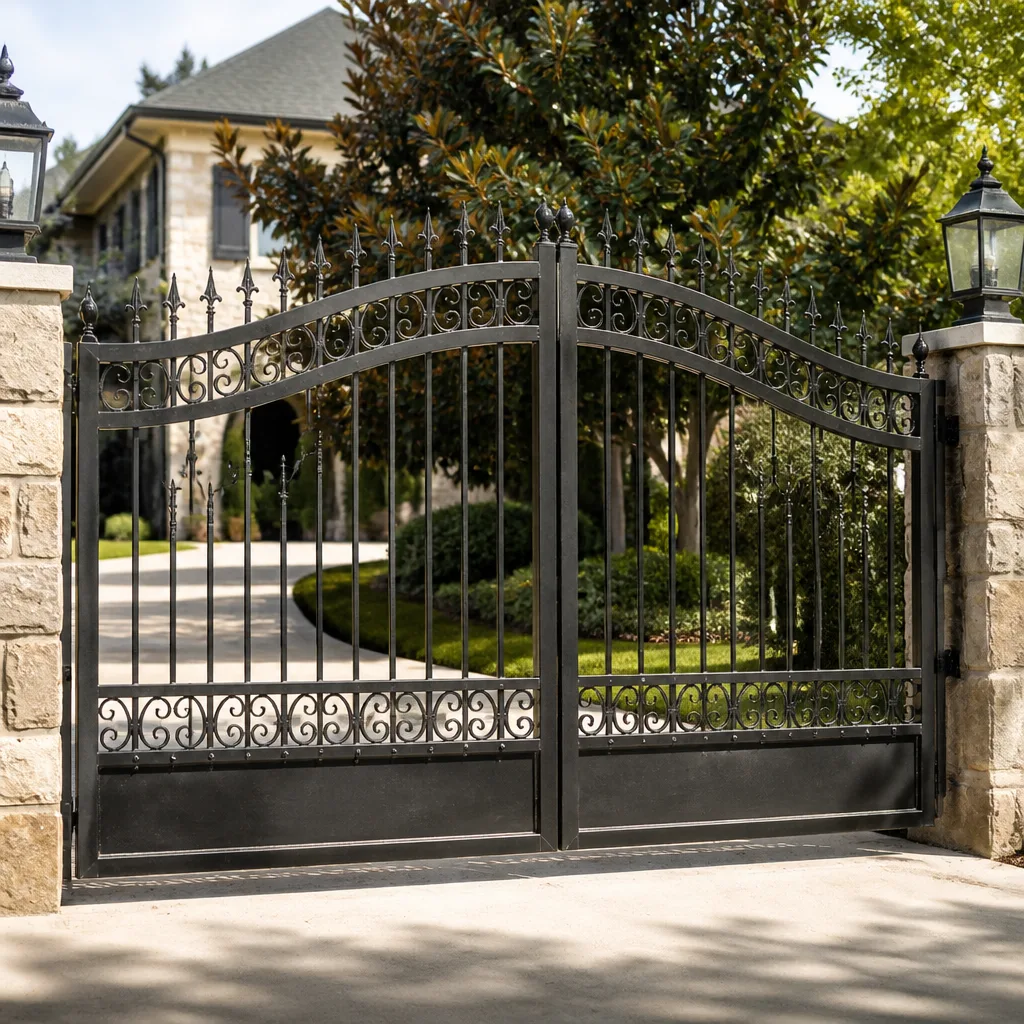 Wrought iron
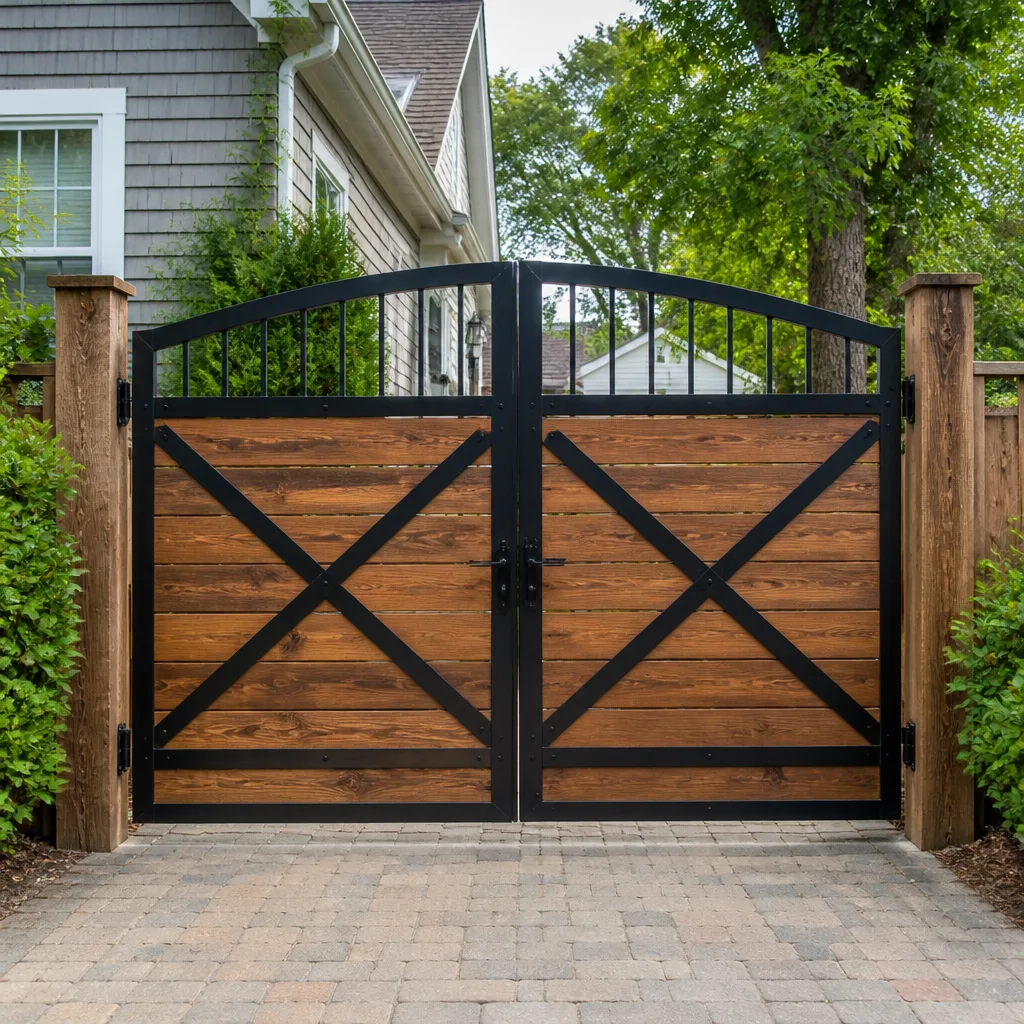 Wood & steel frame
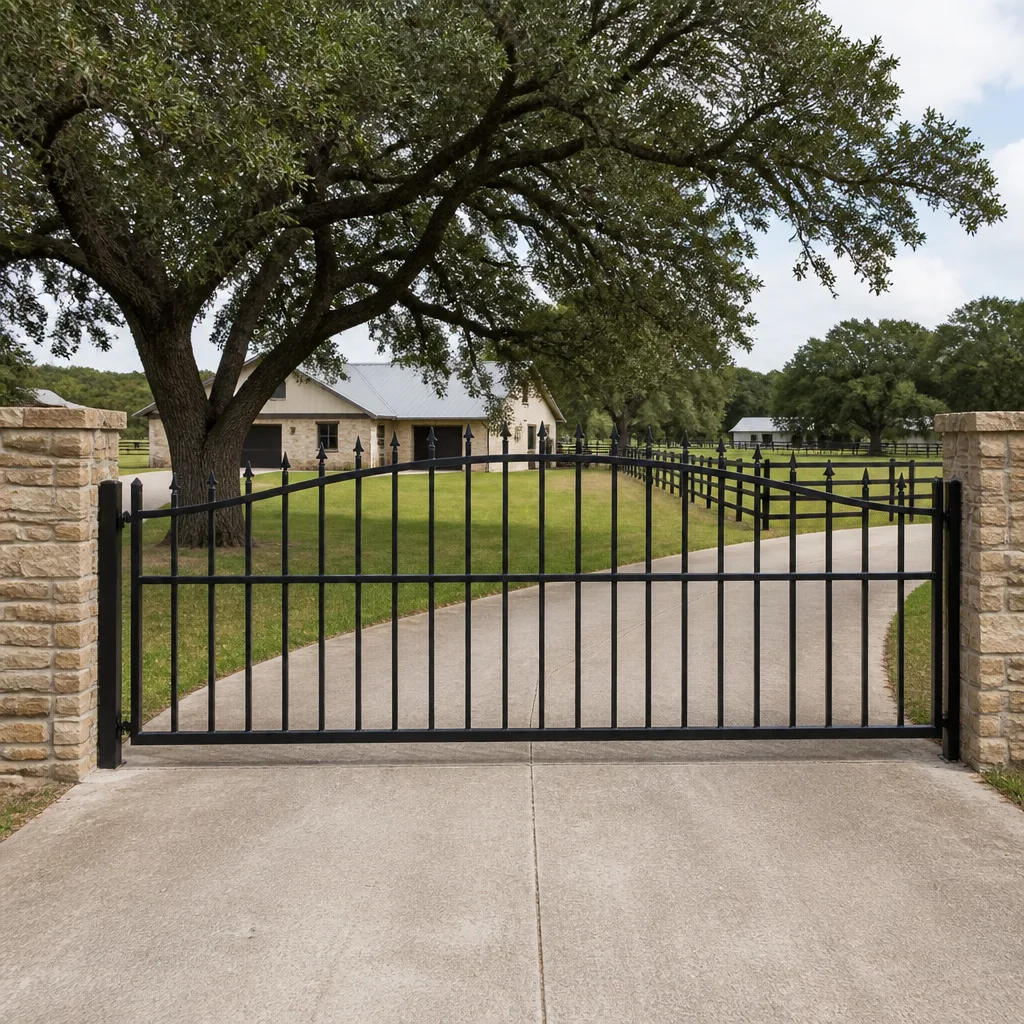 Farm & ranch
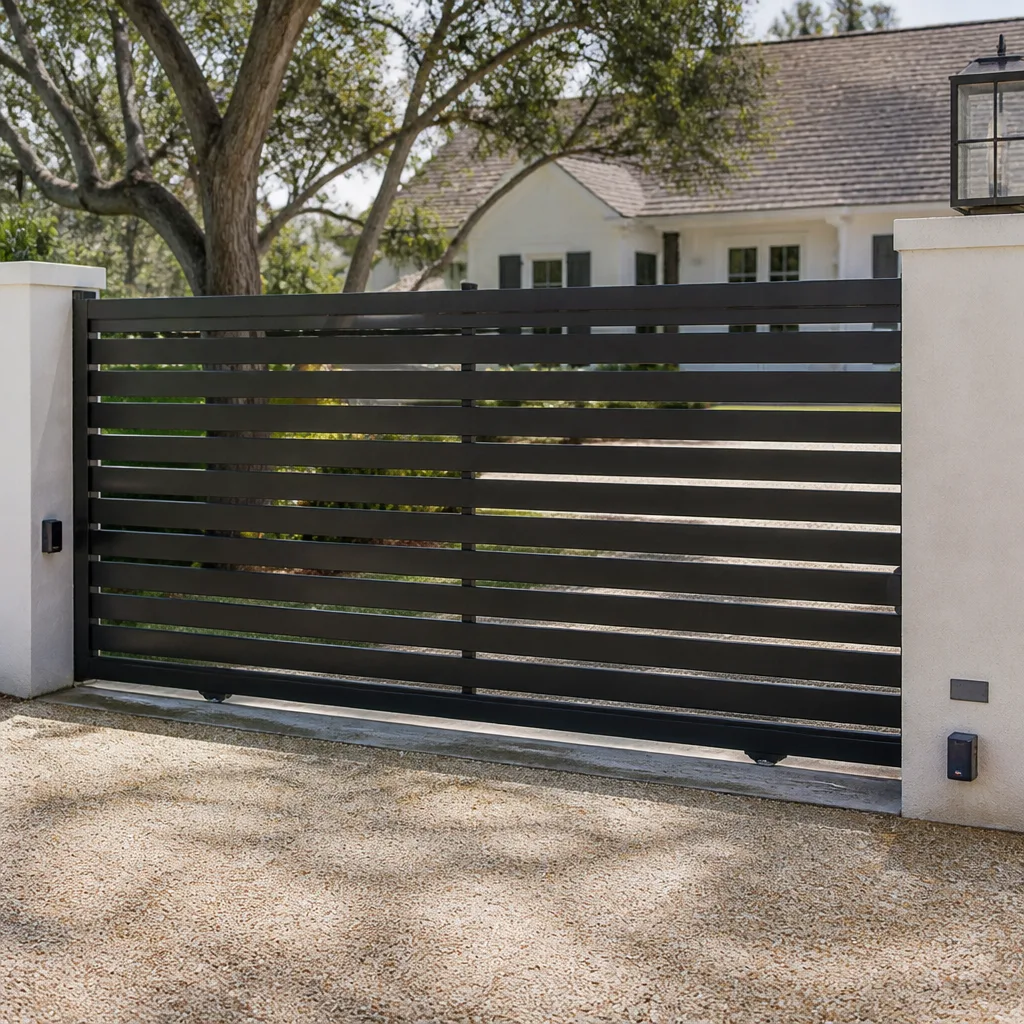 Sliding driveway gates
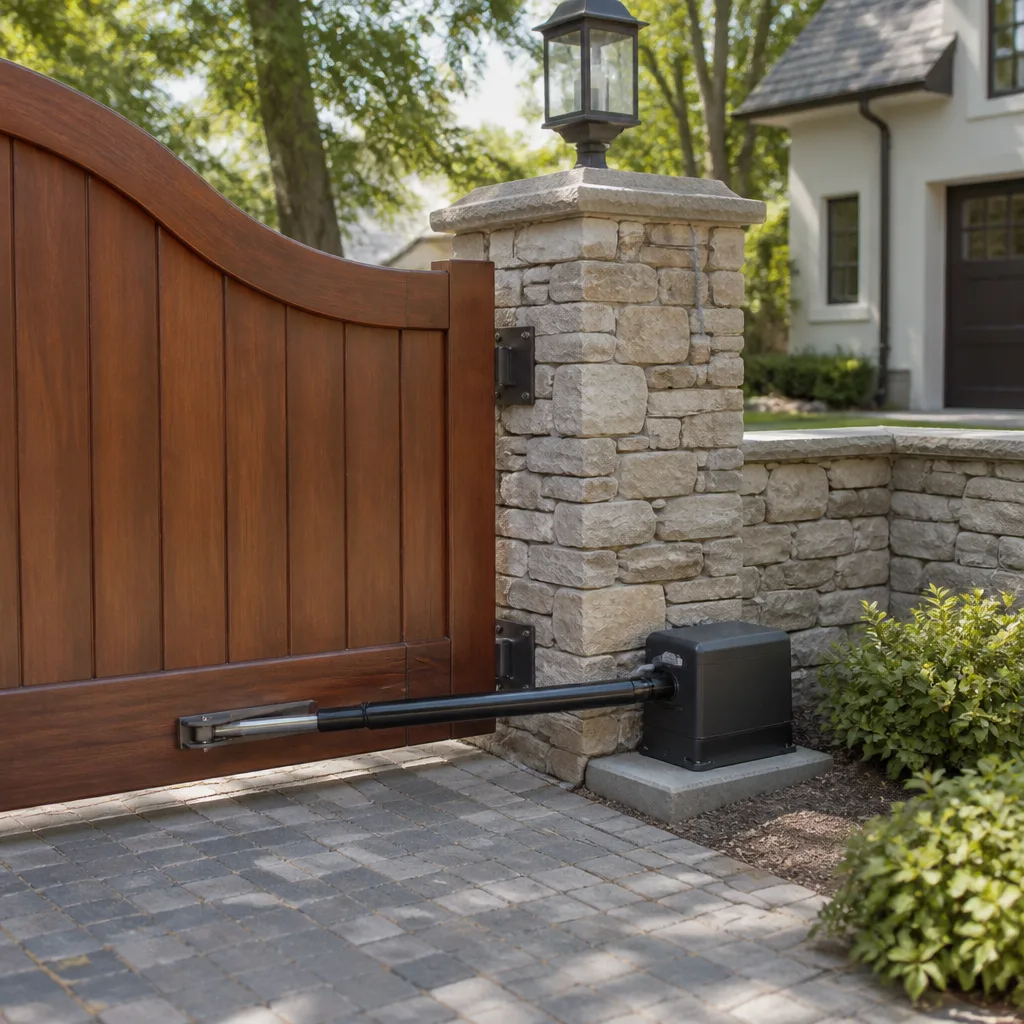 LiftMaster operators
Free on-site gate assessment - hinges, posts, and your LiftMaster or Nice gate operator checked before anything is quoted
The assessment is free and the quote is the invoice.
Get your free estimateGate Repair Warning Signs: A Modesto Homeowner’s Reference Guide
A gate that slows down only on the opening stroke but runs fine closing is usually a drive rack problem on the uphill segment, not a dying battery and not the motor. That single directional clue narrows the diagnosis from five possible causes to one. Most homeowners never notice which direction the problem appears, which is why a gate that’s been “acting up” for a month often arrives at our diagnostic bench as a complete mystery. This guide teaches you to read the behavior instead of just noticing the symptom: which failures show up on open, which on close, which on both, what each sound means, and what to write down before you call anyone in Modesto.
Quick Answer
Gate warning signs fall into four families: directional symptoms (fails only opening or only closing), intermittent versus consistent failure, sound-based clues (grinding, clicking, humming without movement), and visual tells at the hinge and track. Mapping the symptom to the pattern is what separates a ten-minute diagnosis from a return visit. Our technicians have up to 11 years of experience and we work on nine specific brands, so we can usually match a behavior pattern to a probable cause before we reach the property.
Styles & brands we work with
- Wrought iron
- Wood & steel frame
- Farm & ranch
- Sliding driveway gates
- LiftMaster operators
Table of Contents
- Directional Symptoms: Which Stroke Is Failing?
- Intermittent vs. Consistent Failures
- Sound-Based Diagnosis: Grinding, Clicking, Humming
- Visual Warning Signs You Can Check Without Tools
- How to Log Warning Signs Before You Call
- Brand-Specific Patterns We See in Modesto
- Common Mistakes to Avoid
- When to Call a Professional
Directional Symptoms: Which Stroke Is Failing?
The first question we ask any caller is not “what’s wrong” but “does it fail going out or coming in?” The answer reshapes the entire diagnostic path. A gate that opens fine but stalls on the close stroke is rarely a motor problem. A gate that drags going out but snaps shut cleanly points at the drive train, not the control board. Two identical-looking faults can live in completely different subsystems.
Here’s how the directional pattern actually maps to mechanical and electrical sources:
- Fails only on open: almost always a mechanical load on the opening arc. Think a rack tooth missing on the uphill segment, a bent hinge pin, a slide gate track that’s picked up grit at one end, or a swing leaf that’s settled a quarter inch on its post. The motor has more resistance to work against on that stroke.
- Fails only on close: often a safety system or a limit switch. Photocell loops, safety edges, and reverse-travel limits are almost always tied to the close direction because that’s the dangerous one. A short in a safety edge or a misaligned emitter will halt the close stroke without ever affecting the open.
- Fails on both strokes: electrical or operator-level. Capacitor failure, battery in a solar-charged unit, a failing control board, or a limit cam that’s slipped off the actuator shaft.
- Fails at a specific point mid-travel: a physical obstruction or a bent track. The gate doesn’t care about direction; it cares about that one spot.
In Modesto, we see the “fails only on open” pattern most often on older slide gates along the alley-facing properties in neighborhoods like La Loma and College Area, where the track has been hugging the ground for years and the uphill segment takes the worst of the load. That directional clue saves a homeowner a wasted battery replacement.
Intermittent vs. Consistent Failures
An intermittent gate is almost never mechanical. Mechanical problems get worse in a straight line – a rack tooth doesn’t heal and return. When a gate works fine Monday and dead-lifts Tuesday and works again Wednesday, the problem lives in the electrical layer: wiring, the receiver, the control board, or a loose connector. Chasing the mechanical components when the fault is intermittent wastes time and money.
Here’s a short reference to keep in mind:
- Consistent and repeatable: mechanical cause. Rack, track, hinge, wheel, roller, limit cam.
- Intermittent, weather-linked: wiring or connections. A remote stops working in the afternoon heat or after morning fog, and starts working again by evening. Moisture intrusion at a splice, a corroded terminal, or a compromised safety loop.
- Intermittent, time-linked: heat, thermal drift, or a capacitor that only fails warm. A Modesto gate that works fine in the cool of the morning but stalls out mid-afternoon in July is showing you the capacitor, not the motor.
- Intermittent, remote-linked: the receiver or the remote itself. Try a second remote. If one fails and the other doesn’t, the fault is in the remote or the receiver’s channel, not the operator.
- Intermittent, movement-linked: a broken wire in the safety edge. The gate flexes as it moves, the wire separates, the operator reverses, and by the time you walk outside everything looks normal again.
These are the calls that cost the most to diagnose by trial and error, because a generalist will often replace a motor that was never the problem. If the gate behaves differently depending on hour or weather, write that pattern down before you call. It’s the single most valuable note you can hand a technician.
Sound-Based Diagnosis: Grinding, Clicking, Humming
Your ears are the second-best diagnostic tool after your eyes. Three sounds cover most gate failures, and each one points to a different subsystem. Listen from a few feet away, not with your hand on the gate, and note where the sound comes from – the motor housing, the rack, or the gate leaf itself.
- Grinding. A metallic grind coming from the rack or the motor housing is mechanical. On a slide gate, it usually means a worn pinion gear against a rack with missing teeth, or debris packed into the track. On a swing gate, it’s a failing hinge bushing or a gearbox that’s run low on grease. Grinding is progressive and can damage the rack if left alone.
- Clicking. A repeated click or stutter before the gate moves points to a relay or a solenoid inside the operator. Relays engage and drop out when voltage sags. If you hear one click and nothing, the operator is trying to run but the contactor is failing or the safety loop is holding the command. Clicking with no movement is an electrical problem, not a mechanical one.
- Humming but not moving. The classic capacitor symptom. The motor is receiving power and trying to turn, but the start capacitor isn’t giving it the phase shift it needs to actually rotate. You hear a low hum from the housing and nothing else. On a lead-acid battery operator like a Ghost Controls or Mighty Mule unit, the equivalent is a battery that reads charged but can’t deliver cranking amps. Leave it running more than a few seconds and you risk burning the motor winding.
If you hear a grinding sound, do not run the gate to “see if it clears.” Unlike a hum, which is a diagnostic noise, a grind is a wear noise, and every cycle removes material from the rack. Turn the operator to manual and call us. For a full breakdown of what each of these sounds means for our electric gate repair service, we cover the electrical side in more depth on that page.
Visual Warning Signs You Can Check Without Tools
You don’t need a wrench to spot most gate failures in their early stage. Walk the property with a flashlight once a month and look at four specific places. What you’re checking for is not wear itself but change – the ordinary gate in Modesto looks a certain way, and you’re looking for what has started looking different.
- Paint cracking at the hinge. A spiderweb or hairline crack radiating out from a hinge weld means the metal is flexing where it shouldn’t. That’s the earliest signal of a hinge pin that’s going, and it precedes a total hinge failure by months. If the paint is only cracking in one spot, that hinge takes the load.
- Ground scoring under the gate leaf. A swing gate that drags its bottom rail across a worn groove in the concrete has a sagging post or a bent hinge. A slide gate whose track has polished a bright line in the pavement on one segment only is showing you where the wheels pick up resistance.
- Grease color change. Fresh grease is amber or tan. Dark gray grease means metal shavings have mixed in – that’s wear happening now. Black grease dripping from the gearbox means the seals have failed. Any color change at the rack-and-pinion interface deserves attention, because it’s the interface where grinding turns into gear replacement.
- Rust streaks at the edges of the frame. Not cosmetic. Rust tracks the seam where water gets in, and it usually starts at the base of the post where the footing meets the soil. In the Central Valley, that seam gets wet from winter rain and dries out in the summer heat, which is exactly the cycle that sprouts corrosion fast.
Do this walk in the cool part of the morning and again after a hot afternoon. The temperature shift in Modesto between 7am and 3pm in July is enough to make a marginal capacitor failure show up, and a gate that works at dawn and dies by lunch is telling you exactly where the fault lives.
How to Log Warning Signs Before You Call
This is the part most homeowners skip, and it’s the single biggest lever on diagnostic time. A written log of ten lines cuts the on-site diagnostic period roughly in half, because the technician isn’t standing in your driveway waiting for the gate to fail in front of them. You already know the failure; you just need to record it.
Write down these six things on a notepad or a phone note. First, which stroke fails – open, close, or both. Second, whether it’s consistent or intermittent, and if intermittent, what time of day or weather it tends to happen in. Third, which sound you hear – grind, click, hum, or silence. Fourth, where the sound comes from – motor housing, rack, or gate leaf. Fifth, whether the gate stops or reverses when it fails. Sixth, which change first – the paint, the grease, the track, or the post.
- Open the notepad on your phone before you walk outside.
- Press the remote once. Note which stroke moves and where it stalls.
- Write down the sound in the exact words you’d use to describe it to a friend.
- Walk to the hinge or track and look at paint, grease, and ground scoring.
- If the gate failed in the past week, write down the time of day and the weather.
- Take a photo of anything you saw – the cracked paint, the dark grease, the track groove.
- Note the brand name on the operator housing (LiftMaster, FAAC, Ghost Controls, etc.) and any model on the label. This alone saves time, because different brands fail in different, recognizable patterns.
Bring that note to the call. When you call us in Modesto, a written log is the difference between “gate not working” and “gate fails only on open, grinding from the rack, works fine again after 5pm.” Those are two completely different service calls, and the second one arrives with the diagnosis mostly solved.
Brand-Specific Patterns We See in Modesto
Gate operators are not interchangeable. Each one has a personality, and knowing that personality is the difference between a first-visit fix and a return call. Our technicians have up to 11 years of experience across the brands we work on, and we’ve logged enough failure patterns to know which ones present which symptoms.
Ghost Controls and Mighty Mule are the entry-level residential brands we see most often on single-family gates in Modesto’s older neighborhoods, and both tend to fail in the battery and limit-switch layer first. If a Ghost Controls gate slowly loses stroke length on open before failing entirely, that pattern is almost always the battery voltage sagging below what the control board needs. A Mighty Mule with an intermittent “won’t respond to remote” complaint is usually a receiver issue, not the operator itself. On the higher end, FAAC and BFT units on commercial and multi-family properties tend to fail at the control board and the safety loop before the mechanics, which is why the “intermittent” pattern shows up so much in those systems. Linear and Viking units in the mid-range residential market often show hinge and limit-cam wear first, because they’re doing slightly more cycles than the entry-level units were designed for. DoorKing is the brand we see most on access-control gates at apartment and office properties, and its symptoms almost always center on the intercom wiring and the loop detector. Elite covers a range of residential and light-commercial swing and slide gates, and its failure patterns skew toward the limit switches and the operator’s torque sensing.
None of that replaces a proper diagnostic. But knowing that a Ghost Controls gate with a slow open stroke is probably a battery and a FAAC gate with an intermittent close fault is probably a safety loop lets us walk in with the right parts and the right troubleshooting sequence. That’s why the brand name on the label matters as much as the symptom on the driveway.
Common Mistakes to Avoid
- Assuming a slow gate is a motor problem. Motor failure is rare compared to a dragging hinge, a bent track, or a sagging post. If the gate runs slow but never stalls, look at the mechanical load first. A motor replacement on a gate that needed a hinge is money you don’t get back.
- Changing the battery every time the gate stops. A lead-acid battery can read 12 volts on a meter and still fail under load. Before replacing anything, note whether the gate fails only in heat, only after a long idle period, or only when the remote is far from the receiver. Those clues point to different components.
- Running the gate to “clear” a grinding sound. Every grinding cycle wears more metal off the rack or the gearbox. A grind that costs $200 in rack teeth after one cycle costs far more after twenty. Turn the operator to manual instead.
- Bypassing a safety edge to make the close work. A gate that closes properly when the safety edge is disconnected is not fixed – the safety system is doing its job by preventing a close that could crush. Never defeat a safety edge, a photocell, or a loop detector on a Modesto gate. Bring the technician in instead.
- Ignoring the hinge paint crack. A hairline crack in the paint at the weld is the earliest visible signal of hinge failure. Sanding and repainting buries it; that hinge will still fail, just later and with more drama.
- Diagnosing by remote from the car. Intermittent remote issues are almost always about distance, interference, or receiver position, not the operator. Test the gate from the keypad and from a wall switch before you blame the remote.
- Skipping the brand label. A technician who walks up to a gate without knowing whether it’s a Linear or a Viking is starting the diagnosis blind. Read the label. Write it down. The brand name on the housing is the shortest shortcut to the right fix.
If your neighborhood is a little further out, our team also covers surrounding areas – our Modesto page explains which parts of the Central Valley we reach.
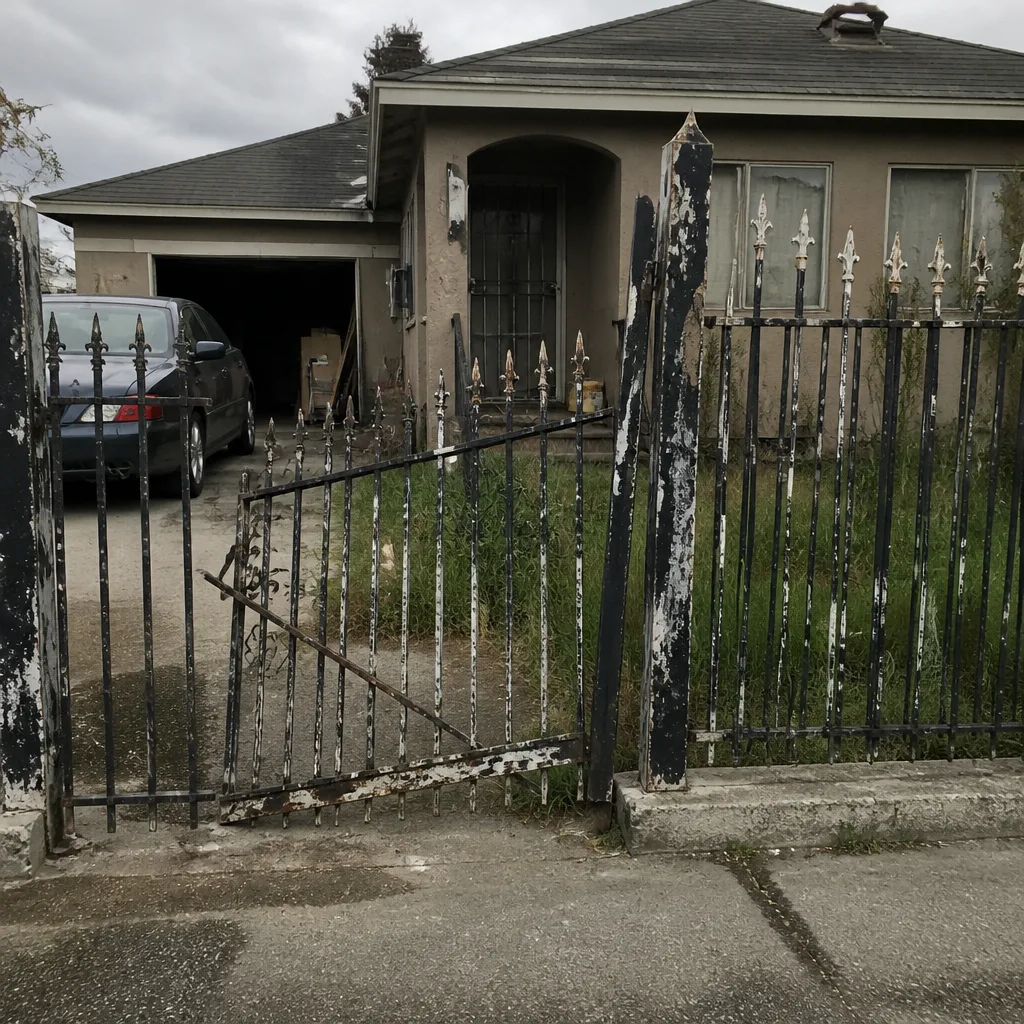
See the difference
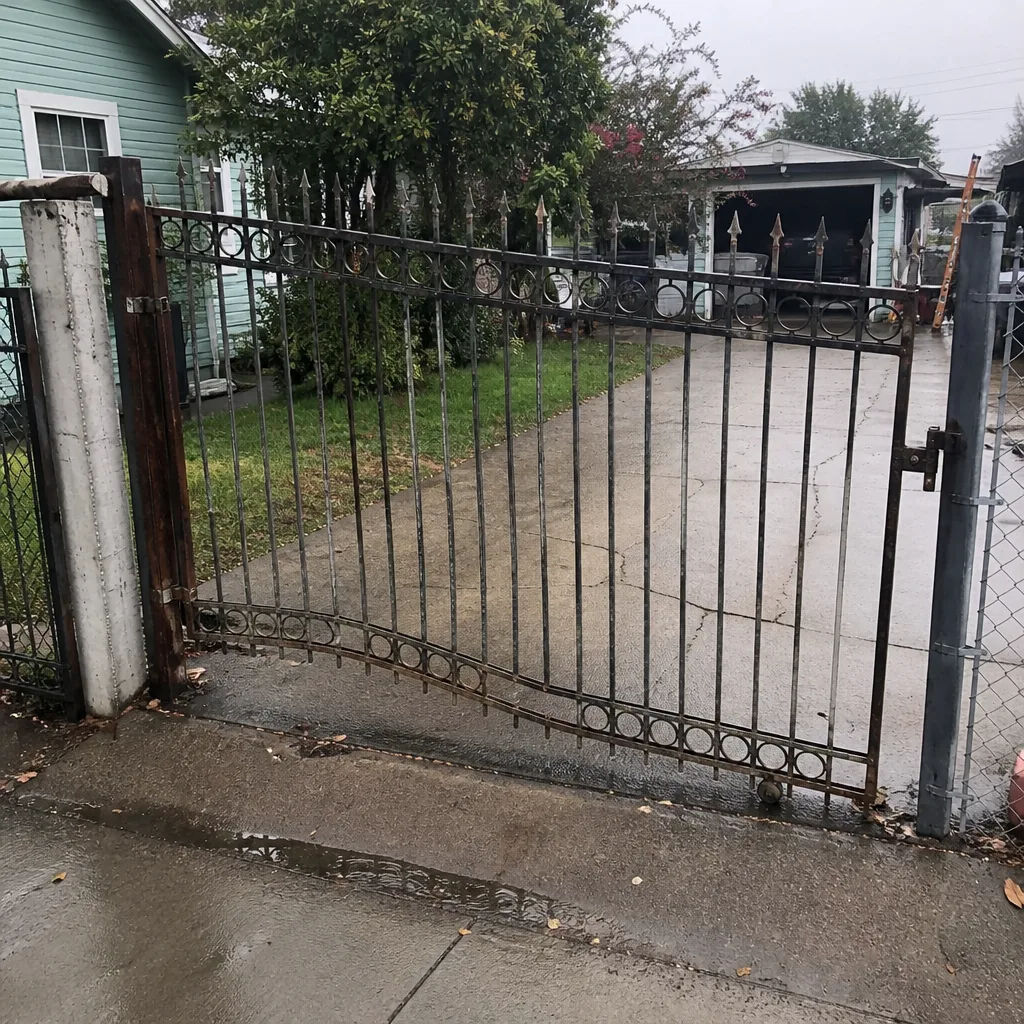 Before
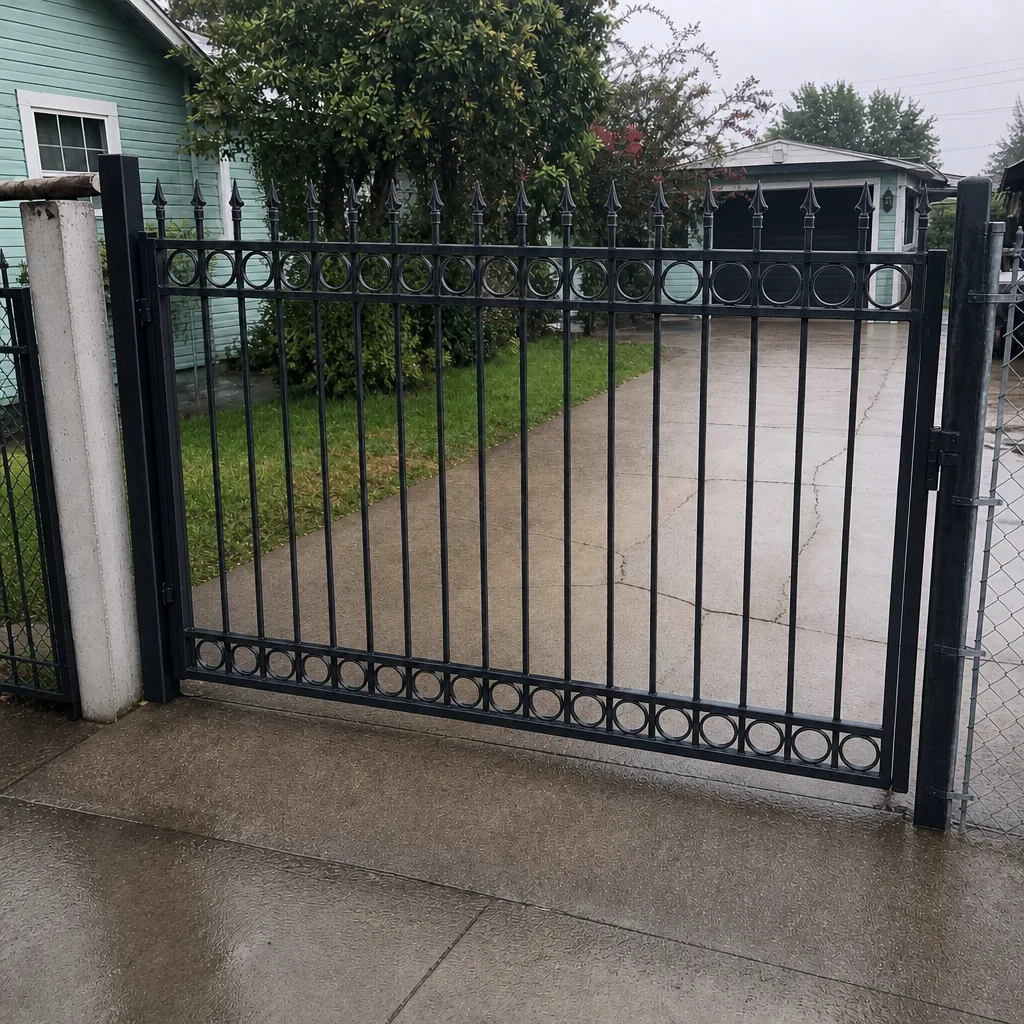 After
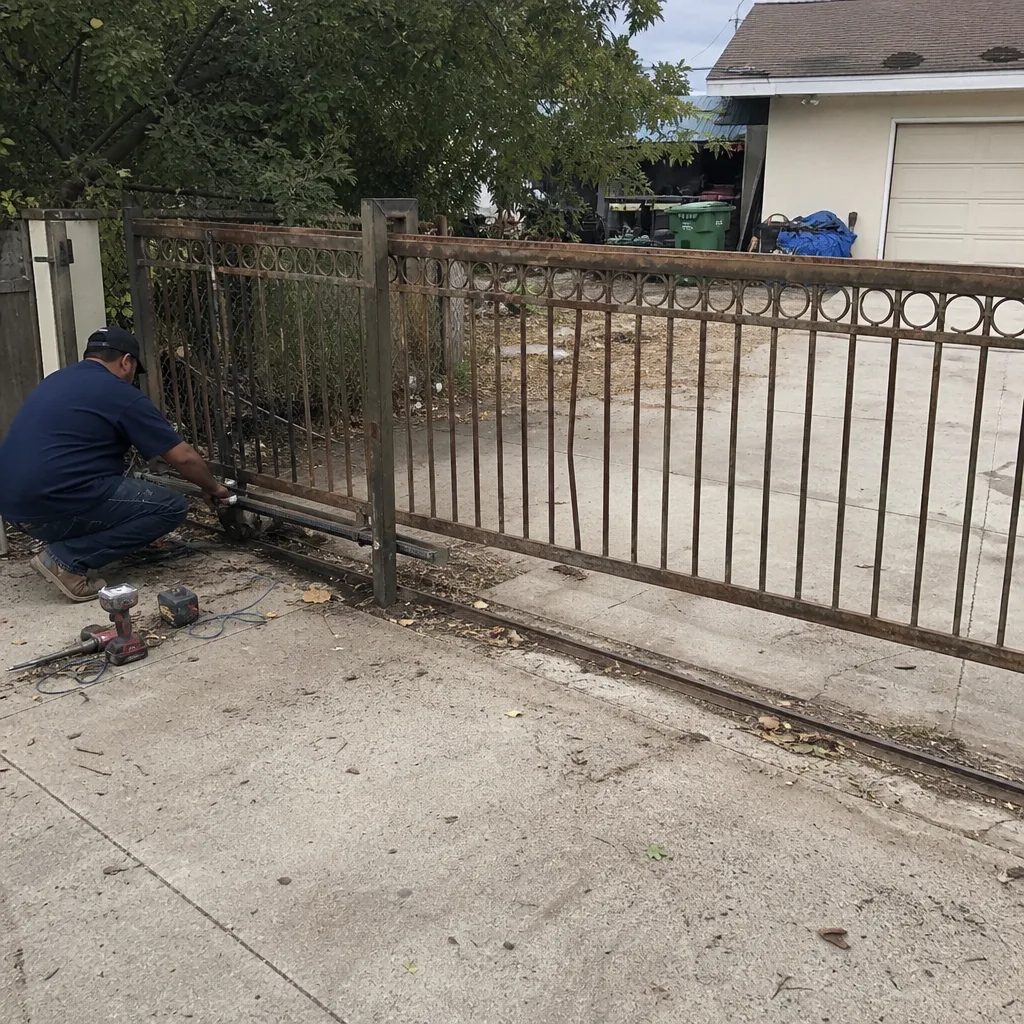 Before
 After
 Before
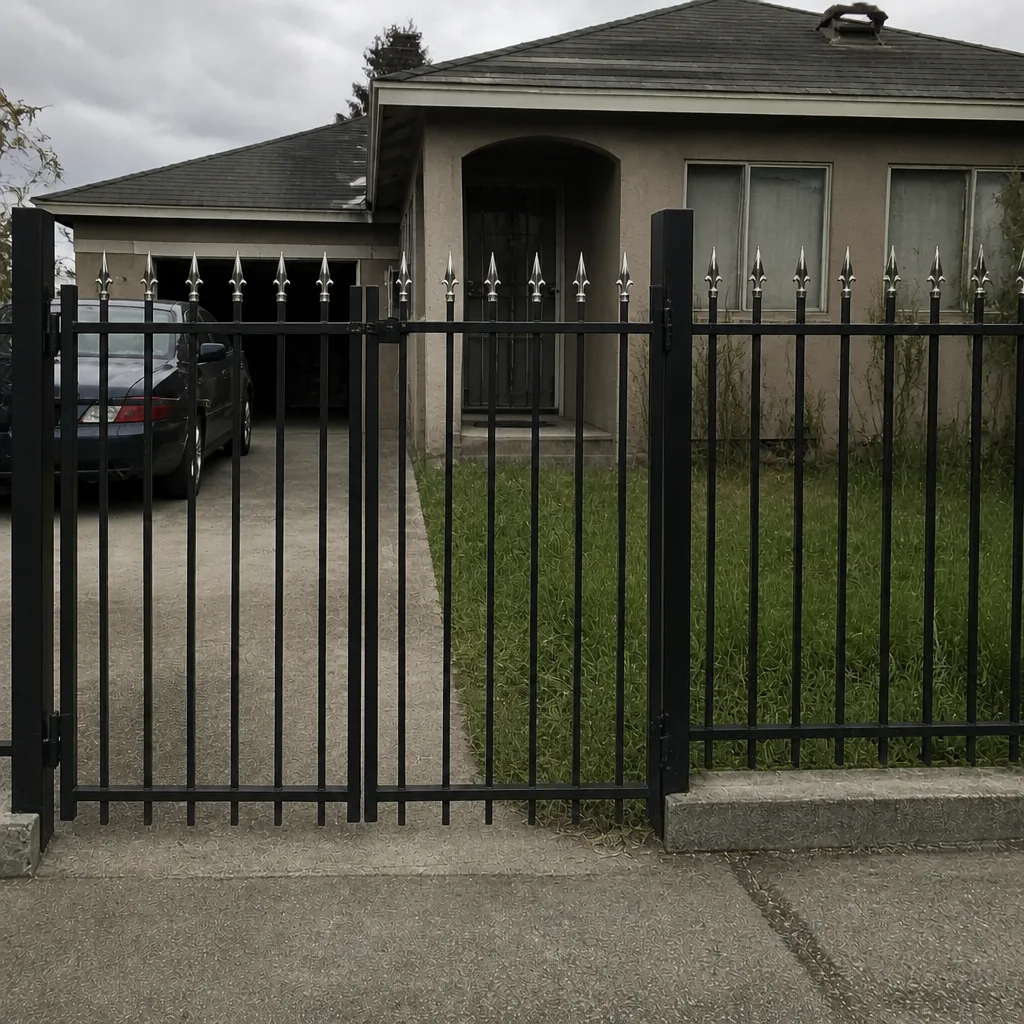 After
When to Call a Professional
Call a gate specialist when the gate reverses without a visible obstruction, when you hear grinding from the operator or the rack, when the gate fails consistently on the close stroke, or when an intermittent fault has already replaced a component without fixing it. Call immediately if the gate leaf sags visibly, if the post has begun to lean, or if you smell burning from the operator housing – those three point to structural or overheating failures that can escalate. Call before you run the gate one more time “to see.” Our gate repair service is fully documented on our main page, and we’ll schedule a visit around your log. Gate Repair Modesto offers free estimates in Modesto – call (844) 834-3242. We answer 24/7. Fast dispatch from 7am to 7pm, Sunday through Friday.
Frequently Asked Questions
The earliest signs are a gate that slows on one stroke before failing, hairline paint cracks at the hinge weld, a slight change in the sound the operator makes, and dark grease at the rack-and-pinion interface. Most homeowners notice the symptom before they notice the cause, so walk the gate once a month and look at those four places. Call (844) 834-3242 for an exact quote – estimates are free.
A gate that works in the cool of the morning but stalls in the afternoon heat is almost always showing a capacitor failure or a battery that can’t deliver under high load. Heat changes the electrical behavior of both components, so the failure is real, just temperature-dependent. In Modesto, this pattern shows up most in July and August when the afternoon swing is extreme. Call (844) 834-3242 for an exact quote – estimates are free.
Yes, generally. A grind is a wear sound – it means metal is being removed from the rack, gearbox, or track, and every cycle makes it worse. A click is a diagnostic sound – it usually points at a relay, a solenoid, or a safety command that’s holding the gate back, and it will not damage the machine by continuing to click. Turn the operator to manual for a grind, and diagnose the click. Call (844) 834-3242 for an exact quote – estimates are free.
No. Intermittent failures almost always live in the wiring, the receiver, the control board, or the safety loop, and the safety components are the wrong place for trial-and-error repairs. Bring a written log of when the failure happens and what it looks like, and a specialist can usually narrow the fault in a single visit. Call (844) 834-3242 for an exact quote – estimates are free.
A gate needs repair rather than replacement when the frame and posts are structurally sound and only the operator, the rack, the hinges, or the control board has failed. Replacement is the right call when the operator housing has rusted through, the post has begun to lean, or the frame is flexing at the welds. For a Modesto gate, our team will tell you directly which is the better value at the on-site estimate, not over the phone. Call (844) 834-3242 for an exact quote – estimates are free.
Often, yes – same-day service is available for repair calls depending on schedule. Call (844) 834-3242. We answer 24/7. A call outside dispatch hours is booked into the next opening, Sunday through Friday, 7am to 7pm. Have your written log ready and mention your brand name, and we’ll match the call to a technician familiar with that system.
If you’ve been reading this and realizing your gate has been showing two or three of these signs for a while, we also handle the electrical side of the work and full installations. You can read more about our electric gate repair service, or about gate repair for the diagnostic and mechanical side. If you’re not sure which category you’re in, the log you take will answer that first. And if you’ve got a new gate project in mind, our team can walk you through Gate Repair Modesto as the starting point.
The Bottom Line
Gate warning signs aren’t a checklist of symptoms – they’re a set of patterns, and the pattern tells you where to look. Fails only opening: mechanical. Fails only closing: safety system or limit. Fails on both: electrical. Intermittent: wiring, receiver, board, or loop. Grinding: wear happening now. Clicking: a command that isn’t completing. Humming: a motor that wants to turn but can’t. Hinge paint cracks, ground scoring, and dark grease are the earliest visual tells. Log what you see, read the brand label, and bring that note to the call. That note is the difference between a first-visit fix and a return visit. Gate Repair Modesto offers free estimates in Modesto – call (844) 834-3242. We answer 24/7. Fast dispatch from 7am to 7pm, Sunday through Friday.
Written by the team at Gate Repair Modesto