
Last updated November 15, 2026
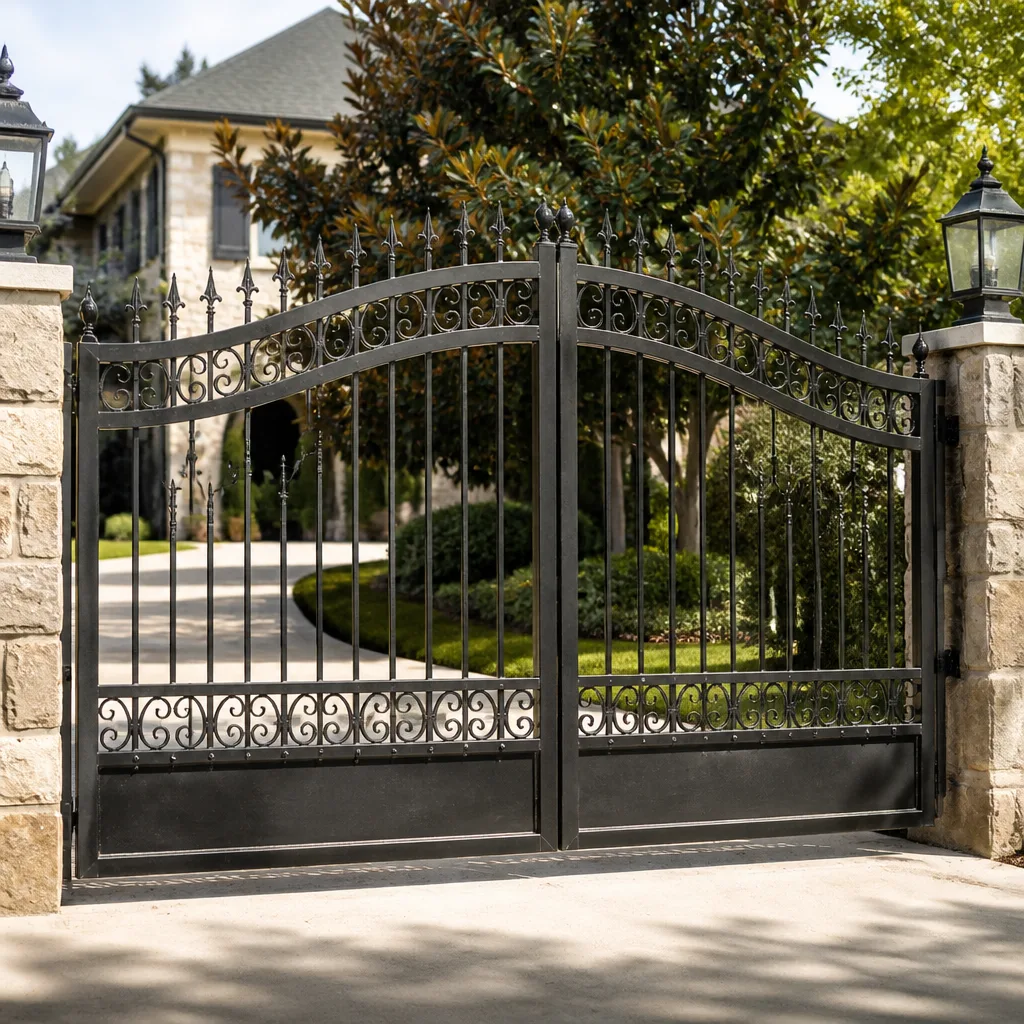 Wrought iron
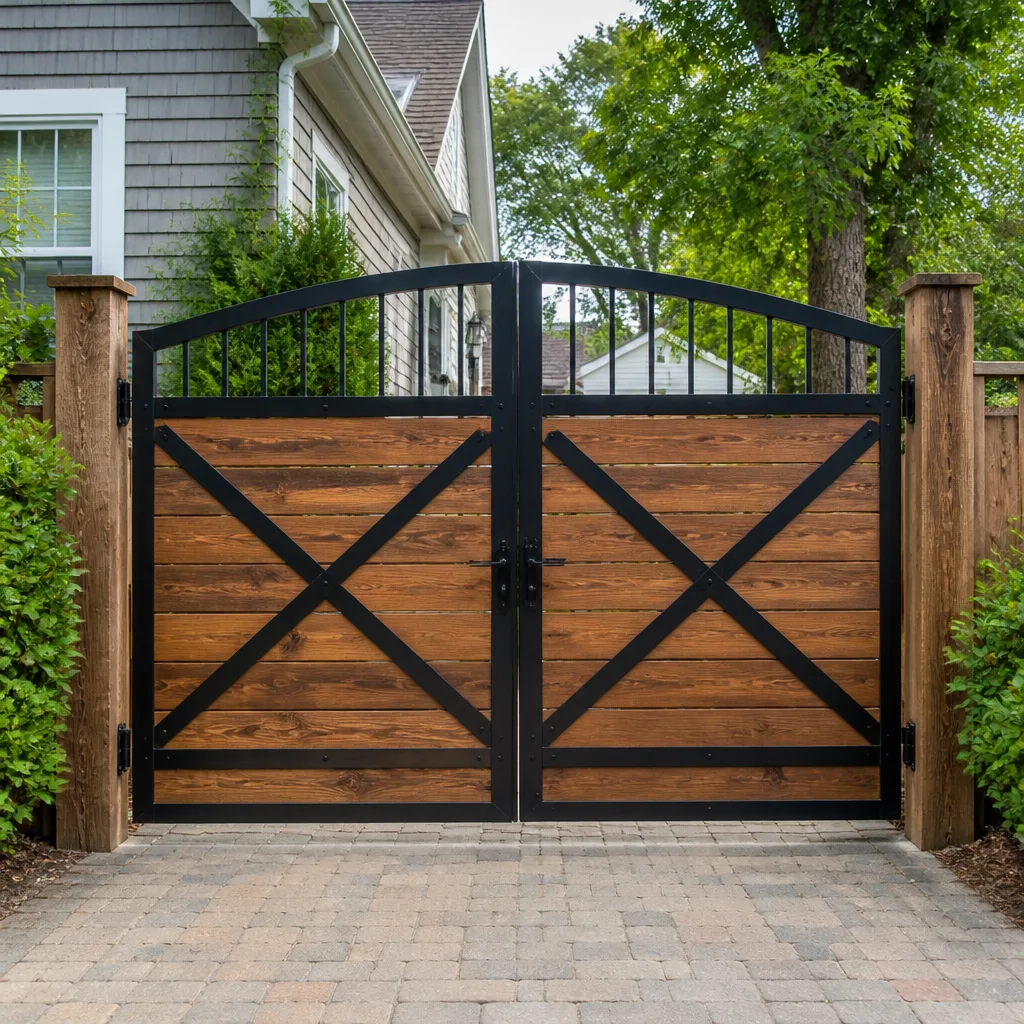 Wood & steel frame
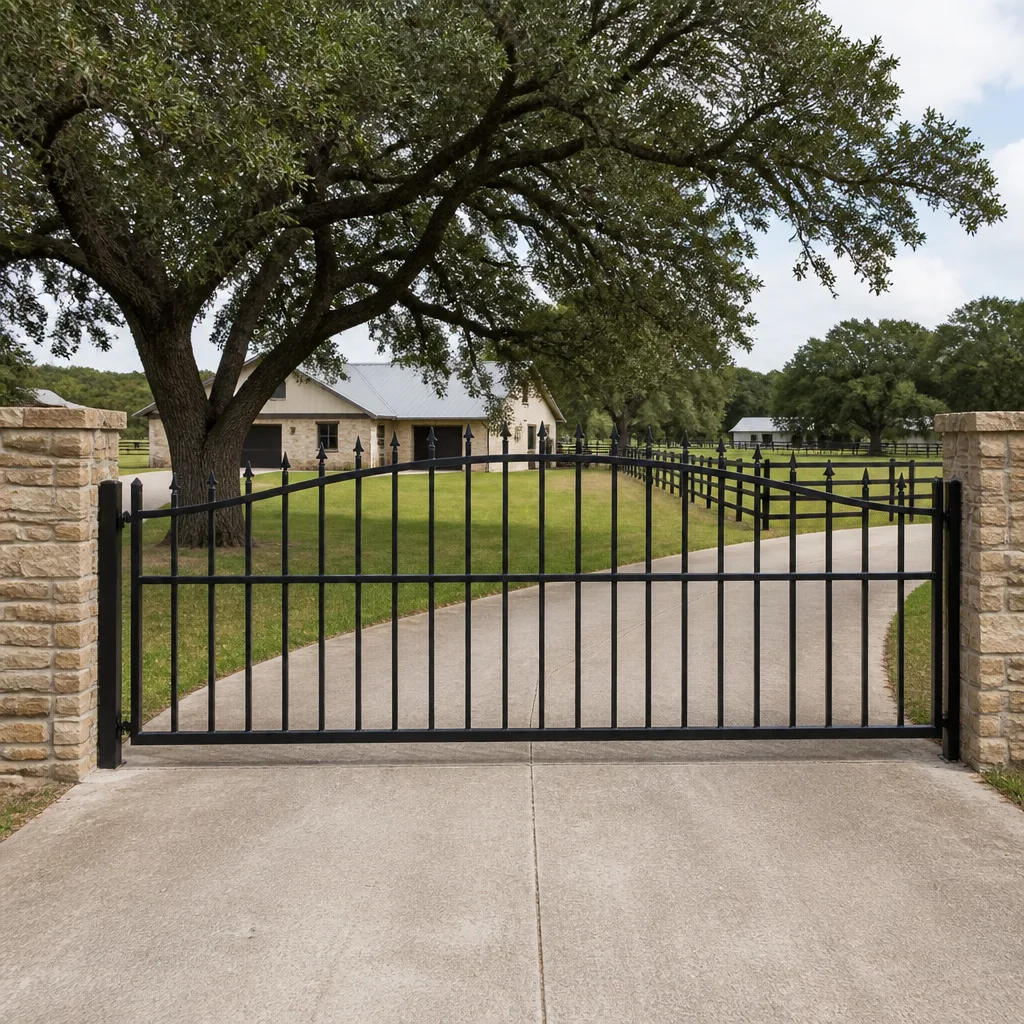 Farm & ranch
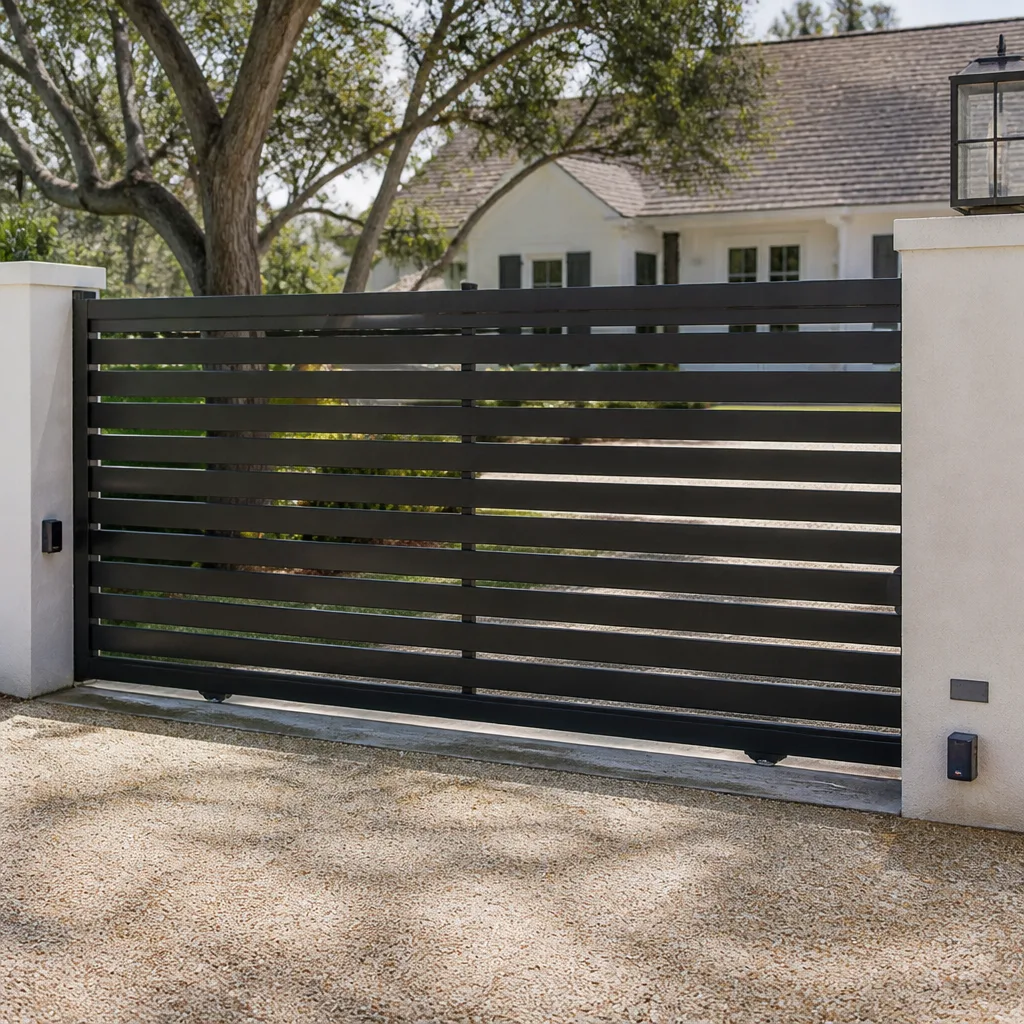 Sliding driveway gates
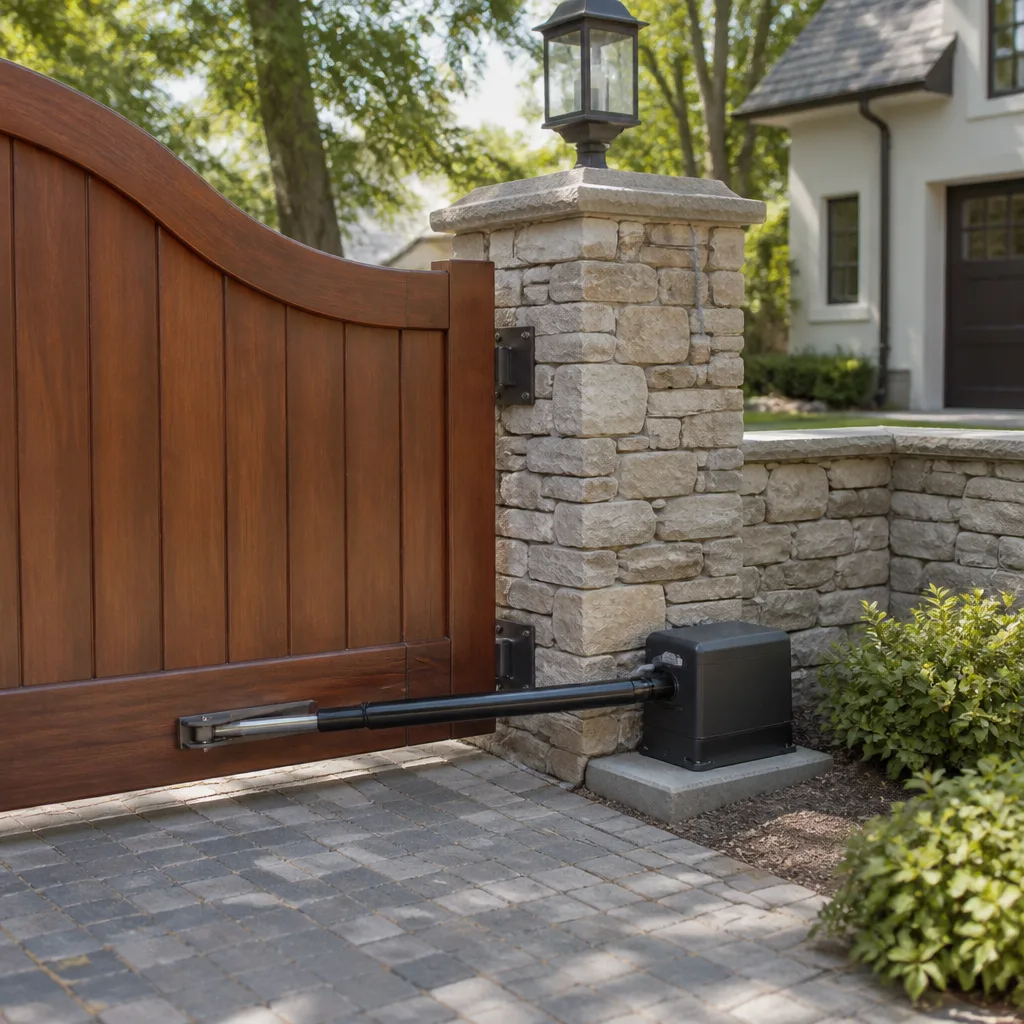 LiftMaster operators
Free on-site gate assessment - hinges, posts, and your LiftMaster or Nice gate operator checked before anything is quoted
The assessment is free and the quote is the invoice.
Get your free estimateGate Repair Permits, Codes & Inspections in Modesto, CA: What You Need to Know
Most gate repairs in Modesto don’t need a permit. That’s the first thing to get straight, because the assumption that runs the other way costs people money and time. The repairs that do need one aren’t the big dramatic jobs you’d expect. They’re the quiet swaps: a new operator in a different size class, a fresh post set in concrete, a widened opening. Swap a failed 1/2 HP operator for a 1 HP model because it’s a better fit, and you’ve changed the equipment class on that gate. Same location, same function, different regulatory category. This guide draws the line between repair and modification so you know which side of it you’re on before anyone touches the gate.
Quick Answer
In Modesto, like-for-like gate repair rarely requires a building permit, but three categories usually do: changing the operator’s equipment class or horsepower rating, installing or replacing gate posts, and altering the opening or travel path. Automated gates must also meet UL 325 safety requirements regardless of permit status, and commercial or multi-family properties can trigger ADA review. When in doubt, ask the city’s building department before work starts, and document every repair whether a permit was pulled or not.
Styles & brands we work with
- Wrought iron
- Wood & steel frame
- Farm & ranch
- Sliding driveway gates
- LiftMaster operators
Table of Contents
- Repair vs. Modification: Where Modesto Draws the Line
- When a Gate Repair Needs a Permit in Modesto
- UL 325 Compliance and the Safety Devices That Protect You
- HOA Rules vs. City Permit Rules: When Both Apply
- ADA Review for Commercial and Multi-Family Gates
- How to Document a Gate Repair for Insurance and Escrow
- What a Gate Inspection Actually Looks At
- The Permit Process, Step by Step
Repair vs. Modification: Where Modesto Draws the Line
The distinction matters because it decides everything downstream: whether you file, whether an inspector visits, and what shows up in a records search years from now. A repair restores a gate to the condition and configuration it was already approved in. A modification changes something the code cares about, and that’s where permits enter the picture.
Here’s how we explain it to property owners across Modesto. Ask one question: after the work, is the gate the same gate in the same class it was before?
- Closer to repair: replacing a failed control board with the same board, swapping a photo-eye that’s stopped responding, replacing a damaged hinge, re-hanging a sagging swing gate on existing posts, replacing a burned-out motor in the same operator model.
- Closer to modification: upsizing the operator, switching from a swing to a slide configuration, setting new posts, changing the gate’s height or width, moving the gate’s position on the property line, adding automation to a gate that was manual.
The California Building Code treats gate structures and their supporting posts as construction elements. Once you touch the structural side, you’re usually outside repair territory. The equipment side has its own logic: the operator’s listing and safety configuration are tied to the specific unit, and changing the class means the safety devices may need to be re-evaluated to match.
This is where brand knowledge earns its keep. An operator from Linear or Viking has specific horsepower and duty-cycle listings, and a technician who works these systems daily can tell you whether the replacement you’re considering is genuinely like-for-like or quietly a step up in class. That’s the first conversation to have, before a single part is ordered.
When a Gate Repair Needs a Permit in Modesto
Three categories account for nearly every permit question we field in Modesto. If your job falls into one of them, plan for the permit conversation first.
- Changing the equipment class or horsepower rating. Putting a larger operator on the same gate changes how much force the system can apply. That’s the trigger. Same-model replacement is usually a straight repair; an upsized or reclassified unit usually isn’t.
- Installing or replacing posts. New posts mean new footings, and footings are structural work with depth and anchoring requirements. A post set to proper footing depth is construction, not maintenance.
- Altering the opening, travel, or gate dimensions. Widening a driveway gate, raising the height, or changing how the gate travels changes the geometry that the original approval was based on.
Outside those three, most of what we see in Modesto is genuine repair. Operators that stop responding to a remote, gates stuck mid-travel, safety loops with a fault, intercom wiring that’s gone intermittent: those are fixes, not filings.
The safest move before any job that sits near the boundary is a phone call to the city’s building department. Describe exactly what’s changing, not what’s being fixed. “The operator died and we’re putting in the same model” gets a different answer than “we’d like a bigger operator.” Ask about permits in plain terms and get the answer in writing if you can.
One more thing worth knowing: permit rules bite hardest at resale and insurance time. Unpermitted structural work on a gate can surface in a title search and stall a closing. That alone is reason to file when the job qualifies.
UL 325 Compliance and the Safety Devices That Protect You
UL 325 is the safety standard for automated gate operators sold in the United States. It’s not a permit rule; it applies to every automated gate, permitted or not. The standard requires that an operator be installed with entrapment protection appropriate to how the gate is used, and that’s where a lot of local gates fall short.
What compliant protection looks like in practice:
- Photo-eyes or safety edges at the points where the gate could close on a person, vehicle, or pet.
- Properly configured operator controls that recognize and respond to those devices, not just accept them as a checklist item.
- Consistent device behavior on every cycle, including when power flickers or the operator reboots.
We’ve diagnosed plenty of Modesto gates where a photo-eye was installed but never wired into the operator’s safety input, or where a safety edge was bypassed because it kept tripping the gate. Those aren’t comfort features. They’re the difference between a gate that stops and a gate that doesn’t.
Commercial systems on DoorKing operators often carry more safety device requirements than a residential Ghost Controls setup because the duty cycle and traffic exposure are different. That’s why brand-specific knowledge matters: the safety input behavior on a commercial operator isn’t interchangeable with a residential unit, and the fix has to match the system.
If you’re unsure whether your gate’s safety devices are actually functional, don’t test them by walking into the gate’s path. Have a technician verify the configuration with the operator’s diagnostics. The consequences of a failed safety device are serious enough that testing belongs with someone who does it regularly.
HOA Rules vs. City Permit Rules: When Both Apply
An HOA can have requirements that have nothing to do with the city’s permit process, and both can apply to the same job. They don’t always agree, and when they conflict the stricter one usually wins in practice.
Typical HOA side requirements:
- Architectural review approval before you change the gate’s appearance, height, or material.
- Specific operator brands or colors on visible street-facing gates.
- Setback or landscaping considerations around the gate’s location.
Typical city side requirements:
- Permits for structural or equipment-class changes.
- UL 325 safety compliance on automated gates.
- ADA review for gates serving commercial or multi-family properties.
The friction point is usually appearance. An HOA may require a specific finish or design that pulls the gate into a class the city hasn’t seen before. Or a city-required safety retrofit may change a component the HOA has opinions about. File for the HOA approval early, before the gate work, and check the city’s requirements in parallel. If your Modesto community has an architectural committee, put the request in before the part is ordered.
For multi-family and commercial properties the two regulators can also collide on ADA. More on that below.
ADA Review for Commercial and Multi-Family Gates
ADA compliance comes into play when a gate controls access to a place of public accommodation or a multi-family residential property, not typically on a single-family home’s driveway gate. When a covered property’s gate gets modified, the accessibility of the pedestrian path through that gate can become part of the review.
What that usually means:
- Clear width at the pedestrian passage that meets accessibility requirements for the path type.
- Operable hardware that can be used without tight grasping, pinching, or twisting.
- Approach and landing around the gate, so the path stays usable.
The subtle part: a repair that doesn’t touch any of those things typically doesn’t trigger ADA review. A modification that changes the gate opening, the pedestrian path, or the hardware can. That’s where we see Modesto multi-family property managers caught off guard. The gate service was supposed to be a motor replacement, and the review turns into a broader accessibility conversation.
If your property in Modesto is commercial or multi-family and you’re altering the gate, ask the city’s building department whether ADA review applies before the scope is set. Bundle that into the same conversation as the permit question. It’s the same phone call.
How to Document a Gate Repair for Insurance and Escrow
Even when a permit isn’t required, paper is what protects you at resale and when you file a claim. The gate doesn’t need a permit to need a piece of paper that shows what was done, who did it, and what parts were used.
What to keep on file for every repair:
- Written scope and written estimate. What failed, what was replaced, and the final agreed price. The written estimate sets the final price; the file should match.
- Brand and model of parts. For example, a Linear operator control board, a Viking safety edge, a Ghost Controls remote receiver board. Model-level depth helps if the part fails later and helps the next technician diagnose faster.
- Photos before and after that show the parts in place and the safety devices functional.
- Permit number if one was pulled. Keep the inspection record with the receipt.
- HOA approval if applicable. A copy of the committee’s sign-off.
The reasoning is simple. If the gate’s operator is ever implicated in a property damage claim or a personal injury incident, the file that shows a compliant installation and a properly functioning safety configuration is your evidence. At resale, the same file reassures a buyer’s agent and their inspector. Neither of those audiences cares about brand loyalty. They care about records.
Emergency repairs on gates happen. If you hire a technician, ask for a written record of the work as part of the job, not as an afterthought.
What a Gate Inspection Actually Looks At
If a permit is required, the inspection isn’t a code sweep of your whole property. It’s focused on the gate work that was permitted, and knowing the focus keeps a surprise from showing up on inspection day.
What an inspector typically reviews:
- Footings and posts at proper depth and anchoring for the new install.
- Structural attachment of the gate to the post and to the operator.
- Electrical for automated gates: the power run, disconnect, and grounding as the permit scope describes them.
- Safety devices on automated gates, including entrapment protection and operator configuration.
- ADA path considerations on covered properties if the reviewed plan includes them.
Where inspections fail, it’s almost always one of three things: safety devices that are physically present but not electrically wired into the operator, footings that were set shallower than the approved plan shows, or an operator that was upsized without the plan being updated. All three are avoidable when the work is scoped and filed correctly in the first place.
The paperwork also matters at inspection. The permit has to match what was actually installed. If the brand or model on the permit differs from what’s on the gate, expect questions. If we’re working on a permitted install in Modesto, we finalize the brand and model before the permit is filed, not after.
The Permit Process, Step by Step
Every job is a bit different, but the sequence is consistent. Here’s the flow we follow when a Modesto gate job crosses into permit territory.
- Confirm the scope. Decide exactly what’s changing. Same-model replacement, new posts, equipment class change. Write it down.
- Call the city’s building department. Confirm whether a permit is required for the scope, and ask what the submittal needs.
- Check HOA requirements in parallel. Architectural review, brands, and colors. Get the sign-off before the part is ordered.
- Finalize the equipment and safety configuration. Brand, model, UL 325 safety devices, and electrical plan. This has to be settled before filing so the permit matches what gets installed.
- File the permit and pay the fee. The permit fee is separate from the job cost, and the written estimate you receive from your contractor is separate again.
- Schedule the work and the inspection. Installation and, where required, the inspection happen as scheduled. Inspection timing is set by the city, not the contractor.
- File the paperwork. Inspection record, receipt, photos, HOA approval. Everything in the folder described above.
Once a permit is involved the timeline is measured, not same-day. That’s fine and normal. The point of the process is that the gate that gets signed off is the gate you can rely on.
Common Mistakes to Avoid
- Assuming “same location, same function” means no permit. The equipment class matters as much as location and function. A 1/2 HP operator replaced with a 1 HP unit is the classic edge case.
- Skipping the safety device wiring when replacing the operator. A photo-eye that’s mounted but not connected offers no protection. Have the configuration verified, not just the presence of the device.
- Filing the HOA request after the part is ordered. If the architectural committee requires a different finish or design, you’re reordering. File early.
- Treating a multi-family gate job like a residential repair. ADA review can ride along on a commercial or multi-family gate modification in Modesto. Ask the question before the scope is locked.
- Skipping the documentation on a no-permit repair. No permit doesn’t mean no paper. Keep the scope, parts, and photos for insurance claims and resale.
- Doing the work without calling the city first. A five-minute call to the building department before work starts prevents permit issues at resale later.
- Testing gate safety devices by walking into the path. That’s not a test; it’s a risk. Entrapment protection gets verified by a technician with the operator’s diagnostics.
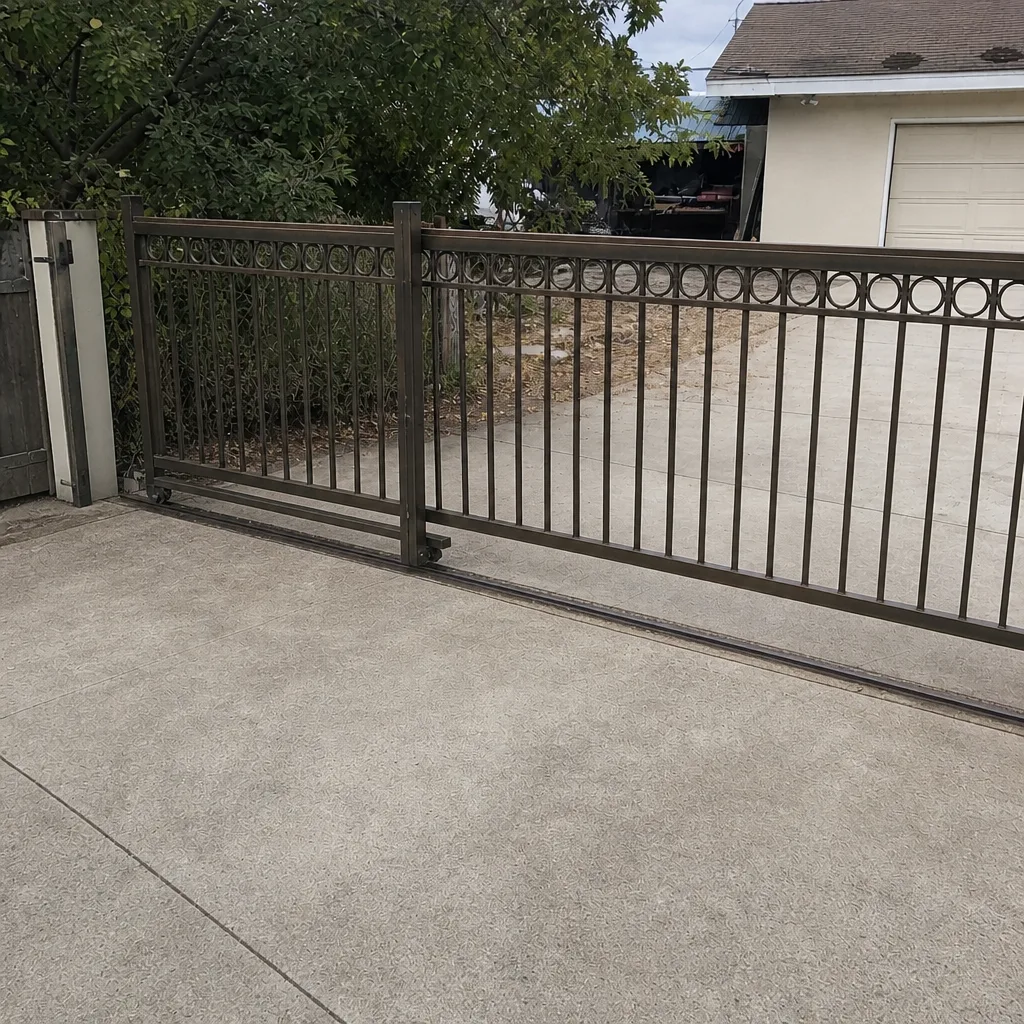
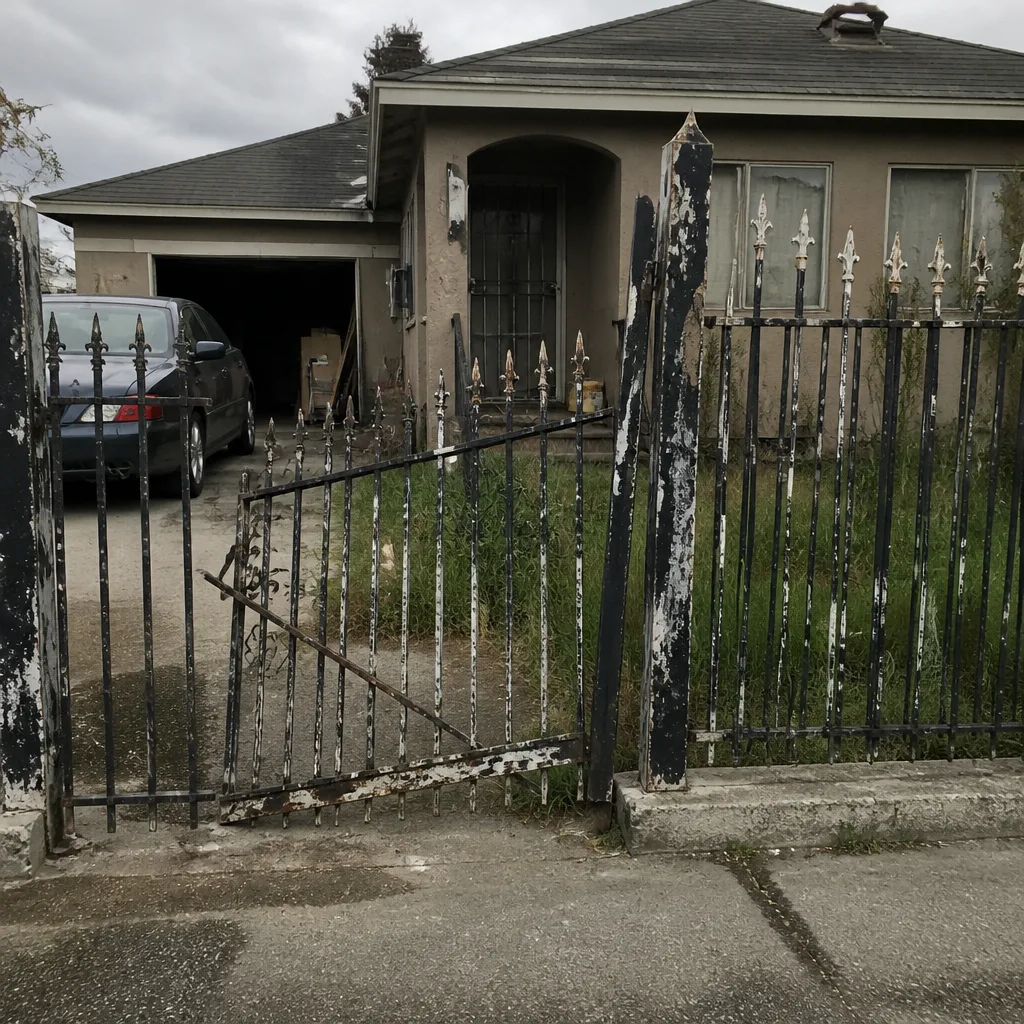
See the difference
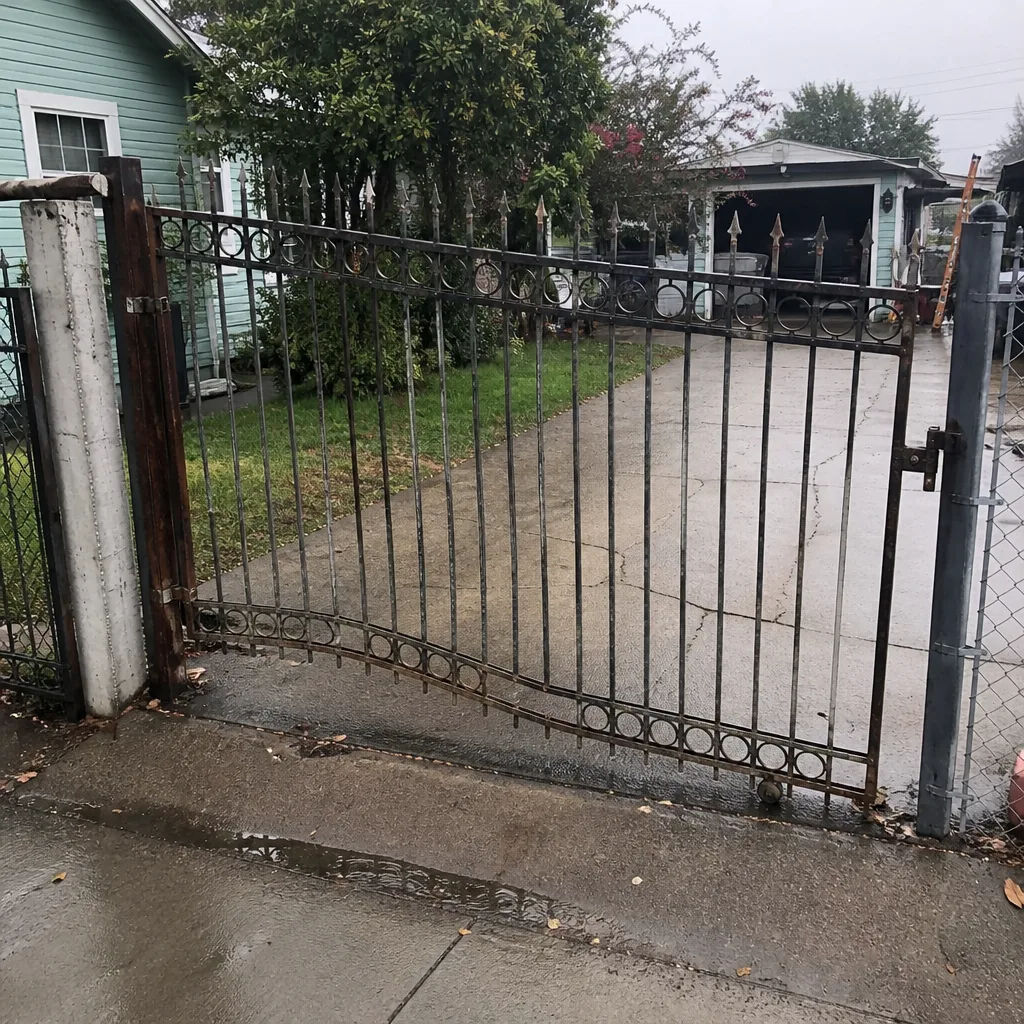 Before
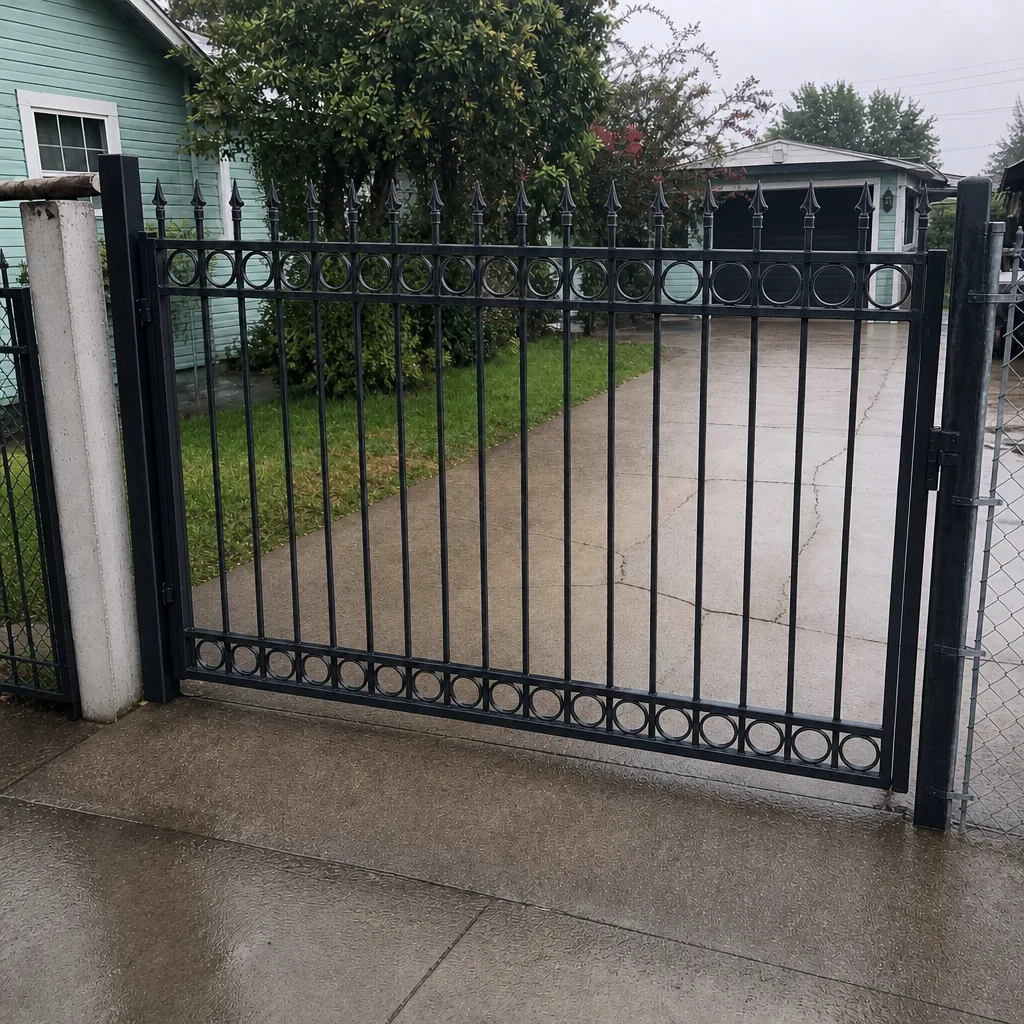 After
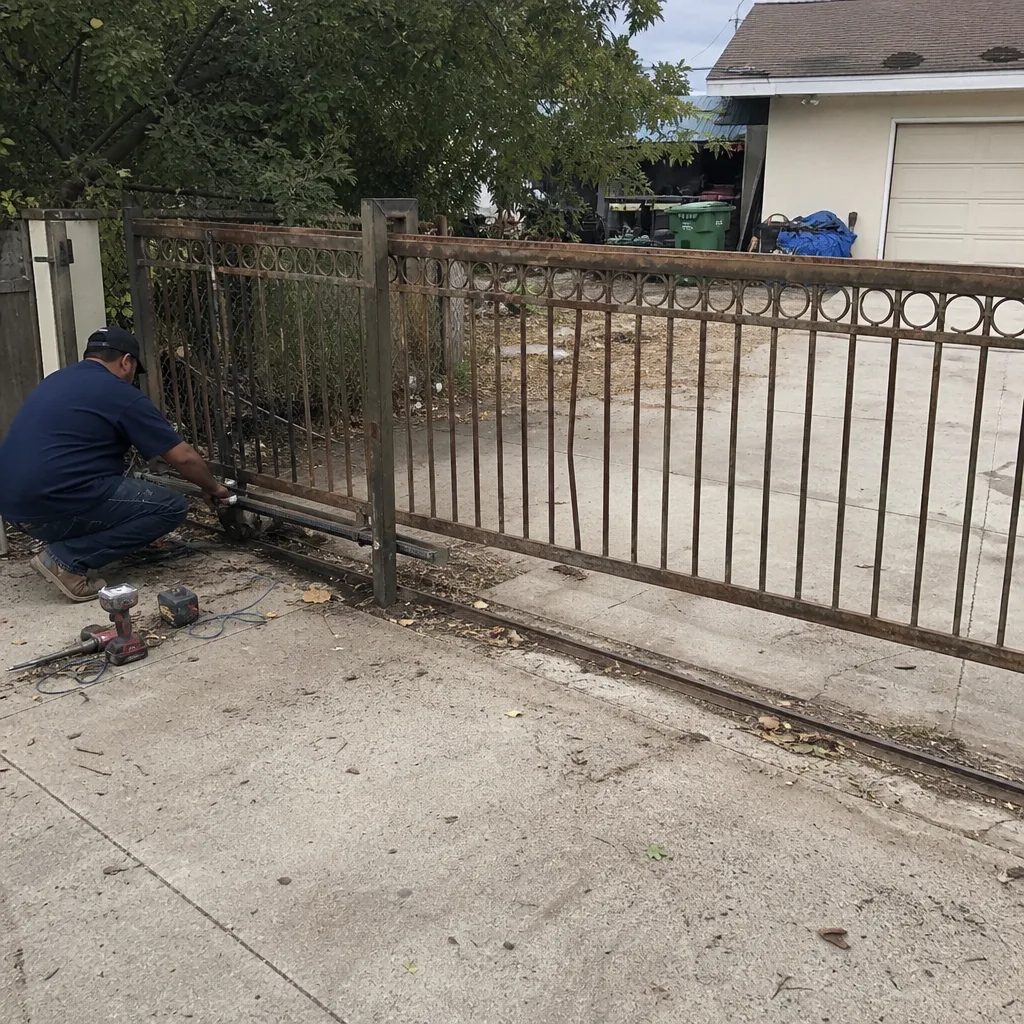 Before
 After
 Before
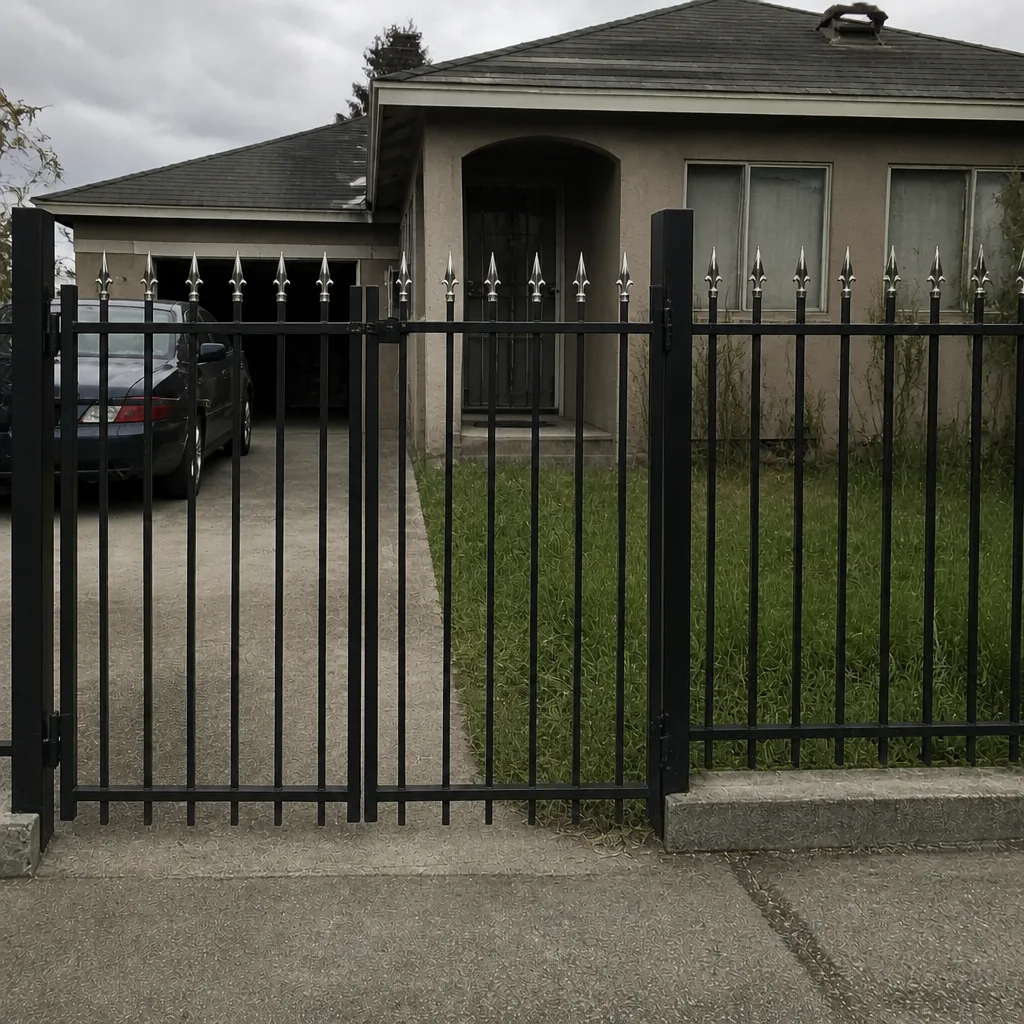 After
When to Call a Professional
The repairs people manage on their own are usually the simple mechanical ones: re-hanging a swing gate, replacing a remote. Everything that touches power, safety devices, or the operator’s programming is where a trained technician keeps you out of trouble. If your gate has a control board fault, an operator that won’t respond, a safety loop that keeps tripping, or intercom wiring that’s gone unreliable, those need hands-on diagnosis with the right brand knowledge.
If you’re at the boundary between repair and modification, the diagnosis matters even more. A technician who works Linear, Viking, DoorKing, and the rest of the gate systems daily can tell you what your job actually is, which is the first step in answering the permit question. From residential swing gates to commercial slide systems, that conversation saves you from filing for the wrong scope or missing a filing altogether.
Gate Repair Modesto offers free estimates in Modesto. If you’re unsure which side of the line your job falls on, call (844) 834-3242. We answer 24/7. Fast dispatch from 7am to 7pm, Sunday through Friday. Our technicians have up to 11 years of experience with the systems on your gate.
Frequently Asked Questions
Most like-for-like gate repairs in Modesto do not need a permit. Repairs that change the operator’s equipment class or horsepower, install new posts, or alter the gate opening usually do. Call the city’s building department before work starts if your job touches any of those three. Call (844) 834-3242 for an exact quote – estimates are free.
Usually not as a straight swap, because changing the horsepower moves the gate into a different equipment class. That’s a modification, not a like-for-like repair, and it typically requires a permit and updated safety device review. Confirm with the city before ordering the unit.
UL 325 is the safety standard for automated gate operators, and every automated gate in Modesto is expected to meet it whether a permit was pulled or not. The standard requires appropriate entrapment protection like photo-eyes and safety edges, properly wired into the operator. If you’re not sure your gate’s safety devices actually work, call a technician to verify the configuration.
When an HOA and the city both apply, follow the stricter requirement in practice. File the HOA architectural review in parallel with the city permit question so neither one surprises you. Call (844) 834-3242 for an exact quote – estimates are free.
Yes. Keep the written scope, brand and model of parts, before-and-after photos, and any HOA sign-off for every repair. That documentation is what protects you at insurance claim time and at resale, even when the city never sees the job. Call (844) 834-3242 for an exact quote – estimates are free.
ADA review typically applies to gates at commercial or multi-family properties when a modification changes the pedestrian passage, hardware, or approach. A simple repair that doesn’t touch those elements usually doesn’t trigger it. Ask the city’s building department whether review applies before locking your scope.
The Bottom Line
The line between repair and modification in Modesto is smaller than most people expect, and the three categories that need a permit are the ones people skip: equipment class changes, new posts, and alterations to the opening. UL 325 applies regardless of permit status, and a non-compliant safety configuration is the real exposure. HOA rules and city permits can both apply, and they don’t always agree. ADA review rides along with commercial and multi-family modifications. Even a no-permit repair deserves documentation. The right first move before any gate work in Modesto is a quick call to the city’s building department and a technician who knows your gate’s brand. That keeps the job on the right side of the rule and the paperwork on file when you need it.
If you’re ready to move forward on a repair or a permitted modification, our team can help. For gate repair in Modesto, we handle both sides of that ledger: the diagnostic work, and the record-keeping that keeps the job clean. If your issue is power or the operator’s controls, electric gate repair covers that specifically. Call (844) 834-3242 for a free estimate.
Learn more about our Gate Repair Modesto services, or see the wider scope of what we do across Modesto. If you’re near the edge of the city or the county line, the same rules generally apply, and the same permit questions are worth asking.
Written by the team at Gate Repair Modesto.